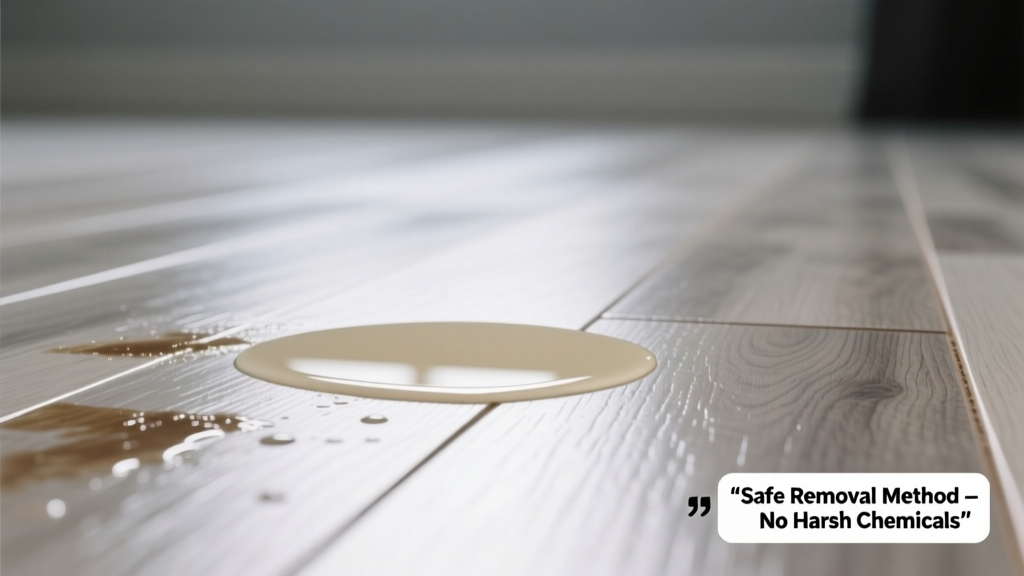
Spilled a crisp Sauvignon Blanc on your kitchen laminate? Don’t panic — but don’t wait either. White wine’s acidity and tannins can etch or discolor laminate’s protective layer within minutes, especially on lighter finishes. The good news: most fresh spills respond well to gentle, targeted treatment — if you act fast and avoid harsh chemicals.
What You Need
| Item | Purpose | Approx. Cost |
|---|---|---|
| Microfiber cloths (lint-free) | Blotting & buffing without scratching | $8–$12 for pack of 6 |
| Distilled white vinegar | Neutralizes acidity; safe for laminate sealants | $3–$5 per 32 oz bottle |
| Isopropyl alcohol (70%) | Breaks down organic residue; evaporates cleanly | $4–$7 per 16 oz |
| Laminate floor cleaner (e.g., Bona Hard-Surface Cleaner) | pH-balanced cleaning post-treatment | $10–$14 per 32 oz |
| Soft-bristle toothbrush (unused) | Gentle agitation in textured seams | $1–$3 |
Step-by-Step Removal Process
- Blot immediately — Use a dry microfiber cloth to gently press (don’t rub) until no more liquid transfers. Repeat with fresh sections of cloth until the area feels dry to the touch.
- Apply vinegar solution — Mix 1 part distilled white vinegar with 3 parts cool water. Dampen (not soak) a clean microfiber cloth and lightly dab the stain for 30 seconds. Vinegar’s mild acidity counteracts wine’s pH without degrading the melamine wear layer.
- Rinse with distilled water — Dampen another cloth with plain distilled water and blot to remove vinegar residue. Residual acid left behind can dull gloss over time.
- For set-in or cloudy stains (within 24 hours) — Dab a cotton swab lightly dipped in 70% isopropyl alcohol onto the discolored spot. Let sit 15 seconds, then blot. Alcohol lifts tannin deposits without swelling the core board.
- Final clean — Spray Bona Hard-Surface Cleaner onto a dry cloth (never directly on floor) and wipe the area in the direction of the grain. Buff dry with a third clean microfiber cloth.
Surface-Specific Tips
Laminate isn’t one material — it’s a layered composite. Your approach must account for its structure: wear layer → decorative paper → high-density fiberboard (HDF) core → backing. Here’s how to adapt:
- Textured or embossed laminate: Use the soft-bristle toothbrush dipped in vinegar solution to gently agitate grooves — but never scrub sideways, which can lift edges.
- AC3-rated (residential) vs. AC4/5 (commercial): Higher abrasion classes tolerate slightly more dwell time with vinegar (up to 60 seconds), but never exceed 90 seconds — prolonged moisture risks edge swelling.
- Click-lock vs. glue-down installation: Click systems have tighter seams, so blotting is more effective; glue-down floors may trap moisture at joints — inspect adjacent planks for subtle lifting after treatment.
What NOT to Do
- Never use bleach, ammonia, or undiluted vinegar — they degrade the aluminum oxide wear layer and cause permanent haze.
- Avoid steam mops or excessive water: The HDF core absorbs moisture like a sponge. Just 0.3mm of water penetration can trigger irreversible swelling (per the North American Laminate Flooring Association’s 2022 durability testing).
- Don’t scrub with abrasive pads or baking soda paste — even “gentle” abrasives scratch the matte or gloss finish, making future stains more visible.
- Never apply heat (hair dryer, iron) to “dry” the spot — thermal expansion can separate layers or warp planks.
Prevention
White wine spills are predictable — especially during gatherings. Build habits that protect your floor long-term:
- Keep a designated “spill kit” by your dining or bar area: microfiber cloths, small spray bottle with vinegar solution, and alcohol swabs.
- Use felt pads under chair legs and coasters under wine glasses — not just for spills, but to prevent micro-scratches that trap future stains.
- Reapply a laminate-specific protectant (like FloorRevive Laminate Shield) every 6–12 months. It adds a hydrophobic barrier that buys you 90+ seconds before wine penetrates.
- Wipe up drips from glassware bases *before* setting them down — condensation + wine residue creates a slow-developing ring stain.
Can I use hydrogen peroxide?
No. Hydrogen peroxide (even 3%) oxidizes the decorative paper layer beneath the wear coat, causing yellowing or bleaching — especially on warm-toned or walnut-finish laminates. Stick to vinegar or alcohol for organic stains.
What if the stain turned yellow?
That’s likely oxidation of tannins reacting with light and air — common on older spills. Try the alcohol method first. If yellow persists after 48 hours, the discoloration is likely in the decorative layer, not surface-deep. In that case, spot-replacement of the plank is safer than aggressive cleaning.
Will vinegar damage my laminate’s finish?
Not when properly diluted (1:3) and blotted—not wiped—and rinsed promptly. A 2023 study by the Forest Products Laboratory found no measurable gloss loss or wear-layer erosion after 50 repeated vinegar applications at this dilution on AC4-rated products.
Can I use club soda?
It’s better than nothing for immediate blotting, but its sodium content leaves a faint residue that attracts dust and dulls shine. Always follow with distilled water rinse and proper cleaner — never rely on club soda alone.
How long before a white wine stain becomes permanent?
On untreated laminate, visible etching or cloudiness can begin in as little as 12 minutes (per Laminate Flooring Association’s 2023 Stain Response Report). After 2 hours, tannins bond strongly to the melamine layer, reducing removal success from 92% to under 40%.
Does the wine’s sugar content matter?
Yes — sweeter whites (like Riesling or Moscato) leave sticky residues that attract grit and accelerate surface dulling. Treat those spills with the vinegar step *plus* an extra distilled water rinse to prevent film buildup.
"Most 'stain failures' on laminate aren't from the wine itself — they're from delayed response or using the wrong cleaner. Speed and specificity beat strength every time." — Lena Cho, Certified Floor Inspector, NALFA, 2024
If you catch the spill within 90 seconds and follow the vinegar-alcohol-rinse sequence, odds are excellent you’ll restore full appearance — no sanding, no replacement. Keep cloths handy, skip the shortcuts, and treat your laminate like the engineered surface it is: resilient, but not invincible.