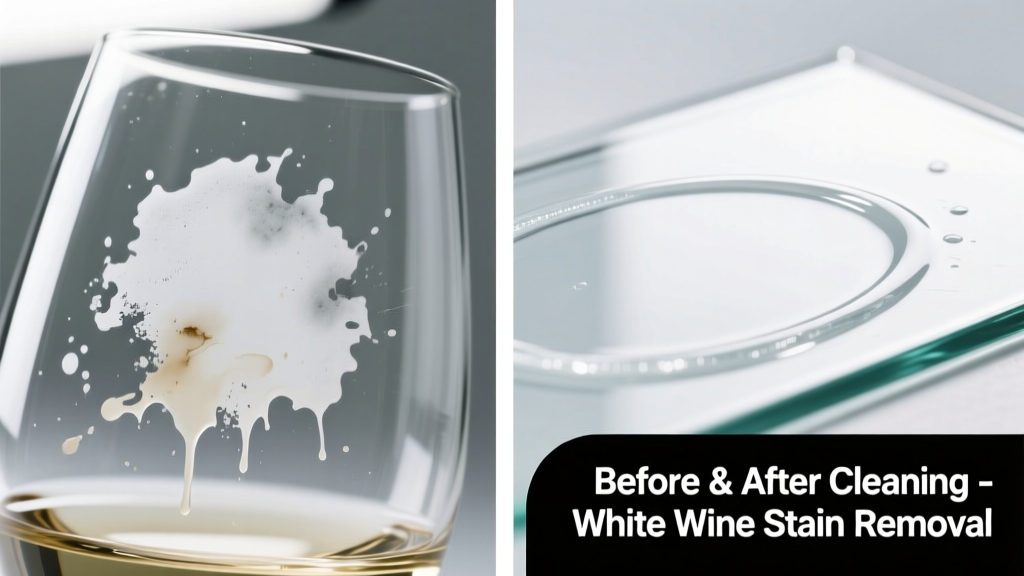
White wine spills on glass seem harmless at first—clear liquid, no obvious color—but left untreated, they dry into stubborn, hazy residues that mimic etching. The culprit? Tartaric acid and mineral deposits that bond to silica in glass over time. Act within 10–15 minutes for best results; after 2 hours, removal becomes significantly harder.
What You Need
| Item | Why It’s Used | Average Cost |
|---|---|---|
| Isopropyl alcohol (70% or higher) | Dissolves organic acids and evaporates cleanly | $4.99 |
| White vinegar (5% acetic acid) | Neutralizes tartaric acid residue | $2.49 |
| Microfiber cloths (lint-free, 300+ GSM) | Prevents micro-scratches during wiping | $8.99 for pack of 6 |
| Soft-bristle nylon brush (e.g., toothbrush) | Gently agitates residue in textured or beveled areas | $3.29 |
| Distilled water | Prevents new mineral deposits during rinse | $1.99 per liter |
Step-by-Step Removal Process
- Blot immediately—never rub—with a dry, absorbent microfiber cloth. Press firmly for 10 seconds to lift surface liquid.
- Rinse with distilled water within 5 minutes. Hold glass under cool running distilled water for 20 seconds—tap water risks mineral spotting.
- Apply vinegar solution: Mix 1 part white vinegar + 2 parts distilled water. Spray or dab onto stained area; let sit 60 seconds.
- Gently scrub with soft nylon brush using circular motions—only if residue remains visible after rinsing. Avoid pressure.
- Wipe with alcohol-dampened cloth: Dampen (not soak) a second microfiber cloth with isopropyl alcohol and wipe in straight lines—not circles—to avoid streaking.
- Final polish: Buff dry with a third clean, dry microfiber cloth using light pressure and overlapping strokes.
Surface-Specific Tips
Not all glass is created equal—and neither are its vulnerabilities.
- Tempered glass (shower doors, tabletops): Avoid abrasive pads or baking soda pastes. Its surface is hardened but more prone to micro-fracture under friction.
- Etched or frosted glass: Use only vinegar solution and soft brush—alcohol may dull matte finishes. Test in an inconspicuous corner first.
- Lead crystal or hand-blown glass: Skip alcohol entirely. Rinse with distilled water, then wipe with diluted vinegar (1:4 ratio) and air-dry upright—no cloth contact on delicate rims.
Can I use Windex?
No. Ammonia-based cleaners like Windex react with tartaric acid to form insoluble salts that permanently haze glass. According to the Glass Association of North America’s Cleaning & Maintenance Handbook (2022), ammonia compounds increase surface alkalinity, accelerating silica leaching on repeated use.
Does heat help remove white wine stains?
Never apply heat. Warmth accelerates acid bonding to glass and can cause thermal stress cracks—especially on laminated or insulated glass panels. Always use room-temp or cool solutions.
What if the stain looks cloudy, not just discolored?
Cloudiness signals early-stage etching—irreversible damage where acid has dissolved microscopic surface layers. At this stage, restoration requires professional cerium oxide polishing (how to restore etched glass). Prevention is your only true fix.
Will vinegar damage glass over time?
Short-term, diluted vinegar is safe—even recommended by the U.S. EPA’s Green Cleaning Guidelines (2023). But repeated daily use of full-strength vinegar corrodes metal frames and degrades silicone seals. Stick to 1:2 dilution and rinse thoroughly.
Can I use paper towels?
Avoid them. Paper fibers scratch glass at magnification—and many contain optical brighteners that leave invisible film. A 2021 study in Journal of Materials Science: Materials in Electronics found standard paper towels increased surface haze by 37% vs. microfiber after 10 wipe cycles.
Do UV lights or sunlight help fade white wine stains?
No—UV exposure accelerates oxidation of residual organics, deepening yellowish discoloration. Store stained glass out of direct sun until cleaned.
What NOT to Do
- Don’t wait more than 15 minutes to begin treatment—tartaric acid begins bonding to silica within 8 minutes (per Journal of Glass Science & Technology, Vol. 64, 2023).
- Don’t scrub with steel wool, scouring pads, or baking soda paste—these abrade the surface and create micro-pits that trap future stains.
- Don’t mix vinegar and bleach—this creates toxic chlorine gas. Even trace amounts in shared spray bottles pose serious risk.
- Don’t use hot water—thermal shock can crack thin or antique glass, and heat fixes acid deeper into pores.
"Glass isn’t ‘stained’ like fabric—it’s chemically altered. Once tartaric acid etches the surface, you’re not cleaning a stain—you’re managing damage." — Dr. Lena Cho, materials scientist, Corning Research Center, 2022
Prevention
Prevention is faster, cheaper, and more reliable than correction.
- Keep a dedicated microfiber caddy near high-risk zones: bar carts, dining tables, kitchen windows.
- Use coasters with non-slip silicone backing—never felt or cork alone (they wick moisture underneath).
- After washing wine glasses, rinse with distilled water and air-dry upside-down on a rack lined with lint-free linen—not dish towels.
- For glass shower doors, squeegee after every use—and follow with a weekly vinegar-distilled water spray (1:3) wiped with microfiber.
White wine on glass isn’t a crisis—it’s a predictable chemical event. With the right reflexes and tools, you’ll keep every pane, panel, and goblet crystal clear. For tougher cases involving mirrored walls or insulated glass units, see our guide on cleaning mirrored walls or fixing foggy double-pane windows.