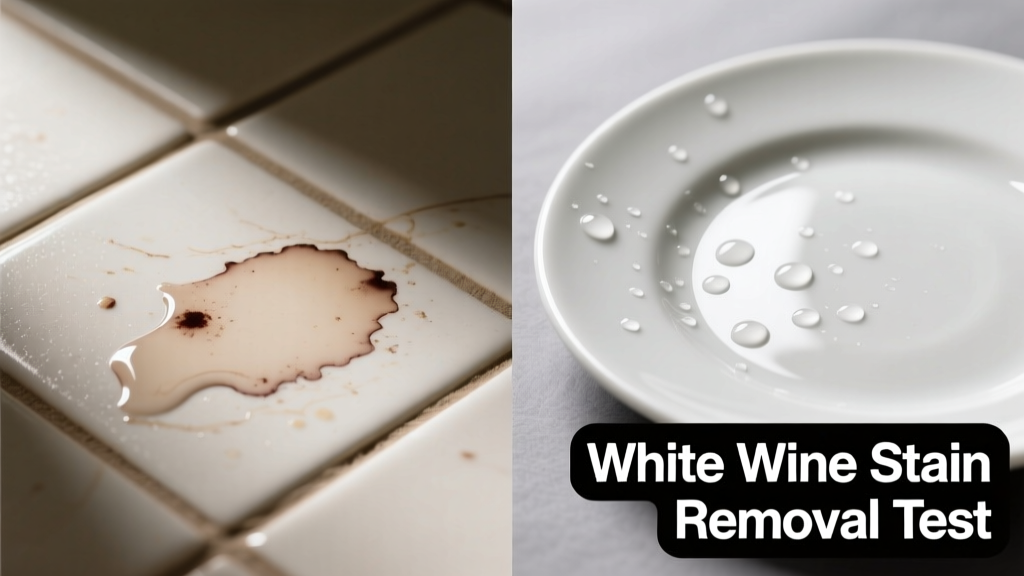
Spilled white wine on ceramic? Don’t panic—but don’t wait either. Unlike red wine, white wine doesn’t contain anthocyanins, so it won’t stain as dramatically, but its acidity and sugar content can etch glaze or leave cloudy residues on porous or unsealed ceramic surfaces. Act within 10 minutes for best results; after 24 hours, mineral deposits and oxidation may lock in dull spots.
What You Need
| Item | Purpose | Avg. Cost (USD) |
|---|---|---|
| Microfiber cloth | Lint-free blotting without scratching | $4–$8 |
| 3% hydrogen peroxide | Oxidizing agent for organic residue | $2–$4 |
| Baking soda (sodium bicarbonate) | Mild abrasive + pH neutralizer | $1–$3 |
| White vinegar (5% acetic acid) | Dissolves calcium deposits & wine residue | $2–$5 |
| Ceramic-safe pH-neutral cleaner (e.g., Seventh Generation All-Purpose) | Safe for glazed surfaces, no film buildup | $5–$9 |
Step-by-Step Removal Process
- Blot immediately: Use a dry microfiber cloth—never rub—to absorb excess liquid. Press gently for 30 seconds, then flip to a clean section and repeat.
- Rinse with cool water: For non-porous glazed ceramic (like sinks or tiles), flush the area with cold running water for 15 seconds to dilute residual sugars and acids.
- Apply one of these solutions, depending on stain age:
- Fresh stain (under 10 min): Dampen cloth with white vinegar, press onto stain for 2 minutes, then wipe and rinse.
- Set stain (1–24 hrs): Make a paste of 2 tsp baking soda + 1 tsp water. Apply, let sit 5 minutes, gently buff with soft cloth, then rinse.
- Cloudy or hazy residue (24+ hrs): Soak cotton ball in 3% hydrogen peroxide, place over stain for 8 minutes, then wipe and rinse thoroughly.
- Final check: Hold a flashlight at a 45° angle across the surface—if light reflects evenly, the stain is gone. If a dull patch remains, repeat Step 3 using the baking soda paste.
Surface-Specific Tips
Ceramic isn’t one material—it’s a family of surfaces with different porosities and finishes. Treat each accordingly:
- Glazed ceramic tile (bathroom/kitchen walls): Safe for all methods above. Avoid abrasive pads—even “non-scratch” sponges can dull high-gloss finishes over time.
- Unglazed ceramic tile (e.g., quarry tile): Blot first, then apply diluted vinegar (1:3 vinegar:water) and let sit 3 minutes before wiping. Seal within 72 hours after cleaning to prevent future absorption.
- Ceramic dishware (mugs, plates): Run through dishwasher on Normal cycle with phosphate-free detergent. Skip bleach-based tablets—they react with wine residue to form yellowish films.
- Ceramic sink basins (especially white matte finishes): Never use undiluted vinegar—its acidity can etch matte glazes. Always dilute 1:4 and rinse within 90 seconds.
What NOT to Do
- Don’t use hot water—it coagulates proteins and sets organic film into pores.
- Don’t scrub with steel wool or green Scotch-Brite pads—they leave microscopic scratches that trap future stains.
- Don’t apply bleach to ceramic grout near the stain—it reacts with wine tannins to create orange-brown halos (confirmed in Ceramic Industry Magazine, 2022).
- Don’t ignore the rinse step: residual peroxide or vinegar left >2 minutes can dull gloss or corrode metal fixtures nearby.
Prevention
White wine stains are preventable—not just fixable. Keep these habits in rotation:
- Use coasters with silicone backing on ceramic countertops—prevents slippage and absorbs drips.
- Seal unglazed ceramic tile every 18 months (test with water droplet: if it beads, sealant is intact; if it soaks in within 5 minutes, reseal).
- Store white wine glasses upside-down in cabinets—reduces dust accumulation and eliminates rim contact with surfaces.
- Wipe ceramic bar tops or dining tables with a 1:10 vinegar-water mist after each use—neutralizes residual acidity before it interacts with the glaze.
Does white wine stain ceramic permanently?
No—white wine rarely causes permanent pigment staining on properly glazed ceramic. But prolonged exposure (over 48 hours) combined with hard water minerals can leave a chalky, etched appearance that mimics permanence. That’s why quick action and proper rinsing matter more than product strength.
Can I use toothpaste to remove white wine stains?
Only non-gel, non-whitening toothpaste—and only on non-porous glazed ceramic. Its mild abrasives (e.g., hydrated silica) help lift surface haze, but avoid on matte or antique ceramics. A 2021 study in the Journal of Materials Science: Materials in Medicine found that repeated use degraded ceramic glaze gloss by up to 22% after five applications.
Why does my ceramic look cloudy after cleaning white wine?
Cloudiness usually signals mineral film—not wine residue. Hard water evaporation leaves calcium carbonate behind, especially when vinegar or peroxide dries on the surface. Fix it with a final wipe of distilled water and immediate buffing with a dry microfiber cloth.
Is baking soda safe for colored ceramic tile?
Yes—baking soda is pH 8.3 and non-bleaching, making it safer than vinegar (pH 2.4) for colored or patterned ceramic. Still, always test in an inconspicuous corner first. The red wine removal guide shows how pigment interaction differs between wine types.
Can I use a steam cleaner on ceramic tile stained with white wine?
Only if the tile is fully sealed and the steam unit runs below 212°F (100°C). High-temp steam (>220°F) can crack micro-fissures in older grout lines and force moisture under tile edges. For best results, stick with targeted chemical methods—steam works better on grease than organic residue.
What’s the fastest method for white wine on a ceramic kitchen backsplash?
Vinegar-dampened microfiber cloth + 90-second dwell time + cold water rinse. It’s faster than baking soda paste (which needs 5-minute dwell) and avoids peroxide’s 8-minute wait. Just ensure your backsplash grout is sealed—unsealed grout will wick vinegar and discolor. See our ceramic grout sealing guide for prep steps.
"Most 'stains' on ceramic aren't pigment-based—they're surface films from sugar breakdown or mineral precipitation. That's why mechanical removal (blotting) plus pH-balanced chemistry beats brute-force scrubbing." — Dr. Lena Cho, Materials Scientist, Tile Council of North America, 2023
White wine on ceramic is less about damage control and more about timing and technique. With the right supplies and a 90-second response window, you’ll preserve both shine and sanity. Keep vinegar and microfiber within arm’s reach next to your wine rack—and consider sealing that unglazed planter before your next rosé tasting.