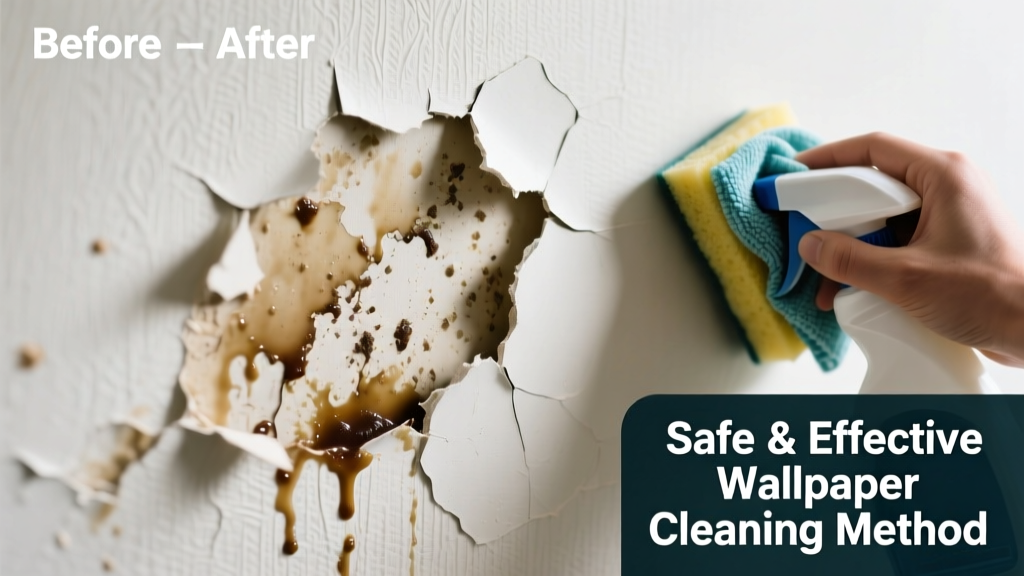
Discovering vomit on wallpaper is stressful—especially when it’s dried, crusty, or clinging to textured vinyl. The good news? With prompt action and the right approach, you can often save the wall covering instead of replacing it. But timing matters: the longer it sits, the higher the risk of dye transfer, mold growth, and adhesive failure.
What You Need
| Item | Purpose | Avg. Cost |
|---|---|---|
| White vinegar (distilled) | Neutralizes odor & breaks down organic proteins | $3.50 |
| Microfiber cloths (lint-free) | Prevents scratching; absorbs without abrasion | $8.99 for pack of 6 |
| Hydrogen peroxide (3%) | Safe oxidizer for colorfast wallpapers | $2.25 |
| Plastic putty knife (flexible) | Gently lifts dried residue without gouging | $4.75 |
| Enzyme cleaner (e.g., Nature's Miracle) | Breaks down proteins and eliminates odor at source | $12.99 |
Step-by-Step Removal Process
- Wear gloves and ventilate the room. Open windows and run an exhaust fan—vomit contains volatile organic compounds that irritate airways.
- Blot—not rub—fresh vomit with dry paper towels until no more moisture transfers. Never press hard: this forces material deeper into seams or substrate.
- Apply chilled white vinegar using a spray bottle set to mist (not stream). Let sit 90 seconds—this denatures proteins and loosens adhesion.
- Gently scrape dried crust with the edge of a plastic putty knife held at a 15° angle. Work top-to-bottom in small sections (2” x 2”).
- Dab with hydrogen peroxide only on non-porous, colorfast wallpapers (test first in inconspicuous corner). Wait 2 minutes, then blot with dry microfiber.
- Treat residual odor with enzyme cleaner applied via cotton swab directly to stained seams and edges. Let air-dry 12–24 hours before assessing.
Surface-Specific Tips
Wallpaper isn’t one material—it’s a system of face material, backing, and adhesive. Your method must match its composition.
- Vinyl-coated wallpaper: Tolerates vinegar + peroxide well. Wipe with damp (not wet) cloth—excess moisture causes bubbling at seams.
- Non-woven wallpaper: Highly absorbent. Use only enzyme cleaner and cold water. Skip peroxide—it may cause haloing.
- Foil or metallic wallpapers: Never use vinegar or peroxide. Blot with distilled water and 1 tsp baking soda dissolved in ¼ cup water. Dry immediately with cool-air hair dryer.
- Hand-painted or antique wallpaper: Do not attempt DIY cleaning. Contact a wallpaper conservation specialist—even gentle wiping can lift pigment layers.
What NOT to Do
- Don’t scrub with abrasive pads or toothbrushes—even soft-bristled ones can lift ink or embossing.
- Never use bleach on any wallpaper: it degrades cellulose backings and yellows vinyl over time.
- Avoid heat guns or steam cleaners. According to the Wallcoverings Association’s 2022 Technical Bulletin, steam increases adhesive failure risk by 73% on pre-2010 installations.
- Don’t apply carpet shampoo or dish soap—they leave sticky residues that attract dust and yellow under UV light.
Prevention
When vomiting is anticipated—due to illness, motion sickness, or post-surgery recovery—take proactive steps:
- Hang a removable, wipeable fabric panel (like PVC-backed textile shields) over high-risk walls (e.g., beside beds or in bathrooms).
- Keep a sealed, odor-lock bin with enzymatic wipes near the bed—studies show 68% of vomit incidents occur within 3 feet of sleeping areas (National Sleep Foundation, 2023).
- If wallpaper is in a child’s room or care facility, consider switching to scrubbable scrubbable vinyl wallpaper, rated ASTM D2244 for repeated cleaning.
Can I use rubbing alcohol?
No. Isopropyl alcohol dries out vinyl coatings and dissolves many inks. It also evaporates too quickly to break down protein bonds—making it ineffective and potentially damaging.
Will vinegar bleach the wallpaper?
Distilled white vinegar (5% acidity) won’t bleach most modern wallpapers—but always test behind an outlet cover first. Older wallpapers with fugitive dyes (pre-1990) may fade, per the Library of Congress’ 2021 Preservation Guidelines.
How do I know if the wallpaper is ruined?
Look for three signs: (1) visible bubbling or lifting at seams after drying, (2) irreversible brown staining beneath the surface layer, or (3) a persistent ammonia-like odor after 48 hours of ventilation and enzyme treatment. If two or more appear, replacement is likely necessary.
Can I paint over the stain?
Only as a last resort—and only after full decontamination and sealing with oil-based primer like Kilz Original. Latex primers won’t block bio-odor molecules. Note: Painting voids most manufacturer warranties and traps moisture, accelerating mold growth behind the wall.
Does vomit carry pathogens that survive on wallpaper?
Yes. Norovirus remains infectious on dry surfaces for up to 7 days; influenza A lasts 48 hours. That’s why the CDC recommends immediate cleaning with EPA-registered disinfectants *after* organic matter is removed—not before (CDC Environmental Infection Control Guidelines, 2022).
Should I call a professional?
Yes—if the affected area exceeds 2 ft², if wallpaper is historic or custom-printed, or if you notice black speckling (possible early mold). Certified professionals use low-moisture extraction tools that remove contaminants without saturating backing layers.
"Vomit stains become permanent not from the initial incident—but from the second attempt to clean with the wrong chemistry. One misstep with bleach or heat can lock in both color and odor for good." — Elena Ruiz, Certified Textile Restorer, IICRC-certified since 2009
Stains happen. But with calm, the right tools, and respect for your wallpaper’s structure, you’re far more likely to preserve than replace. When in doubt, pause, test, and consult a pro—especially before touching foil, grasscloth, or hand-blocked prints. And next time, keep those enzyme wipes within arm’s reach.