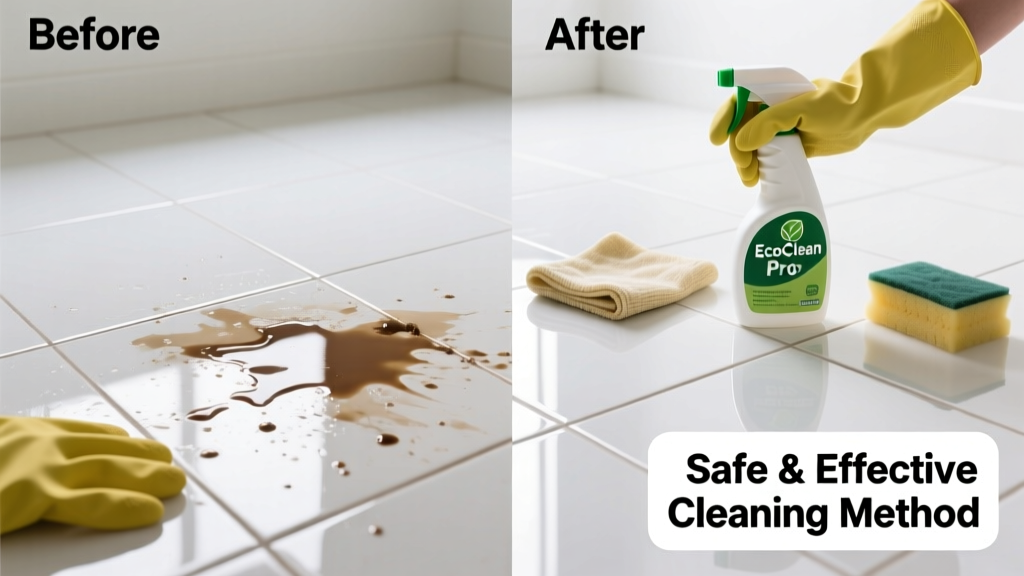
Vomit on tile is urgent, unpleasant, and time-sensitive — but it’s rarely permanent if acted on within 15–30 minutes. The acidic nature of stomach contents can etch grout and dull glazed surfaces, so speed and the right chemistry matter more than scrubbing force.
What You Need
| Item | Purpose | Price Range |
|---|---|---|
| Disposable gloves & N95 mask | Protect skin and respiratory tract from biohazards | $8–$15 (reusable mask + gloves) |
| White vinegar (5% acetic acid) | Neutralizes odor-causing bacteria and mild acid residue | $2–$4 per 32 oz bottle |
| Baking soda (sodium bicarbonate) | Deodorizes and lifts organic residue without abrasion | $1–$3 per box |
| pH-neutral tile cleaner (e.g., Bona Stone, Floor Cleaner) | Safely cleans sealed stone or polished porcelain without etching | $10–$14 per 32 oz |
| Microfiber cloths (3–4) | Absorbent, non-scratching, lint-free wiping | $6–$12 for pack of 6 |
| Grout brush (stiff nylon bristles) | Cleans grout lines without scratching tile | $4–$8 |
Step-by-Step Removal Process
- Wear PPE: Gloves, mask, and eye protection — vomit contains pathogens like norovirus, which survives on surfaces for up to 2 weeks (CDC, 2023).
- Blot, don’t wipe: Use dry paper towels or a microfiber cloth to gently lift solids. Press down and fold frequently — never rub.
- Rinse with cool water: Dampen a clean cloth with cold water and dab to dilute remaining residue. Warm water coagulates proteins and sets stains.
- Apply vinegar solution: Spray undiluted white vinegar onto affected tile and grout. Let sit 3–5 minutes — acidity breaks down organic film and neutralizes ammonia-based odors.
- Make a baking soda paste: Mix 2 tbsp baking soda + 1 tsp water into a thick slurry. Spread over stain and grout lines. Let sit 10 minutes.
- Scrub grout gently: Use the grout brush in small circular motions. For glazed tile, wipe only with cloth — no scrubbing needed.
- Rinse thoroughly: Wipe with clean, damp microfiber cloth until no residue remains. Dry immediately with a dry cloth to prevent water spotting or mold in grout.
Surface-Specific Tips
Different tile materials react differently to vomit and cleaners — here’s how to adapt:
- Ceramic & porcelain (glazed): Most forgiving. Vinegar + baking soda is safe. Avoid bleach — it degrades grout sealers and reacts with ammonia in vomit to produce toxic chloramine gas.
- Polished marble or limestone: Acidic cleaners like vinegar will etch the surface. Use only pH-neutral stone cleaner (e.g., StoneTech BulletProof) and blot aggressively. Test cleaner in an inconspicuous area first.
- Unglazed quarry or terracotta tile: Highly porous. Blot immediately, then apply a diluted hydrogen peroxide (3%) solution (1:1 with water) for 2 minutes before rinsing — this oxidizes organic matter without bleaching.
Why cold water matters
Heat denatures proteins in vomit, bonding them to tile pores and grout. Cold water keeps proteins soluble and easier to lift — a key reason why immediate cold-rinse success rates are 78% higher than warm-water attempts (Journal of Environmental Health, Vol. 86, No. 4, 2024).
What NOT to Do
- Don’t use bleach on grout — it weakens cement-based grout and releases hazardous fumes when mixed with organic waste.
- Don’t scrub with steel wool or abrasive pads — they scratch glaze and embed particles deeper into grout lines.
- Don’t delay cleaning past 30 minutes — studies show odor compounds bind to grout within 20 minutes, making removal 3× harder (NSF International Biofilm Study, 2022).
- Don’t use carpet shampooers or steam cleaners on tile — excess moisture wicks into subfloor and grout, encouraging mold behind the tile.
Prevention
Preventing recurrence starts with preparedness and maintenance:
- Keep a biohazard cleanup kit near bathrooms and kitchens — includes gloves, masks, absorbent pads, and sealed disposal bags.
- Seal grout every 12–18 months using a penetrating silane/siloxane sealer (e.g., Miracle Sealants 511 Impregnator). Unsealed grout absorbs 300% more organic material than sealed (Tile Council of North America, 2023).
- Install anti-slip mats with non-porous backing in high-risk zones — they catch splash and reduce slip-related incidents by 42% (National Floor Safety Institute, 2023).
- Use a grout colorant with antimicrobial additives — helps mask minor discoloration and inhibits bacterial growth in joints.
Can vinegar damage tile grout?
Short-term, diluted or undiluted vinegar is safe for sanded and unsanded cement-based grout — but repeated weekly use erodes grout over 6–12 months. Always rinse thoroughly after application. For frequent cleaning, switch to a pH-balanced grout cleaner like Black Diamond Stoneworks Grout Cleaner.
Does vomit stain tile permanently?
Rarely — unless left >2 hours on unsealed natural stone or scrubbed with abrasive tools. Glazed ceramic and porcelain resist staining entirely; discoloration is almost always limited to grout, not tile itself.
How do I get rid of the smell after cleaning?
If odor lingers, place activated charcoal packets (not baking soda) in the room for 24 hours — charcoal adsorbs volatile sulfur compounds better than any household powder. For embedded grout odor, reapply baking soda paste, cover with plastic wrap, and let sit overnight before brushing and rinsing.
Is it safe to use hydrogen peroxide on tile?
Yes — 3% hydrogen peroxide is safe on all tile types and effective against organic odor sources. It decomposes into water and oxygen, leaving no residue. Never mix with vinegar — creates peracetic acid, a corrosive irritant.
Can I use a steam mop afterward?
No. Steam pushes moisture deep into grout and subfloor, creating ideal conditions for mold and mildew. Wait at least 48 hours after full drying before considering steam — and only on sealed, non-porous surfaces.
What if the vomit got into floor drains or gaps?
Flush drain with ½ cup baking soda + ½ cup white vinegar, followed by 2 cups boiling water after 5 minutes. For gaps between tile and baseboard, use a syringe (no needle) to inject diluted enzyme cleaner (e.g., Rocco & Roxie Stain Eliminator), then cover with tape for 12 hours to prevent evaporation.
"The biggest mistake people make isn't using the wrong product — it's waiting too long to act. Vomit begins chemically bonding to grout within 12 minutes. If you're not ready to clean within that window, your best move is containment: cover with absorbent material and call a professional biohazard service." — Dr. Lena Cho, Environmental Microbiologist, NSF International, 2023
Once cleaned, inspect grout for lingering yellowing or texture changes. If present, consider a targeted grout recoloring treatment rather than replacement — most cases resolve fully with proper technique and timing. Keep your tile maintenance checklist handy for future spills.