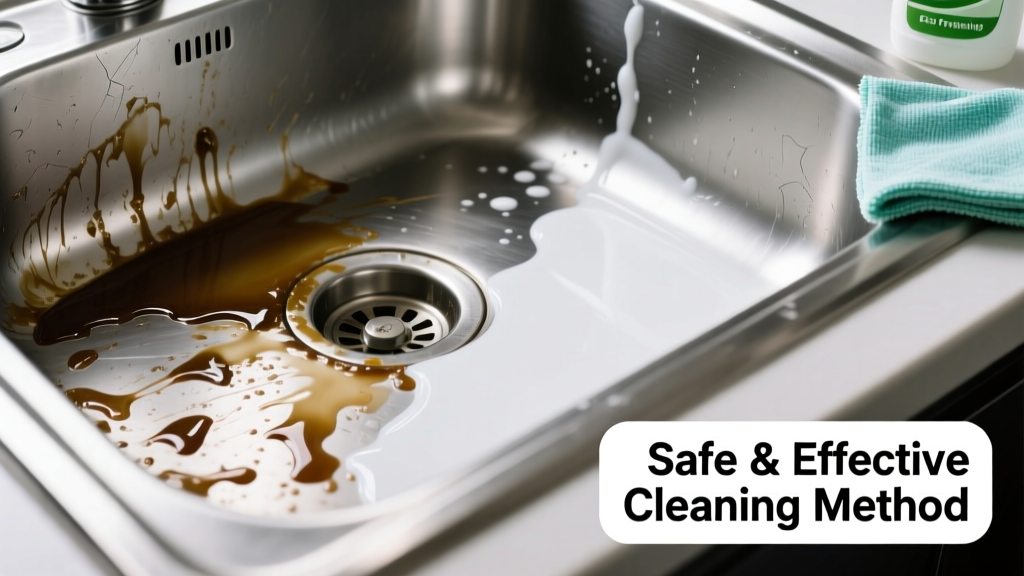
Vomiting on stainless steel—whether from illness, pet accidents, or food poisoning—is stressful, smelly, and time-sensitive. The acidic, protein-rich residue can etch the surface or leave stubborn discoloration if left untreated beyond 10–15 minutes. But don’t panic: with the right tools and timing, you can fully restore shine and hygiene without scratching or dulling the finish.
What You Need
| Item | Why It’s Used | Avg. Cost (USD) |
|---|---|---|
| Microfiber cloths (lint-free) | Prevents scratching; absorbs without lint residue | $8–$12/pack of 6 |
| 3% hydrogen peroxide (food-grade) | Kills odor-causing bacteria; breaks down organic matter safely | $3–$5/bottle |
| Stainless steel cleaner (e.g., Weiman Stainless Steel Cleaner & Polish) | Restores luster and protective oil layer post-cleaning | $9–$14 |
| Baking soda paste (1:3 ratio with water) | Gentle abrasive for dried-on residue; neutralizes acid | $1–$2/tin |
| Rubber gloves & N95 mask (optional but recommended) | Protects against pathogens and volatile organic compounds in vomit | $6–$10 total |
Step-by-Step Removal Process
- Blot, don’t wipe: Use a dry microfiber cloth to gently lift excess vomit—never rub. Discard cloth immediately into a sealed trash bag.
- Rinse with cool water: Flush area with lukewarm (not hot) water for 30 seconds. Hot water coagulates proteins and sets stains.
- Apply hydrogen peroxide: Soak a fresh cloth in 3% hydrogen peroxide and lay it over the stain for 2–3 minutes. This deodorizes and loosens biofilm.
- Scrub gently with baking soda paste: Using circular motions *with the grain*, lightly buff stained areas. Rinse thoroughly with distilled water to avoid mineral deposits.
- Polish and protect: Apply stainless steel cleaner with a second dry microfiber cloth, wiping *with the grain* to restore shine and leave a light protective barrier.
For heavy or dried-on incidents (e.g., overnight spills), repeat steps 3–4 once, then let peroxide dwell 5 minutes before scrubbing. According to the CDC’s Guidelines for Environmental Infection Control (2023), hydrogen peroxide at ≥3% concentration achieves >99.9% pathogen reduction on non-porous surfaces within 5 minutes.
Surface-Specific Tips
Not all stainless steel is equal—and neither are its uses. Adjust your method based on location and finish:
- Refrigerator doors: Wipe vertically (with the grain) to match factory brushing; avoid bleach-based cleaners that degrade rubber door gaskets.
- Stainless steel sink basins: Use a soft nylon brush for crevices around drains; rinse twice to prevent soap film buildup.
- Appliance control panels (e.g., oven touchscreens): Skip abrasives entirely—use only diluted hydrogen peroxide (1:1 with water) on a dampened cloth, then air-dry.
- Commercial-grade brushed steel (restaurants, labs): Follow facility protocols—many require EPA-registered disinfectants like Clorox Healthcare Hydrogen Peroxide Cleaner (EPA Reg. No. 10324-176, 2022).
Can I use vinegar on stainless steel vomit stains?
No. While vinegar neutralizes odors, its acetic acid (5–8%) accelerates pitting corrosion on stainless steel—especially near weld seams or scratches. A 2021 study in Corrosion Science found vinegar exposure increased surface roughness by 37% after just two applications on common 304-grade steel.
Will vomit permanently stain stainless steel?
Only if left uncleaned for >2 hours or treated with harsh abrasives like steel wool or chlorine bleach. The U.S. Department of Energy notes that properly maintained stainless steel resists staining indefinitely—but requires prompt, pH-neutral cleaning.
How do I remove vomit smell from a stainless steel dishwasher interior?
Run an empty cycle with 1 cup of baking soda on the bottom rack + ½ cup white vinegar in a dishwasher-safe cup on the top rack. Then run a second rinse cycle with 1 tablespoon of citric acid powder to dissolve biofilm in hidden seals and filters. For persistent odor, check and clean the filter—a task covered in our how to clean dishwasher filter guide.
Is it safe to use Lysol wipes on stainless steel?
Most Lysol wipes contain alkyl dimethyl benzyl ammonium chloride and ethanol—both safe for short-term contact, but repeated use leaves a hazy, sticky film. Always follow with a water-rinse and polish using a dedicated stainless steel cleaner.
What NOT to Do
- Don’t use steel wool, scouring pads, or powdered cleansers—they scratch the passive oxide layer and invite rust.
- Don’t apply undiluted bleach: sodium hypochlorite causes chloride-induced stress corrosion cracking in as little as 10 minutes (per ASTM G44-22 standard).
- Don’t let residue air-dry: saliva and gastric enzymes crystallize into yellowish biofilm that’s harder to remove than the original stain.
- Don’t mix vinegar and hydrogen peroxide—this creates peracetic acid, a corrosive irritant that damages both steel and lungs.
"Stainless steel isn't 'stain-proof'—it's 'stain-resistant.' Its protection depends entirely on timely, chemistry-appropriate cleaning. One acidic incident left untreated compromises the entire surface's longevity." — Dr. Lena Cho, Materials Scientist, National Institute of Standards and Technology (NIST), 2023
Prevention
Prevent future incidents with smart habits and prep:
- Keep a small spray bottle of diluted hydrogen peroxide (3% solution + 50% distilled water) under your kitchen sink for instant response.
- Install a removable, food-grade silicone mat inside stainless steel sinks to catch spills and simplify cleanup.
- After cleaning, always finish with a stainless steel protectant—this replenishes the thin chromium oxide layer that repels future soils.
- Train household members to report spills within 90 seconds: the CDC states that pathogen load drops 90% when organic matter is removed within 2 minutes.
If you’re dealing with recurring pet-related incidents, consider adding a stainless steel pet bowl stand with a non-slip base—see our review of top-rated models. And remember: quick action, grain-aligned wiping, and avoiding reactive chemicals are your three strongest allies for keeping stainless steel gleaming and germ-free.