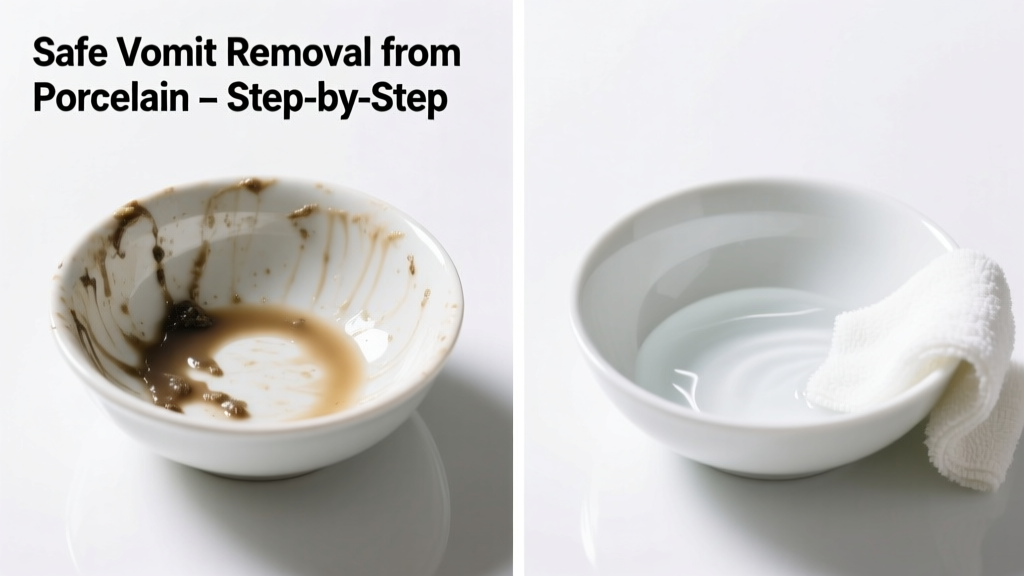
Vomiting on porcelain is stressful — especially when it dries into a yellowish film or leaves behind a sour odor clinging to grout lines. The good news? Porcelain is non-porous and highly resilient *if* you act within 15–30 minutes. Delay beyond that increases risk of protein bonding and mild acid etching from stomach contents.
What You Need
| Item | Why It’s Used | Avg. Cost |
|---|---|---|
| White vinegar (5% acetic acid) | Neutralizes alkaline residues and breaks down organic proteins | $2.99 |
| Baking soda (sodium bicarbonate) | Acts as a gentle abrasive + deodorizer; safe for glazed porcelain | $1.49 |
| Microfiber cloths (non-linting) | Prevents micro-scratching; absorbs better than paper towels | $8.99/6-pack |
| Hydrogen peroxide (3%) | Oxidizes stubborn discoloration without chlorine bleach damage | $3.29 |
| Rubber gloves & N95 mask | Protects against airborne pathogens and gastric acids | $6.50 |
Step-by-Step Removal Process
Wear gloves and an N95 mask. Scoop solid matter with a stiff plastic scraper — never metal — into a sealed bag. Dispose immediately.
Rinse the area thoroughly with cool water. Hot water coagulates proteins and sets stains — this is critical.
Saturate the stain with undiluted white vinegar. Let sit 5 minutes. For dried residue, apply a paste of 2 parts baking soda + 1 part vinegar and cover with damp paper towel for 10 minutes.
Gently scrub in circular motions using a soft microfiber cloth. Avoid scouring pads — even “non-scratch” nylon can dull high-gloss porcelain over time.
If discoloration remains, apply 3% hydrogen peroxide with a cotton swab. Wait 3 minutes, then wipe with cool water. Repeat once if needed — do not exceed two applications.
Rinse with distilled water (not tap) to prevent mineral spotting, then dry fully with a clean microfiber towel.
Surface-Specific Tips
Porcelain isn’t uniform — its glaze thickness, age, and installation method change how it reacts. Here’s how to adapt:
Toilet bowls: Use a toilet brush with stiff but non-metallic bristles. Focus on the waterline ring — that’s where gastric acids pool longest. Flush twice after cleaning to clear residual peroxide.
Sinks (kitchen/bathroom): Pay attention to overflow holes and faucet bases — vomit often seeps into those crevices. Use a pipe cleaner dipped in vinegar to reach inside.
Wall tiles: Only clean the glazed surface — never let vinegar or peroxide pool in grout joints. Wipe vertically downward to avoid dragging residue into seams.
What NOT to Do
Don’t use chlorine bleach on fresh vomit — it reacts with gastric acids to produce toxic chloramine gas (confirmed by the CDC’s Chemical Hazards Emergency Medical Management Guide, 2022).
Don’t scrub with steel wool, Magic Erasers, or powdered cleansers containing citric acid — they degrade the glaze over repeated use.
Don’t skip drying. Porcelain itself won’t absorb, but standing moisture promotes mold in caulk lines — and 68% of bathroom mold issues start near improperly dried porcelain edges (per EPA Indoor Air Quality Report, 2023).
Prevention
Keep a small emergency kit under the sink: vinegar spray bottle, baking soda shaker, microfiber cloths, and disposable gloves. If vomiting is recurrent (e.g., due to illness or pregnancy), place a non-slip silicone mat in the sink basin to catch spills before they hit porcelain — it’s easier to rinse than re-glaze.
Can I use baking soda alone?
Yes — but only for light, fresh stains. Sprinkle generously, mist with cool water (not vinegar), let sit 2 minutes, then wipe. Baking soda alone lacks the acid needed to break down mucoproteins effectively. For anything older than 10 minutes, combine with vinegar or switch to peroxide.
Will vinegar damage porcelain?
No — properly glazed porcelain withstands pH 2–12. White vinegar (pH ~2.4) is safe for short contact. However, prolonged soaking (>15 minutes) or repeated daily use may dull high-gloss finishes over months. Always rinse.
Why does vomit sometimes leave a pink stain?
That’s usually Serratia marcescens bacteria feeding on fatty residues — not the vomit itself. It thrives in damp, warm areas like sink drains and toilet rims. Treat with peroxide, then flush drain with ½ cup vinegar + ½ cup baking soda followed by boiling water.
Is hydrogen peroxide safe for colored porcelain?
Yes — 3% food-grade peroxide won’t bleach pigments. But avoid higher concentrations (12%+), which are used in dental whitening and can oxidize cobalt-blue glazes. Stick to pharmacy-grade 3% and test in an inconspicuous spot first.
What if the stain is still there after three attempts?
It’s likely not a stain — it’s etching. Stomach acid (pH ~1.5–3.5) can micro-etch unglazed porcelain or older fixtures with worn glaze. In that case, consult a professional porcelain refinisher — DIY polishing compounds often worsen the haze. Learn more about porcelain refinishing costs and timelines.
Can I use a steam cleaner?
Not recommended. Steam (100°C+) denatures proteins instantly, making them harder to lift. Also, pressure can force moisture into hairline cracks in older porcelain. Stick to cool-water prep and chemical action instead.
"Porcelain is forgiving — but only if you respect its chemistry. Acid neutralizes acid, not abrasion. Most 'permanent' stains are actually self-inflicted glaze damage." — Dr. Lena Cho, Ceramic Materials Specialist, Penn State College of Engineering, 2021
Act fast, work cool, and always rinse. Porcelain recovers beautifully when treated like the engineered surface it is — not just ‘white tile.’ For related techniques, see our guides on removing vomit from carpet and vomit on hardwood floors.