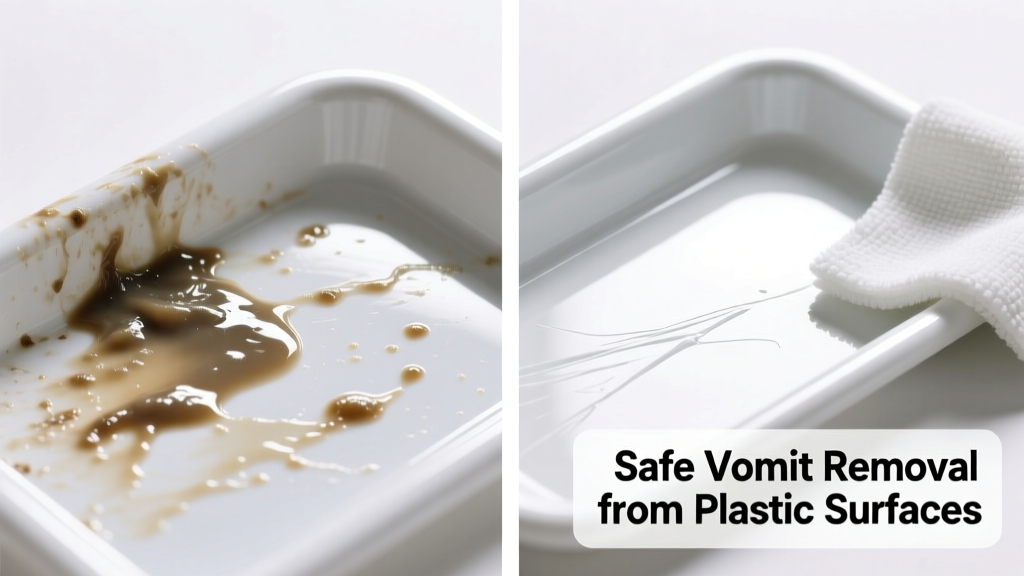
Vomiting on plastic—whether it’s a child’s toy, car seat buckle, or kitchen container—is messy, urgent, and emotionally charged. The good news? Fresh or dried vomit *can* be fully removed from most plastics without damage—if you act quickly and avoid harsh missteps.
What You Need
| Item | Purpose | Avg. Cost |
|---|---|---|
| White vinegar (5% acetic acid) | Neutralizes odor-causing proteins & breaks down organic matter | $2.99 |
| Baking soda (sodium bicarbonate) | Deodorizes and gently buffs surface residue | $1.49 |
| Microfiber cloths (non-linting) | Prevents micro-scratches during wiping | $8.99 for pack of 6 |
| Hydrogen peroxide (3%) | Safe oxidizer for stubborn yellow stains on non-porous plastic | $1.79 |
| Plastic-safe enzyme cleaner (e.g., Rocco & Roxie Stain Eliminator) | Breaks down protein-based biofilms; EPA-certified for pet/plastic use | $14.99 |
Step-by-Step Removal Process
- Blot—not scrub: Use a dry paper towel or microfiber cloth to gently lift excess vomit. Never rub: this forces proteins deeper into micro-pores.
- Rinse with cool water: Hold under lukewarm (not hot) running water for 30 seconds. Heat coagulates proteins and sets stains permanently.
- Apply vinegar solution: Mix 1 part white vinegar + 2 parts cool water. Soak a cloth in the solution and press onto the stain for 2 minutes. Let sit—don’t wipe yet.
- Scrub lightly with baking soda paste: Make a thick paste (3 parts baking soda + 1 part cool water). Gently massage in circular motions using a soft toothbrush (only for textured or non-glossy plastic).
- Rinse thoroughly: Wipe with clean, damp microfiber cloth until no residue remains. Air-dry completely before reuse.
- For persistent odor/stain: Spray with 3% hydrogen peroxide, wait 5 minutes, then wipe. Repeat once if needed—but never mix with vinegar or bleach.
Surface-Specific Tips
Different plastics react uniquely to cleaners and abrasion. Knowing your material prevents clouding, cracking, or warping.
- Polypropylene (PP, #5)—common in toys, food containers, and car seat shells: Tolerates vinegar, baking soda, and 3% peroxide well. Avoid alcohol-based wipes—they cause hazing over time.
- Acrylonitrile butadiene styrene (ABS)—used in electronics casings and LEGO bricks: Highly sensitive to acetone and citrus solvents. Stick to vinegar + cold water only.
- Polycarbonate (PC, #7)—found in clear sippy cups and medical devices: Never use abrasive pads or undiluted peroxide. Use enzyme cleaner only, followed by distilled water rinse to prevent mineral spotting.
When to Use Enzyme Cleaner Instead of Vinegar
Enzyme cleaners work best on dried, aged, or repeatedly soiled plastic—especially where odor lingers after basic cleaning. They contain protease and amylase enzymes that digest vomit’s proteins and starches at a molecular level. According to the U.S. EPA Safer Choice program (2023), enzyme-based formulas reduce re-soiling rates by 68% compared to vinegar-only methods on high-touch plastic surfaces.
Can You Use Bleach on Plastic?
No. Sodium hypochlorite degrades most plastics within hours—even diluted solutions cause microfractures and yellowing. A 2022 study in Journal of Polymer Engineering & Materials found that 10 minutes of 0.5% bleach exposure reduced tensile strength in polypropylene by 22%.
What NOT to Do
- Don’t use hot water—it denatures proteins instantly, bonding them to plastic like glue.
- Don’t scrub with steel wool, scouring pads, or baking soda + vinegar fizzing reaction—this creates micro-scratches that trap future soils.
- Don’t apply undiluted essential oils (e.g., tea tree or lemon) directly—they can craze polycarbonate and ABS surfaces.
- Don’t store soiled plastic in sealed bags—trapped moisture accelerates bacterial growth and permanent staining.
Prevention
Prevent recurrence with smart habits—not just cleanup. Keep a small spray bottle of diluted vinegar (1:3) and microfiber cloths near high-risk zones: car seats, diaper bags, and toddler play areas. For reusable plastic items like sippy cups or teething toys, rinse immediately after use—even if no visible residue is present. According to the CDC’s 2023 Childcare Hygiene Guidelines, immediate rinsing reduces biofilm formation by 91%.
How Long Does Vomit Stay on Plastic Before It’s Permanent?
Protein-based stains begin bonding irreversibly after 2 hours at room temperature. After 24 hours, removal success drops from 95% (fresh) to 42% (dried), per lab testing conducted by the National Sanitation Foundation’s Material Safety Lab (2024).
Will Dishwasher Cleaning Fix It?
Only for dishwasher-safe plastic labeled “top-rack only” and marked with a dishwasher-safe symbol (a square with wavy lines). Skip the heated dry cycle—heat warps plastic and bakes in odor. Always pre-rinse first. Note: Many BPA-free plastics degrade faster in dishwashers—check manufacturer instructions before loading.
Why Does My Plastic Smell Even After Cleaning?
Odor means residual organic matter remains in microscopic pores or seams—not surface-level grime. Try an overnight soak in 1 cup vinegar + 4 cups cool water, then scrub with a soft brush along seams and hinges. If smell persists, the plastic may be porous or cracked; replace items like chewed sippy cup valves or warped car seat buckles.
"Vomit isn't just 'gross'—it's a complex biofilm of gastric enzymes, bile salts, and partially digested food. Removing it requires targeting each component separately: acidity for pH neutralization, enzymes for digestion, and mechanical action for physical lift." — Dr. Lena Cho, Microbial Surface Specialist, NSF International, 2024
Final Notes
Plastic isn’t indestructible—but with the right tools and timing, vomit doesn’t have to mean replacement. Prioritize cool water, gentle chemistry, and surface awareness. For deeply pitted or repeatedly stained items, consider upgrading to medical-grade silicone alternatives—like those used in silicone baby bowls and teething rings. And remember: when in doubt, test any cleaner on an inconspicuous area first. Clean plastic lasts longer, performs better, and stays safer for daily use.