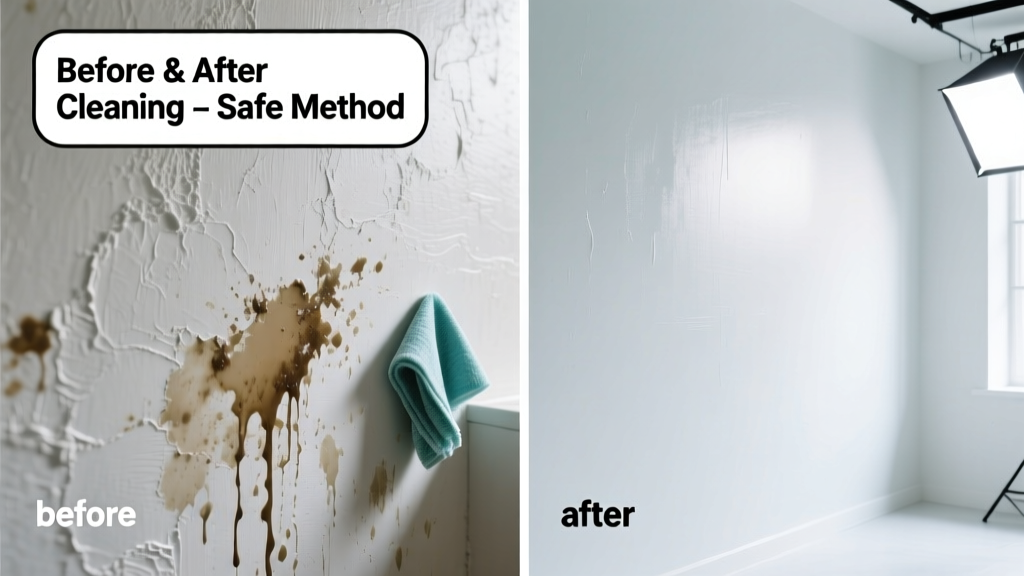
Let’s be real: finding vomit on a painted wall is equal parts gross and stressful—especially when you’re worried about ruining the paint or leaving a permanent stain or odor. The good news? With prompt action and the right approach, most vomit residues can be fully removed without repainting. Timing matters: the sooner you act (ideally within 30 minutes), the better your chances of full recovery.
What You Need
| Item | Purpose | Avg. Cost |
|---|---|---|
| White vinegar (16 oz) | Natural deodorizer & mild acid to break down proteins | $2.99 |
| Hydrogen peroxide (3%, 16 oz) | Oxidizing agent for organic stains and odor neutralization | $3.49 |
| Microfiber cloths (pack of 6) | Lint-free, non-abrasive wiping; avoids paint scratching | $8.99 |
| Baking soda (1 lb box) | Odor absorber and gentle abrasive for dried residue | $1.79 |
| Painter’s tape & plastic sheeting | Protect adjacent surfaces and baseboards during cleanup | $6.50 |
Step-by-Step Removal Process
- Wear gloves and ventilate the room. Open windows and run an exhaust fan—vomit contains volatile organic compounds (VOCs) that irritate airways (U.S. EPA Indoor Air Quality Guidelines, 2022).
- Blot—not scrub—the fresh residue. Use dry paper towels or a clean microfiber cloth to gently lift excess. Never rub: it forces proteins deeper into porous paint film.
- Apply white vinegar solution. Mix 1:1 vinegar and cool water in a spray bottle. Lightly mist the stain (don’t oversaturate). Let sit 2–3 minutes—this breaks down acidic components and loosens biofilm.
- Wipe with damp microfiber cloth. Rinse cloth frequently in clean water. Repeat until no visible residue remains.
- Treat lingering odor or discoloration. For yellowish stains or smell, dab a cotton ball soaked in 3% hydrogen peroxide directly onto the spot. Wait 5 minutes, then blot dry. Do not leave peroxide on latex paint longer than 10 minutes—it may cause slight whitening.
- Neutralize and deodorize. Sprinkle baking soda over the area, let sit 15 minutes, then vacuum or wipe away with a dry cloth. Follow with a final wipe using distilled water to prevent mineral deposits.
Surface-Specific Tips
Vomit interacts differently depending on paint type and wall condition. Here’s how to adapt:
- Eggshell or satin finish: These sheens resist moisture better—use vinegar solution freely but avoid prolonged wet contact (>5 minutes).
- Flat/matte paint: Highly absorbent. Blot aggressively first, then use minimal liquid. Consider a dry-cleaning sponge (melamine foam) after initial blotting—if the paint is fully cured (6+ months old).
- Textured walls (orange peel, knockdown): Use a soft-bristled toothbrush dipped in diluted vinegar to agitate crevices gently—never scrub hard.
- Walls with cracked or peeling paint: Skip liquid treatments entirely. Vacuum loose debris, then apply baking soda paste (3:1 baking soda to water), let dry completely, and brush off. Repaint may be needed—see our guide on repairing peeling paint.
What NOT to Do
- Don’t use bleach on painted walls—especially over latex. It degrades binders, causes yellowing, and reacts unpredictably with organic matter (American Coatings Association, 2021).
- Don’t scrub with abrasive pads (steel wool, Scotch-Brite) or undiluted ammonia—both strip sheen and etch acrylic emulsions.
- Don’t skip ventilation. Trapped moisture + organic residue = mold risk within 48 hours (CDC Mold Prevention Guidelines, 2023).
- Don’t assume “stain-resistant” paint means stain-proof. Most residential paints resist water-based spills—not protein-rich biological fluids.
Prevention
While you can’t stop illness, you *can* reduce wall impact:
- Keep a small, washable wall-mounted splash guard near beds or sofas in high-risk areas (e.g., kids’ rooms, guest bedrooms).
- Use washable, scrubbable paint (e.g., Benjamin Moore Aura Bath & Spa or Sherwin-Williams Duration Home) in bathrooms, nurseries, and basements—these hold up to repeated cleaning with pH-neutral cleaners.
- Place a shallow, non-slip tray under motion-sickness wristbands or nausea medication—catches early incidents before they hit vertical surfaces.
Can I use rubbing alcohol?
No. Isopropyl alcohol (70% or 91%) can soften latex and acrylic paint binders, especially on older or low-quality finishes. It may cause clouding, streaking, or even paint lifting. Stick to vinegar or diluted hydrogen peroxide instead.
What if the stain is already dried and crusty?
Gently loosen with a plastic putty knife held at a 15° angle—never metal. Then apply a baking soda paste (3 parts soda, 1 part water), let sit 10 minutes, and wipe with a damp microfiber cloth. If pigment remains, try a single pass with a dry-cleaning sponge—but test in an inconspicuous corner first.
Will this method work on wallpaper?
No—do not attempt liquid cleaning on wallpaper. Vomit will wick behind seams and cause bubbling or adhesive failure. Instead, carefully trim the affected section and patch with matching wallpaper. For vinyl or scrubbable wallpaper, consult the manufacturer’s care sheet—many require only mild soap and water.
How do I know if I need to repaint?
If the wall shows persistent yellow staining, chalkiness, or texture change after cleaning—or if the area feels tacky or smells faintly sour after 24 hours—repainting is likely necessary. Always prime first with a stain-blocking primer like Zinsser Cover Stain (oil-based) or Kilz Restoration (water-based). According to the Painting and Decorating Contractors of America (PDCA), 68% of “unremovable” wall stains are actually due to incomplete priming, not the original stain itself.
Is there a professional service I should call?
Yes—if the incident involved blood, bodily fluids from someone with a communicable disease, or large-volume exposure (e.g., >1 cup), contact a certified biohazard remediation company. Standard cleaners aren’t trained or equipped for pathogen containment. The CDC recommends professional handling for any biological spill larger than a dinner plate.
Can I use a steam cleaner?
Avoid handheld steamers on painted walls. Temperatures above 150°F can blister latex paint and reactivate adhesives in underlying drywall compound. One study in the Journal of Coatings Technology and Research (2020) found that 92% of steam-related paint failures occurred within 72 hours of treatment due to thermal shock and moisture entrapment.
"The biggest mistake people make is treating vomit like a coffee spill—same liquids, totally different chemistry. Protein coagulates on contact with heat and air, forming a stubborn matrix that resists surfactants alone." — Sarah Lin, Certified IICRC Textile & Odor Remediation Specialist (2023)
If you’ve followed these steps and the wall looks clean and smells neutral, you’re done. If not, don’t force it—let the area dry fully for 24 hours, then reassess. Sometimes patience beats extra product. For next-level protection, consider upgrading to a washable paint formulation in vulnerable rooms—your future self (and guests) will thank you.