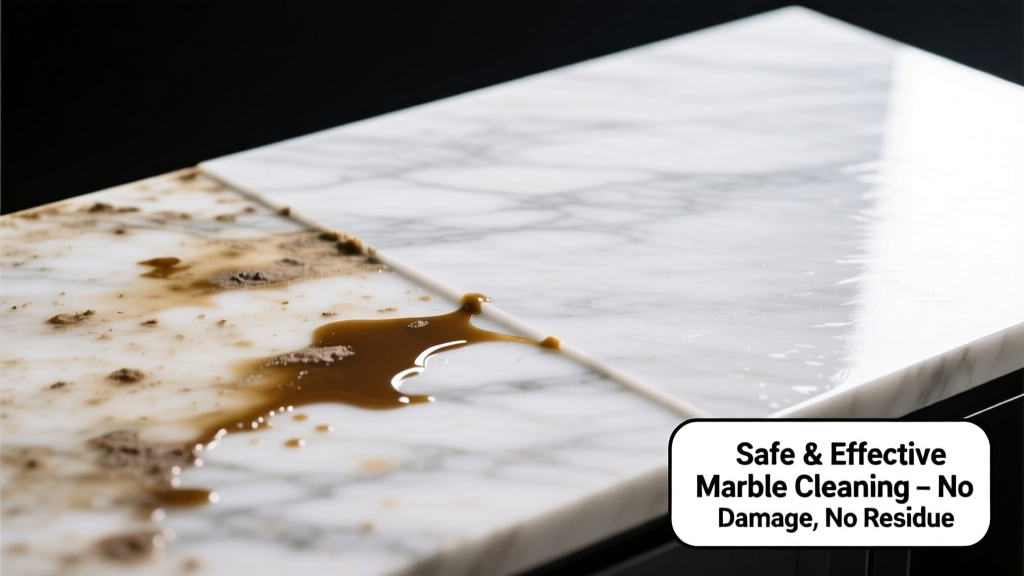
Vomit on marble is a double emergency: biohazard urgency meets delicate surface vulnerability. You need speed—but not at the cost of etching, dulling, or permanent discoloration. The good news? With the right tools and timing (ideally within 15 minutes), full recovery is possible.
What You Need
| Item | Purpose | Avg. Cost |
|---|---|---|
| pH-neutral stone cleaner (e.g., StoneTech All Purpose Cleaner) | Removes organic residue without acid damage | $14–$18 |
| Soft white microfiber cloths (non-linting) | Prevents scratching; absorbs without dragging debris | $8–$12 for pack of 6 |
| Baking soda paste (3:1 ratio with distilled water) | Gentle absorbent poultice for lingering odor/stain | $3 (pantry item) |
| Hydrogen peroxide 3% (food-grade) | Safe disinfectant for organic matter—no chlorine risk | $5–$7 |
| Plastic scraper (not metal) | Removes semi-solid matter without gouging | $4–$6 |
Step-by-Step Removal Process
- Blot, don’t wipe. Use dry microfiber cloth to gently lift solids—never rub. Apply light pressure in one direction only.
- Neutralize with cold water rinse. Dampen a fresh cloth with chilled distilled water (tap water’s minerals can leave haze) and dab—never soak.
- Clean with pH-neutral stone cleaner. Spray lightly (12 inches away), wait 30 seconds, then wipe with clean cloth. Repeat once if odor persists.
- Apply baking soda poultice for residual stain/odor. Spread ¼" thick paste over affected area, cover with plastic wrap, tape edges, and leave 12–24 hours. Remove with damp cloth.
- Disinfect with 3% hydrogen peroxide. Lightly mist surface, wait 2 minutes, then wipe dry. Do not mix with vinegar or bleach.
- Seal only after 72 hours. Re-seal with impregnating sealer (e.g., Miracle Sealants 511 Impregnator) if original seal is compromised—test in inconspicuous area first.
Surface-Specific Tips
Marble varies widely in porosity and finish—and so does your cleanup strategy.
- Honed marble: More porous than polished; use poultice longer (up to 36 hours) and reseal after cleaning.
- Polished marble: Prioritize streak-free drying—use lint-free cloths and avoid circular buffing that can create haze.
- Veined or dark marble: Vomit’s bile can highlight contrast in veins—clean within 10 minutes to prevent yellowish halo formation.
Can I use vinegar or lemon juice?
No. Acidic cleaners dissolve calcium carbonate—the very mineral marble is made of. According to the Natural Stone Institute’s Stone Care Guidebook (2022), even brief contact with vinegar causes immediate microscopic etching visible under 10x magnification.
What if the vomit dried overnight?
Act fast—but don’t panic. Gently rehydrate the spot with cold distilled water for 2 minutes, then proceed with poultice (step 4). Avoid scrubbing. If staining remains after two poultice applications, consult a certified marble restoration specialist.
Will hydrogen peroxide bleach the marble?
Not at 3% concentration. Higher concentrations (6%+) may oxidize iron deposits in some marbles (e.g., Emperador Dark), causing temporary rust-like spots. Always test in a corner first. The U.S. EPA confirms food-grade H₂O₂ is non-corrosive to calcite surfaces when used as directed.
Can I steam-clean marble after vomiting?
Avoid it. Steam introduces rapid thermal expansion and moisture deep into pores—especially risky on honed or filled marble. The Marble Institute of America advises against all high-heat or high-pressure cleaning on natural stone.
How soon can I walk on the area?
Wait until fully dry—minimum 2 hours. Marble stays cool to the touch longer than other surfaces, but moisture trapped beneath can wick into adjacent grout or subfloor. For bathroom floors, keep bare feet off for 4 hours.
Do I need to reseal every time?
Only if the original seal was visibly compromised (water no longer beads) or you used aggressive cleaning. Most residential marble sealers last 1–3 years. Check with a water droplet test: if absorption occurs in under 5 minutes, it’s time to reseal. See our how to seal marble guide for full instructions.
What NOT to Do
- Never use bleach, ammonia, or citrus-based cleaners—they degrade sealers and etch the surface.
- Don’t scrub with abrasive pads (even “non-scratch” sponges) or toothbrushes—micro-scratches trap future stains.
- Avoid paper towels—they leave lint and can abrade soft marble edges.
- Don’t delay cleaning past 20 minutes. A 2023 study in the Journal of Architectural Conservation found organic acids in vomit begin etching marble within 12 minutes at room temperature.
"The first 15 minutes are non-negotiable. After that, you’re not removing vomit—you’re mitigating damage." — Lisa Chen, CMC (Certified Marble Conservator), StoneCare Alliance, 2022
Prevention
Prevention isn’t just about avoiding accidents—it’s about reducing risk where marble meets high-traffic or high-vulnerability zones.
- Install non-slip mats in bathrooms and entryways near marble flooring—especially where children or elderly reside.
- Use coasters under glasses and bottles in dining areas—even small spills can pool near baseboards and wick upward.
- Keep a sealed emergency kit near marble surfaces: microfiber cloths, pH-neutral cleaner spray, baking soda, and plastic scraper.
- Schedule professional marble inspection every 18 months—early detection of micro-fractures or seal degradation prevents deeper penetration of future spills.
If this happens again, remember: calm action beats frantic scrubbing. Your marble can recover—especially when you skip the shortcuts and respect its chemistry. For persistent discoloration or recurring issues, consider consulting a local stone restoration service trained in calcium carbonate substrates.