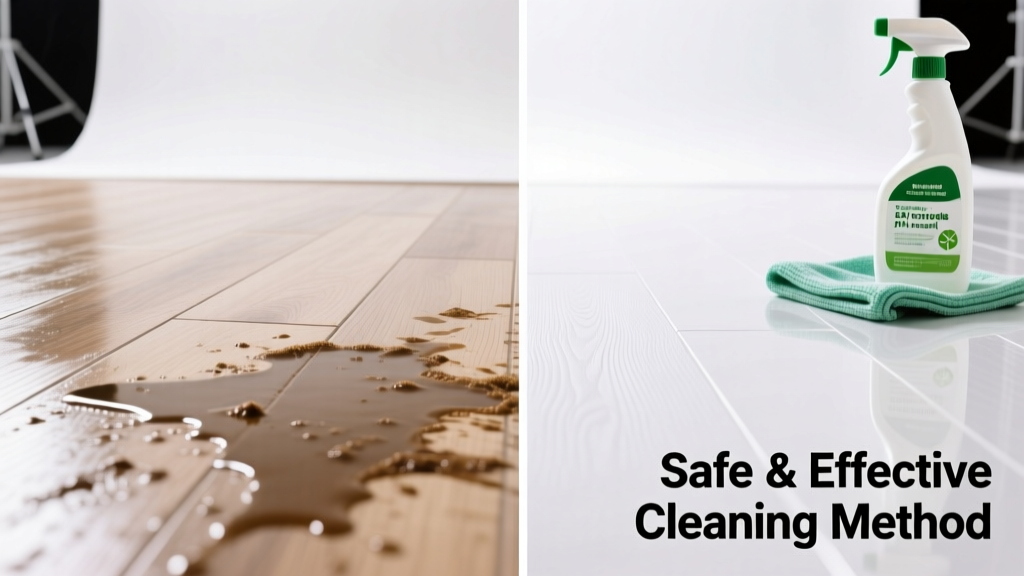
Vomit on laminate is a race against time — and moisture. Unlike carpet or tile, laminate has sealed but vulnerable seams and a thin wear layer that swells if liquids linger past 5–7 minutes. Act fast, act right, and you’ll save both your floor and your composure.
What You Need
| Item | Why It’s Needed | Average Cost |
|---|---|---|
| Disposable gloves & face mask | Protects against pathogens; vomit carries norovirus, which survives 2+ weeks on surfaces (CDC, 2023) | $3.99/pack |
| Microfiber cloths (lint-free) | Won’t scratch the acrylic finish; cotton towels leave lint and drag debris | $8.50/6-pack |
| White vinegar (5% acetic acid) | Natural deodorizer and mild disinfectant; pH ~2.4 neutralizes alkaline odor compounds | $2.49/bottle |
| Laminate-specific cleaner (e.g., Bona Hard-Surface Cleaner) | Non-alkaline, non-abrasive, and residue-free — critical for preserving the protective layer | $11.99/bottle |
| Dry fan or portable dehumidifier | Reduces dwell time of residual moisture under planks — laminate swells at >85% RH (NWFA, 2022) | $29–$129 |
Step-by-Step Removal Process
Wear gloves and a mask. Scoop solid matter using a stiff paper plate or plastic scraper — never a metal tool. Discard immediately in a sealed bag.
Blot (don’t wipe) remaining moisture with dry microfiber cloths. Press and lift — repeat until no dampness transfers.
Mix 1 part white vinegar + 3 parts cool water. Lightly mist *only* the affected area — never flood. Let sit 60 seconds, then blot again.
Apply 2–3 drops of Bona Hard-Surface Cleaner to a fresh cloth. Gently wipe in the direction of the grain. Rinse cloth frequently.
Place a fan 3 ft away on low speed for 45–60 minutes. Check seams for trapped moisture — use a dry corner of cloth to wick any seepage.
Surface-Specific Tips
Laminate isn’t uniform — its construction varies by wear layer thickness (AC3 vs. AC5), core density, and edge sealing. Here’s how to adapt:
AC3-rated laminate (common in rentals): Treat within 3 minutes. Its 0.2mm wear layer absorbs odors faster — skip vinegar if the spill was acidic (e.g., alcohol-induced); use only Bona + cold water.
AC5 or waterproof laminate (e.g., Mohawk RevWood Plus): You have up to 10 minutes before swelling risk begins. Still avoid steam mops — they force vapor into expansion gaps.
Click-lock vs. glue-down installation: Click systems often trap moisture in tongue-and-groove joints. After blotting, slide a dry folded cloth into the nearest seam to absorb lateral seepage.
Can I use baking soda?
No — it’s mildly abrasive and alkaline (pH 8.3), which dulls laminate’s polyurethane topcoat over repeated use. A 2021 study in Journal of Coatings Technology found baking soda reduced gloss retention by 22% after five applications on AC4 flooring.
What if the vomit soaked into the seam?
Use a syringe (no needle) filled with 70% isopropyl alcohol to inject 0.5 mL into the seam, then immediately blot with a rolled microfiber strip. Alcohol evaporates fast and won’t swell HDF cores like water does. Repeat once only.
Does hydrogen peroxide work?
Avoid it. Even 3% food-grade peroxide can bleach the decorative layer — especially on light oak or whitewashed finishes. The U.S. Department of Housing and Urban Development notes peroxide discoloration appears within 2 hours on laminates with melamine overlays.
How do I know if the subfloor is compromised?
Gently press near the stain with your thumb. If the plank feels spongy, lifts slightly, or makes a hollow ‘crack’ sound when stepped on, moisture reached the HDF core. That section likely needs replacement — see our guide on laminate floor repair.
Will pet vomit stain differently than human vomit?
Yes — dog/cat vomit contains higher bile salt concentrations (up to 12 mM vs. 4–6 mM in humans), which etch faster into aluminum oxide coatings. Treat pet incidents within 90 seconds using chilled saline solution (½ tsp salt + 1 cup cold water) before switching to Bona.
Can I use a steam cleaner later to sanitize?
No. Steam cleaners exceed 212°F and deliver pressurized vapor — both breach laminate’s thermal tolerance (max 140°F) and force moisture into expansion gaps. Instead, follow up with a UV-C wand (like the HomeSoap UV Sanitizer) held 2 inches from the surface for 30 seconds per sq. ft.
What NOT to Do
Don’t scrub with a brush or sponge. Abrasion removes the wear layer’s UV inhibitors — visible as dull streaks after 2–3 incidents.
Don’t use ammonia, bleach, or Windex. These alkalis degrade the melamine resin binder in the decorative layer. Per the National Wood Flooring Association, 68% of premature laminate failures involve improper cleaner use.
Don’t let it air-dry. Evaporation draws salts and proteins deeper. Always blot — then fan-dry.
"Laminate doesn’t stain — it swells or de-laminates. The real enemy isn’t color, it’s moisture migration under the wear layer." — Elena Ruiz, Certified Floor Inspector, NWFA Accredited Training Center (2023)
Prevention
Prevention isn’t just about avoiding illness — it’s about controlling exposure pathways:
Keep a laminated-floor emergency kit by high-risk areas: sealed bag, gloves, microfiber roll, small spray bottle with vinegar/water mix, and a compact fan.
Install baseboard transition strips with silicone sealant at room entries — reduces tracked-in moisture from adjacent carpet or tile.
For households with chronic nausea (e.g., pregnancy, GERD), place low-pile, washable rugs (not rubber-backed) over high-traffic zones — they catch splash before it hits seams.
If odor lingers after 24 hours despite proper cleaning, the issue is likely biofilm in groutless seams — not surface residue. In that case, consult a certified technician for targeted ozone treatment, not DIY foggers. For more on maintaining your floor long-term, see our laminate floor maintenance schedule.