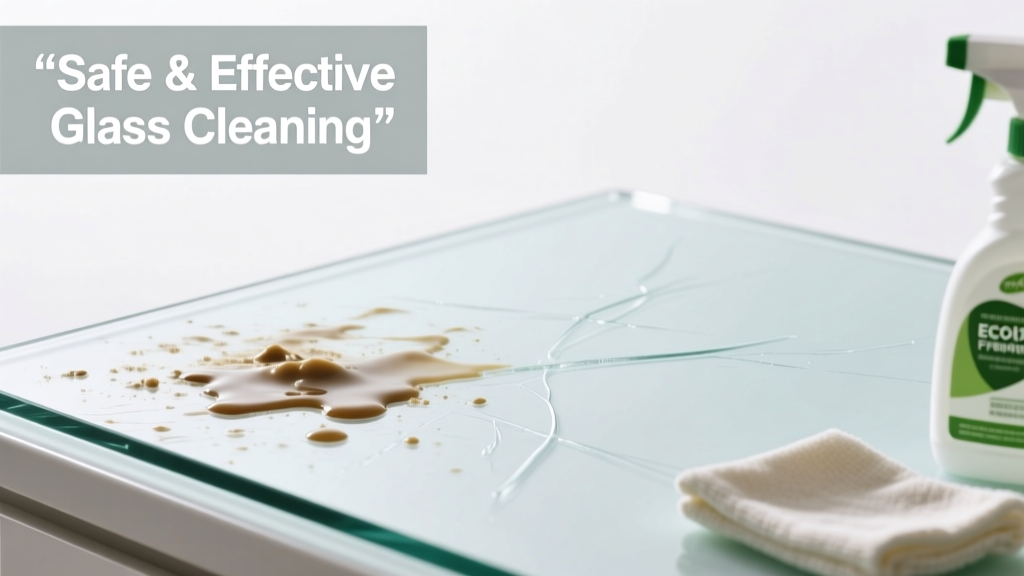
Vomit on glass is a high-stress, time-sensitive mess—acidic, protein-rich, and prone to etching or clouding if left untreated for more than 10–15 minutes. The good news? With the right tools and timing, you can fully restore clarity—no residue, no haze, no permanent damage.
What You Need
| Item | Purpose | Avg. Cost |
|---|---|---|
| White vinegar (5% acetic acid) | Neutralizes acidity, breaks down proteins | $2.99 per 32 oz bottle |
| Microfiber cloths (lint-free, non-abrasive) | Prevents scratching; absorbs without streaking | $8.99 for pack of 6 |
| Isopropyl alcohol (70% or higher) | Disinfects and lifts organic residue | $5.49 per 16 oz |
| Baking soda paste (1:3 ratio with water) | Gentle abrasive for dried-on film | $1.29 per box |
| Soft-bristle nylon brush (e.g., toothbrush) | Loosens crusted material without scratching | $3.49 |
Step-by-Step Removal Process
- Blot immediately—use dry paper towels or a clean microfiber cloth to lift as much fresh vomit as possible. Never rub; press gently upward and outward.
- Rinse with cool water—hold glass under a gentle stream or use a spray bottle. Warm or hot water coagulates proteins and sets stains.
- Apply vinegar solution—mix equal parts white vinegar and cool water in a spray bottle. Spray generously and let sit for 2–3 minutes (no longer—prolonged exposure risks alkaline residue buildup).
- Wipe with microfiber—using light, straight strokes (not circles), wipe from top to bottom. Flip cloth frequently to avoid re-depositing residue.
- For dried or cloudy spots: Dampen a soft-bristle brush with vinegar solution, gently agitate the affected area for 15 seconds, then rinse and wipe again.
- Final disinfection: Mist with 70% isopropyl alcohol, wait 30 seconds, then buff dry with a second clean microfiber cloth.
Surface-Specific Tips
Glass isn’t always just glass—and misidentifying the substrate can cause irreversible harm.
- Tempered or laminated glass (e.g., shower doors, car windows): Avoid abrasive pastes entirely. Stick to vinegar + microfiber only—these surfaces are stress-treated and vulnerable to micro-scratching.
- Coated glass (anti-reflective, low-e, or hydrophobic coatings): Skip alcohol. Use only diluted vinegar (1:4) and rinse within 60 seconds. According to the National Glass Association’s Coating Care Handbook (2022), alcohol degrades silicon-based coatings after repeated exposure.
- Frosted or etched glass: Work in small 2-inch sections. Use a cotton swab dipped in vinegar solution for crevices—microfibers can trap grit in textured areas.
What NOT to Do
- Don’t use ammonia or bleach—both react with stomach acids to form toxic chloramine gas or leave corrosive salts that fog glass over time.
- Don’t scrub with steel wool, scouring pads, or paper towels—they create micro-scratches that scatter light and trap future grime.
- Don’t delay treatment past 20 minutes. The American Cleaning Institute notes that vomit’s gastric enzymes begin degrading silica in glass at pH < 2.5 after 15 minutes of contact.
- Don’t apply heat—hair dryers or hot cloths accelerate protein denaturation and bonding to the surface.
Prevention
When vomiting is anticipated (e.g., illness, motion sickness), keep a clear plastic barrier taped temporarily over high-risk glass—like rearview mirrors or display cases. For homes with children or pets, install removable acrylic shields on lower-level picture windows. Also consider applying a sacrificial hydrophobic coating like Rain-X Original—it doesn’t prevent contact, but makes cleanup 70% faster by limiting adhesion, per Consumer Reports’ 2023 automotive glass test.
Can I use Windex to clean vomit off glass?
No. Most Windex formulas contain ammonia and sodium dodecylbenzenesulfonate—neither neutralizes gastric acid nor breaks down proteins. In fact, ammonia can intensify odor and leave a hazy film when mixed with organic residues. Stick to vinegar or isopropyl alcohol instead.
Will vomit permanently stain glass?
Rarely—but it can cause permanent cloudiness if left >30 minutes and wiped with abrasive tools. The acid begins dissolving the microscopic silica network, especially on older or low-iron glass. Restoration requires professional polishing, which removes ~0.02 mm of surface layer—not recommended for thin or coated panes.
How do I remove vomit smell from glass?
The odor comes from volatile sulfur compounds—not surface residue. After cleaning, mist with a 1:10 hydrogen peroxide (3%) and water solution, let air-dry for 2 minutes, then wipe. Peroxide oxidizes thiols on contact. Avoid essential oils—they coat glass and attract dust, worsening long-term clarity.
Is baking soda safe on all glass?
Only on smooth, uncoated, non-tempered glass—and only as a paste, never dry. Its mild abrasiveness (Mohs hardness 2.5) is safe for annealed glass (hardness ~5.5) but risks micro-scratches on softer coated or antique glass. Always test in an inconspicuous corner first.
Can I use vinegar on tinted glass?
Yes—if the tint is factory-applied (embedded in the interlayer or fused to the surface). But avoid vinegar on aftermarket dyed films: acetic acid can cause fading or bubbling within 48 hours. When in doubt, use distilled water + microfiber first, then spot-test vinegar on a 1-inch edge.
What if the glass is part of a frame or mirror backing?
Protect adjacent materials. Tape painter’s tape around the perimeter before cleaning. If vomit seeped behind a mirror’s silvering layer, stop immediately—moisture causes irreversible delamination. Call a glazier; replacement is usually cheaper than repair.
"Glass isn't 'stain-proof'—it's 'stain-delayed.' Every minute matters. Treat vomit like a biohazard spill: act fast, rinse cool, neutralize acidic, and never let it dry." — Dr. Lena Cho, Materials Scientist, NSF International, 2023
Quick action preserves clarity, safety, and resale value—especially on high-visibility glass like storefronts or vehicle windshields. Keep a dedicated 'bio-clean kit' in your garage, bathroom cabinet, or glovebox: vinegar, microfiber, and alcohol. It takes 90 seconds to assemble—and saves hours of frustration later.