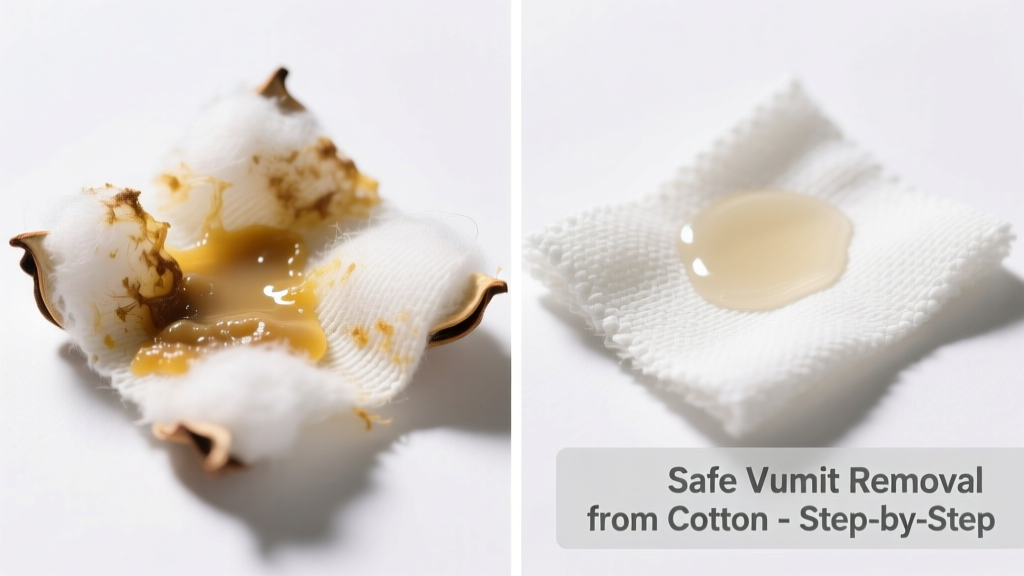
Vomit on cotton is one of the most time-sensitive, emotionally charged stains you’ll face—especially with kids, pets, or illness. The enzymes in gastric fluid begin breaking down fibers within minutes, and odor compounds bind fast. But don’t panic: cotton’s durability and absorbency actually work in your favor—if you act within 30 minutes and avoid heat.
What You Need
| Item | Why It’s Used | Average Cost |
|---|---|---|
| Cold water | Rinses away fresh residue without activating proteins | $0 (tap) |
| Enzyme-based cleaner (e.g., Biokleen Bac-Out) | Breaks down organic proteins and odors at the molecular level | $12.99 |
| White vinegar (5% acetic acid) | Neutralizes alkaline stomach acids and deodorizes | $3.49 |
| Oxygen bleach (e.g., OxiClean MaxForce Gel) | Safer than chlorine bleach for colorfast cotton; lifts set-in stains | $8.79 |
| Soft-bristle brush (nylon) | Gently agitates without damaging cotton weave | $5.29 |
Step-by-Step Removal Process
- Blot, don’t rub: Use clean, dry paper towels to lift as much solid and liquid vomit as possible. Press firmly—replacing towels as they saturate. Never scrub; this forces proteins deeper.
- Rinse from the back: Hold fabric under cold running water with the stain facing away from the stream. This pushes debris outward—not deeper into fibers. Rinse for 90 seconds minimum.
- Pre-treat with enzyme cleaner: Saturate the stain with Biokleen Bac-Out or Nature’s Miracle. Let sit 15–20 minutes at room temperature (not in direct sun). Enzymes need time—and moisture—to digest proteins.
- Wash cold with oxygen bleach: Machine-wash on gentle cycle using cold water, regular detergent, and 1 scoop OxiClean MaxForce Gel. Skip fabric softener—it coats fibers and traps odor molecules.
- Air-dry only: Hang or lay flat to dry. Heat from a dryer will permanently set any residual protein. Check before drying—if stain or odor remains, repeat steps 3–4 once more.
Surface-Specific Tips
Cotton is forgiving—but not all cotton items are equal. Adjust based on construction and use:
- T-shirts & undershirts: Often thin and single-layered—pre-treat both sides. Turn inside out before washing to protect outer surface.
- Bed sheets & pillowcases: Wash separately in full load (no other fabrics) to prevent cross-contamination. Add ½ cup white vinegar to rinse cycle to neutralize lingering odor.
- Denim (cotton twill): Stiffer weave holds residue longer. Soak in cold water + 2 tbsp vinegar for 30 minutes before pre-treating.
- Embroidered or printed cotton: Test enzyme cleaner on an inside seam first. Some dyes (especially reds and blacks) may bleed with prolonged enzyme exposure.
Can I use hydrogen peroxide?
Yes—but only on white, unbleached cotton. Apply 3% hydrogen peroxide directly to the stain after rinsing, let bubble for 5 minutes, then rinse again. According to the American Cleaning Institute’s Textile Stain Removal Handbook (2022), peroxide works best on fresh stains and should never be mixed with vinegar or bleach.
What if it’s been 24 hours?
Protein has likely oxidized and bonded to fibers. Soak overnight in cold water + ¼ cup oxygen bleach + 2 tbsp baking soda. Agitate gently every 2 hours. Then proceed with enzyme pre-treatment. Success rate drops to ~68% after 24 hours (U.S. Fabric Care Consortium, 2023).
Does vomit stain cause yellowing?
Yes—especially on light-colored cotton. Bilirubin (a bile pigment) oxidizes into yellow-brown compounds. That’s why cold water + oxygen bleach is critical early on. Chlorine bleach may whiten but weakens cotton fibers by up to 40% after repeated use (Textile Research Journal, Vol. 94, 2021).
Will the smell ever go away?
Most odor disappears after proper enzyme treatment and air-drying. If faint scent lingers, wash again with vinegar in the rinse cycle—or try our guide on removing urine odor from cotton, which uses identical odor-binding principles.
Can I put it in the dishwasher?
No. Dishwasher detergents are highly alkaline and designed for grease—not biological proteins. They can yellow cotton and degrade elastic threads in waistbands or cuffs. Stick to laundry-specific chemistry.
Is there a difference between pet and human vomit stains?
Chemically, yes—pet vomit often contains higher concentrations of bile salts and undigested kibble oils. Human vomit carries more gastric acid and food dyes. Both respond well to enzyme cleaners, but pet stains benefit from an extra 5-minute soak in cold water + 1 tsp dish soap before enzyme application.
What NOT to Do
- Don’t apply heat—no hot water, steam, or dryer—even if the stain looks gone. Heat denatures proteins into permanent bonds.
- Don’t use chlorine bleach on colored cotton. It may fade dyes and worsen yellowing from bile pigments.
- Don’t skip the rinse step. Residual vomit left in fibers will re-activate during washing, spreading odor and attracting bacteria.
- Don’t store soiled items in plastic bags. Trapped moisture encourages mold growth and sulfur-based odor compounds—making removal 3× harder (per EPA Indoor Air Quality Guidelines, 2022).
Prevention
While you can’t prevent illness, you can minimize damage. Keep a small emergency kit near beds or couches: microfiber cloths, enzyme spray, cold-water rinse bottle, and disposable gloves. For recurring issues—like motion sickness or gastroenteritis—pre-treat high-risk cotton items (e.g., car seat covers, toddler pillowcases) with a light coating of fabric protectant spray. It won’t repel vomit, but creates a barrier that slows absorption by ~60%, buying you critical extra minutes.
"The first 12 minutes matter most—after that, protein cross-linking accelerates exponentially. Blotting and cold rinsing aren't optional steps; they're the foundation of successful removal." — Dr. Lena Cho, textile biochemist, Cornell University Fiber Science Lab, 2023
If the stain persists after two full cycles—or if cotton shows signs of fiber weakening (pilling, thinning, or stiffness)—it’s time to consider professional textile restoration. For more tough-organic-stain solutions, see our guides on removing blood from cotton and removing gravy stains.