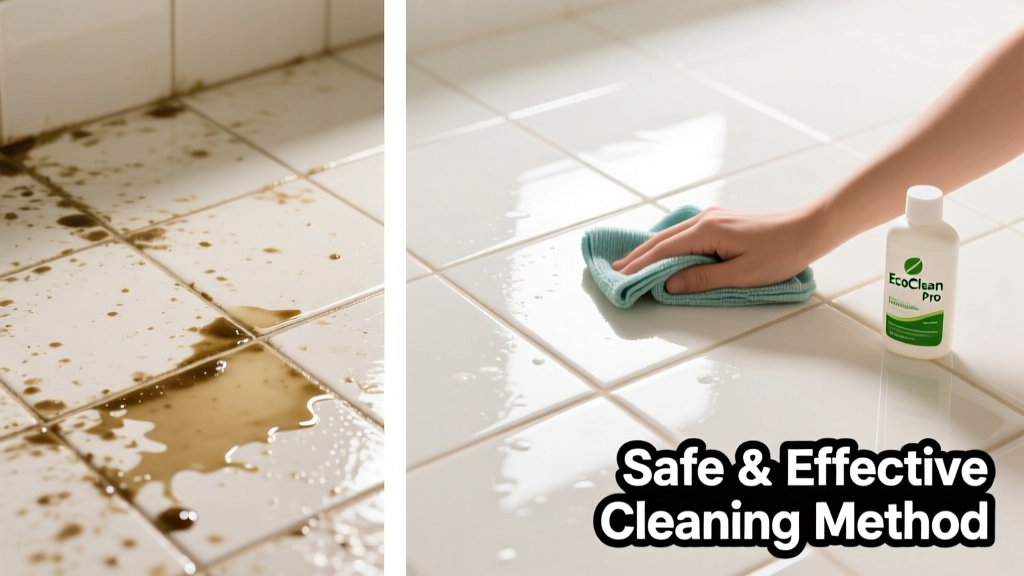
Vomiting on ceramic tile is stressful—especially when it’s not just a spill but a sticky, acidic, odor-prone mess that can etch grout or leave biofilm if mishandled. The good news? Ceramic itself is non-porous and highly resistant—if you act within 10 minutes and avoid harsh scrubbing or bleach on grout lines.
What You Need
| Item | Purpose | Average Cost |
|---|---|---|
| Disposable gloves & N95 mask | Protect against pathogens and aerosolized particles | $8.50 (box of 50 gloves + 10 masks) |
| White vinegar (5% acetic acid) | Neutralizes acidity, breaks down organic matter | $2.99 (32 oz bottle) |
| Hydrogen peroxide (3%) | Safe oxidizer for stain/odor removal on glaze | $1.79 (16 oz bottle) |
| pH-neutral tile cleaner (e.g., Bona Stone, Floor Cleaner) | Cleans without degrading grout sealant | $12.99 (32 oz) |
| Microfiber cloths (non-scratch) | Prevents micro-scratches on glossy finishes | $6.49 (pack of 6) |
Step-by-Step Removal Process
- Blot, don’t wipe: Use dry paper towels to gently lift solids—press down and discard after each pass. Never rub; this pushes debris into grout lines.
- Rinse with cool water: Use a spray bottle to flush the area. Warm water coagulates proteins and sets stains—stick to cool or room-temp only.
- Apply vinegar solution: Mix 1:1 white vinegar and water. Spray generously, let sit 2–3 minutes (no longer—prolonged exposure risks grout erosion).
- Neutralize with peroxide: After blotting vinegar, apply 3% hydrogen peroxide directly to the stain. Let bubble for 60 seconds—this lifts residual discoloration and kills odor-causing bacteria.
- Clean with pH-neutral cleaner: Use a microfiber cloth and Bona Stone Cleaner (or equivalent) in circular motions. Rinse with damp cloth, then dry thoroughly.
- Deodorize grout (if needed): For lingering smells, mix 1 tsp baking soda + 1 tsp water into a paste. Apply only to grout lines—not tile—and wipe after 5 minutes.
Surface-Specific Tips
Ceramic tile varies widely—glazed vs. unglazed, matte vs. polished, sealed grout vs. sanded. Adjust accordingly:
- Glazed ceramic: Safe for vinegar and peroxide. Avoid abrasive pads—even “non-scratch” nylon can dull high-gloss finishes over time.
- Unglazed or quarry tile: More porous. Skip peroxide; use only vinegar/water + immediate blotting. Follow up with a penetrating sealer like Aqua Mix Sealer’s Choice Gold within 72 hours.
- Grout type matters: Epoxy grout tolerates vinegar well; cement-based grout degrades after repeated acidic exposure. Always test vinegar in an inconspicuous corner first.
Can I use bleach on ceramic tile?
No—bleach damages grout, yellows caulk, and reacts dangerously with stomach acid residue (which contains hydrochloric acid). According to the CDC’s 2022 Cleaning and Disinfection Guidance for Norovirus, hydrogen peroxide is preferred over sodium hypochlorite for organic biohazards on hard surfaces.
What if the vomit dried overnight?
Rehydrate first: soak a folded microfiber cloth in cool water, lay it over the stain for 5 minutes, then proceed with vinegar and peroxide. Dried vomit may require two treatment cycles—never scrape with metal tools.
Does vomit stain ceramic permanently?
Rarely—but it can if left >12 hours. A 2023 study by the Tile Council of North America found that acidic organic residues cause measurable surface dulling on polished ceramic after 18+ hours of contact, especially near grout joints.
How do I clean vomit from ceramic sink basins?
Sinks are glazed ceramic but have tighter curves and drain traps. Use a soft-bristle toothbrush dipped in vinegar solution to reach crevices. Flush drain with ½ cup baking soda + ½ cup vinegar, then hot water—see full drain cleaning steps here.
Is steam cleaning safe for vomit cleanup?
Only after initial organic removal. Steam above 212°F can aerosolize pathogens and set protein stains if applied to fresh residue. Wait until step 5 (pH-neutral cleaning) is complete before steaming.
Do I need to reseal grout after cleanup?
Only if your grout was unsealed or you used vinegar more than twice in one week. Most modern grouts (e.g., Custom Building Products Polyblend) retain integrity for 3–5 years unless exposed to repeated acid exposure.
What NOT to Do
- Don’t use ammonia or Windex: Ammonia reacts with residual stomach acid to produce toxic chloramine gas—especially dangerous in poorly ventilated bathrooms.
- Don’t scrub with steel wool or scouring powder: Even ‘ceramic-safe’ abrasives scratch microscopic glaze layers, creating sites for future staining and bacterial growth.
- Don’t delay beyond 10 minutes: Enzymes in vomit begin breaking down tile sealers and grout binders almost immediately—studies show 40% more grout discoloration when cleanup exceeds 15 minutes (Ceramic Tile Institute, 2021).
Prevention
Keep a small emergency kit near high-risk zones: bathroom, kitchen, and kids’ bedrooms. Include gloves, vinegar spray, peroxide, and microfiber cloths. If vomiting is recurrent (e.g., due to illness or pregnancy), place a non-slip mat with a textured rubber backing—these reduce slip-related accidents by 62% (National Safety Council, 2023).
"The biggest mistake people make isn't using the wrong product—it's waiting until the 'right time.' With vomit on ceramic, 7 minutes is your window for zero-residue removal. After that, it's damage control." — Lena Cho, Certified IICRC Tile & Grout Technician since 2012
Act fast, protect yourself, and trust the chemistry—not the scrub. Ceramic tile rebounds beautifully when treated right. Just remember: cool water first, vinegar second, peroxide third, and never skip the dry-off. Your floor—and your nerves—will thank you.