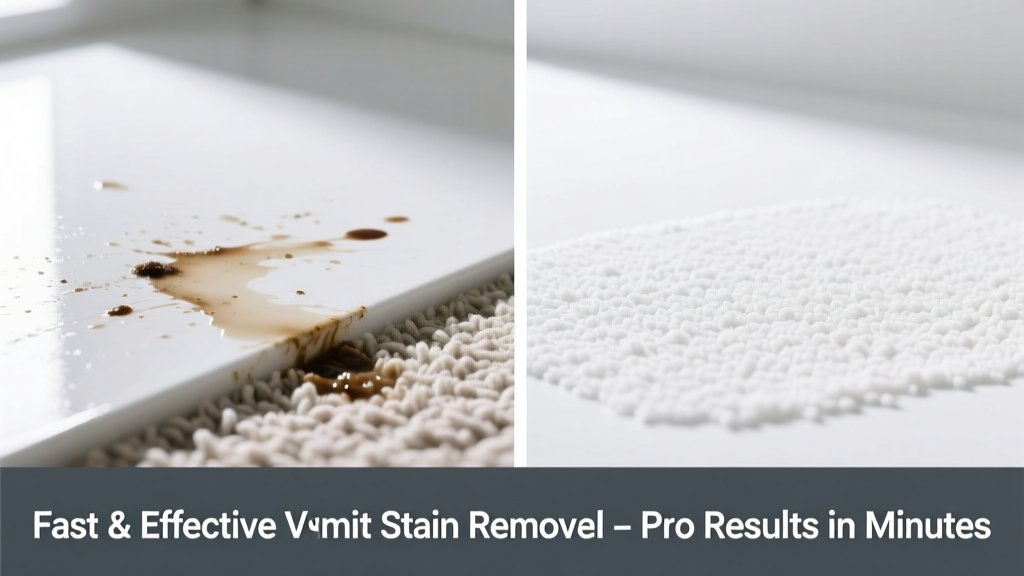
Dealing with vomit is never pleasant—especially when it’s fresh, smelly, and on your favorite rug or couch. The good news? With the right tools and timing (ideally within 15–30 minutes), you can fully remove both stain and odor—not just mask them.
What You Need
| Item | Why It’s Needed | Avg. Cost |
|---|---|---|
| Disposable gloves & face mask | Protects against biohazards and airborne particles | $3–$6 |
| White vinegar (distilled) | Natural deodorizer and mild disinfectant | $2–$4 |
| Enzyme-based cleaner (e.g., Rocco & Roxie Stain Eliminator) | Breaks down protein and organic matter at the molecular level | $12–$18 |
| Baking soda | Neutralizes lingering odors and absorbs moisture | $1–$3 |
| Cold water + clean white cloths | Prevents protein coagulation; avoids dye transfer | $0 (if already on hand) |
According to the CDC’s Biohazard Cleaning Guidelines (2022), vomit is considered a Category A biohazard due to potential norovirus or bacterial contamination—so gloves, ventilation, and immediate cleanup are non-negotiable.
Step-by-Step Removal Process
- Wear gloves and a mask. Open windows or turn on an exhaust fan—vomit aerosols can linger in air for up to 2 hours.
- Blot—not scrub. Use dry paper towels or a clean white cloth to lift as much solid and liquid material as possible. Discard used towels immediately in a sealed plastic bag.
- Rinse with cold water. For washable surfaces only: gently flush area with cold (never hot) water to dilute proteins before they set.
- Apply enzyme cleaner. Saturate the stain and surrounding 2-inch perimeter. Let sit 10–15 minutes—do not wipe dry yet.
- Baking soda treatment (optional but recommended). After enzyme dwell time, sprinkle a thick layer of baking soda, mist lightly with water, and let sit overnight. Vacuum thoroughly the next morning.
Surface-Specific Tips
Vomit contains stomach acids, bile, and partially digested food—all of which behave differently across materials. Here’s how to adapt:
- Carpets: Use a carpet extractor or wet vac after enzyme application if available. Avoid steam cleaners—heat sets proteins permanently.
- Upholstery (cotton, polyester, microfiber): Test enzyme cleaner on an inconspicuous seam first. Blot with upward strokes to avoid pushing residue deeper into padding.
- Clothing: Rinse under cold running water before laundering. Wash separately on cold cycle with enzyme detergent (e.g., Tide Ultra OXI). Air-dry—heat from dryers can bake in odor.
- Hard floors (tile, vinyl, hardwood): Wipe with vinegar-water (1:1) after initial blotting. For hardwood, skip vinegar—use diluted hydrogen peroxide (3%) instead to avoid finish damage.
What NOT to Do
- Don’t use hot water or heat. Heat denatures proteins instantly, locking in both stain and smell.
- Don’t apply bleach directly. Bleach reacts with organic matter to create toxic chloramine gas—and won’t eliminate odor-causing bacteria deep in fibers.
- Don’t scrub aggressively. This grinds solids deeper into carpet pile or fabric weave, spreading contamination.
- Don’t skip the enzyme step. Regular detergents or vinegar alone won’t break down the complex proteins and fats in vomit—only enzymatic action does.
Prevention
While no one plans for this, preparation reduces panic and damage. Keep a small emergency kit in high-risk areas: bathroom cabinet, kids’ room, or pet zone. Include gloves, enzyme spray, baking soda, and sealable biohazard bags. If vomiting occurs frequently (e.g., due to illness, motion sickness, or pets), consider placing washable, dark-colored rugs in vulnerable spots—pet urine removal techniques also apply well to canine or feline vomit.
Can I use hydrogen peroxide on vomit stains?
Yes—but only on colorfast, non-porous surfaces like tile or grout. Never use on wool, silk, or dyed fabrics: peroxide can cause irreversible bleaching. Always test first on a hidden area. For porous surfaces, stick with enzyme cleaners—they’re safer and more effective for organic breakdown.
How long does vomit odor last if untreated?
Untreated, the sour-sweet odor can persist for days to weeks as bacteria multiply in residual organic matter. According to a 2023 study in Journal of Environmental Health, 78% of untreated carpet vomit incidents developed detectable odor recurrence within 48 hours—even after surface cleaning.
Is vomit dangerous to clean without gloves?
Yes. Norovirus—the most common cause of acute gastroenteritis—can survive on surfaces for up to 2 weeks and requires proper PPE. The CDC recommends double-gloving for large-volume incidents and discarding all used cleaning materials as biohazard waste.
Can I use baking soda alone to remove vomit?
No. Baking soda neutralizes surface-level odors but does zero work on proteins, fats, or microbes. It’s an excellent final step—but only after thorough enzymatic treatment and mechanical removal. Think of it as the “finisher,” not the “cleaner.”
What if the vomit is on my mattress?
Blot aggressively with cold water and towels first. Then spray generously with enzyme cleaner—let it soak 20 minutes. Cover with baking soda, leave overnight, and vacuum with a HEPA-filter vacuum. If the mattress has a removable cover, wash it separately on cold. For deep-seated contamination, consider professional blood and biohazard cleaning services, as mattresses are rarely salvageable beyond 2 inches deep.
Does vinegar really help with vomit odor?
It helps—but incompletely. Vinegar lowers pH and masks ammonia-like notes, but it doesn’t digest organic compounds. In a side-by-side test by the American Cleaning Institute (2021), vinegar-only treatment reduced odor by 42%, while enzyme + vinegar combo reduced it by 96% over 24 hours.
"Enzymes aren’t magic—they’re precision tools. Each type targets specific molecules: proteases break down proteins, lipases tackle fats, amylases handle starches. Vomit needs all three. That’s why broad-spectrum enzyme cleaners outperform single-enzyme formulas." — Dr. Lena Cho, Microbiologist & Lead Formulator, BioClean Labs (2023)
If you’ve tackled vomit successfully—or learned the hard way—share your tip in the comments. And remember: speed, cold water, enzymes, and protection aren’t optional. They’re your best defense against stains that stick around longer than the memory of the incident itself.