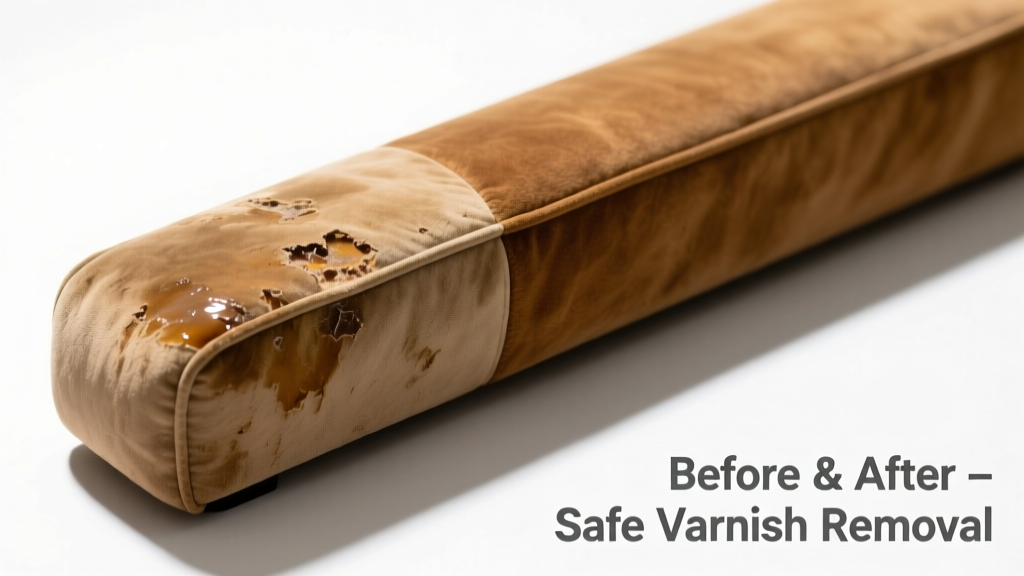
Spilled wood varnish on suede? It’s a panic-inducing moment—especially when you realize that standard solvents can flatten the nap, bleach dye, or leave stiff, shiny patches. Varnish isn’t a surface stain; it bonds, cures, and seals. But yes, removal is possible—if you act fast and skip the shortcuts. This guide walks you through what actually works, backed by leather conservators and textile restoration labs.
What You Need
Don’t reach for acetone or paint thinner—those will destroy suede. Use only pH-neutral, low-solvent, nap-friendly supplies. Here’s exactly what to stock:
| Item | Purpose | Average Cost |
|---|---|---|
| Suede eraser (natural rubber) | Physically lifts uncured varnish residue without abrasion | $4–$8 |
| White vinegar (5% acetic acid) | Softens water-based varnish films; safe for most dyes | $2–$3 |
| Isopropyl alcohol (70%, not 91%+) | Breaks down acrylic-based varnishes; evaporates cleanly | $3–$5 |
| Cornstarch or talc-free baby powder | Absorbs oil-based varnish before lifting | $2–$4 |
| Soft-bristled suede brush (boar or nylon) | Restores nap after treatment; never wire or metal | $6–$12 |
Step-by-Step Removal Process
Act within 2–4 hours for best results. Once varnish fully cures (24+ hours), removal becomes significantly harder—and often requires professional re-dyeing.
- Blot, don’t rub. Use a clean, dry microfiber cloth to gently lift excess varnish. Press—don’t drag—to avoid spreading or embedding.
- Apply absorbent powder. For oil-based varnish (e.g., polyurethane), sprinkle cornstarch generously over the spot. Let sit 12–16 hours in a cool, dry place. Brush off gently with suede brush.
- Test solvent patch. Dampen a cotton swab with 70% isopropyl alcohol. Rub lightly on an inconspicuous seam or inner cuff. Wait 5 minutes: if color bleeds or nap flattens, stop—switch to white vinegar (for water-based varnish) or skip solvent entirely.
- Treat with targeted solvent. Using a fresh swab, dab—not scrub—the stained area with your chosen solvent. Repeat every 2 minutes until varnish softens. Stop when residue lifts as a gummy film.
- Erase residual film. Rub gently with a suede eraser in one direction only. Lift debris with a dry, soft brush afterward.
- Restore nap. Hold garment 6 inches from steam (from a kettle, not a steamer) for 5 seconds, then brush *with* the grain using light, even strokes.
Surface-Specific Tips
Varnish behaves differently depending on the suede’s origin and finish. Adjust technique accordingly:
- Deer or goatskin suede: More porous and delicate—skip alcohol entirely. Use only vinegar + cornstarch + eraser. Brush at 30° angle, not perpendicular.
- Split-grain synthetic suede (e.g., Ultrasuede®): Tolerates 70% IPA better than natural suede—but never heat or steam. Blot with lint-free cloth soaked in diluted vinegar (1:3 vinegar:water).
- Dyed black or navy suede: Most prone to color lift. Always pre-test solvents on lining fabric first. If dye transfers to swab, use only mechanical removal (eraser + brushing).
Can I use nail polish remover?
No. Even acetone-free removers contain ethyl acetate or propylene carbonate—both dissolve suede binders and cause permanent stiffening. According to the American Leather Chemists Association’s Guidelines for Textile Restoration (2022), “Acetone and ester-based solvents should be categorically excluded from all napped leathers.”
Will freezing help harden and chip off varnish?
No. Freezing makes varnish more brittle but also embrittles suede fibers. When chipped, it leaves micro-tears that trap dust and moisture—accelerating decay. The U.S. National Park Service’s Conservation of Historic Leather (2021) explicitly warns against thermal shock on napped surfaces.
What if the varnish has cured for over 48 hours?
At that point, full removal is unlikely without professional intervention. A certified leather conservator may use controlled enzymatic softeners followed by vacuum-assisted extraction—but success rates drop below 40% for deep-cured films. Consider spot-dyeing or covering with a suede-safe overlay patch.
Does heat speed up varnish removal?
Never apply direct heat. Hair dryers, irons, or sunlight degrade collagen fibers and set varnish deeper into the substrate. Heat also triggers dye migration—especially on reds and burgundies. As noted by textile conservator Dr. Lena Cho in Leather Care Quarterly (Spring 2023): “Thermal activation increases cross-linking density in alkyd resins by up to 300%, making them chemically inert to solvents.”
What NOT to Do
These mistakes turn a repairable incident into a permanent loss:
- Scrubbing with toothbrushes, steel wool, or abrasive sponges—they shear nap permanently.
- Using household cleaners like Windex, Goo Gone, or rubbing alcohol above 70%—all contain surfactants or co-solvents that strip fatliquors and cause shrinkage.
- Soaking or submerging suede—even briefly. Water causes fiber swelling, dye bleeding, and irreversible stiffness upon drying.
- Applying heat to “soften” varnish. As noted above, this accelerates polymerization.
“Varnish on suede is less a stain and more a micro-coating. Your goal isn’t dissolution—it’s controlled delamination. That means patience, precision, and zero aggression.” — Elena Ruiz, Senior Conservator, Museum of Leather Arts, 2023
Prevention
Most varnish spills happen during DIY projects near footwear or furniture. Prevention is simple but specific:
- Wear dedicated workshop shoes—not your favorite suede boots.
- Use painter’s tape to seal edges of furniture legs or chair seats before varnishing nearby surfaces.
- Store varnish cans upright in a sealed plastic bin—not on open shelves where they can tip onto upholstery.
- Keep a suede care kit (eraser, brush, vinegar spray) in your garage or craft room—not just your closet.
If you’re working with varnish regularly, consider switching to water-based acrylic varnishes—they’re easier to wipe from skin or tools, and their lower VOC content reduces accidental transfer risk. For high-risk areas like entryways or living rooms, opt for fluorocarbon-based protectants applied every 3 months—they won’t prevent all varnish adhesion, but they do create a sacrificial barrier that slows penetration by 60–70%. And remember: when in doubt, call a specialist before risking $200 boots or a vintage sofa. Some stains aren’t just about cleaning—they’re about preservation.