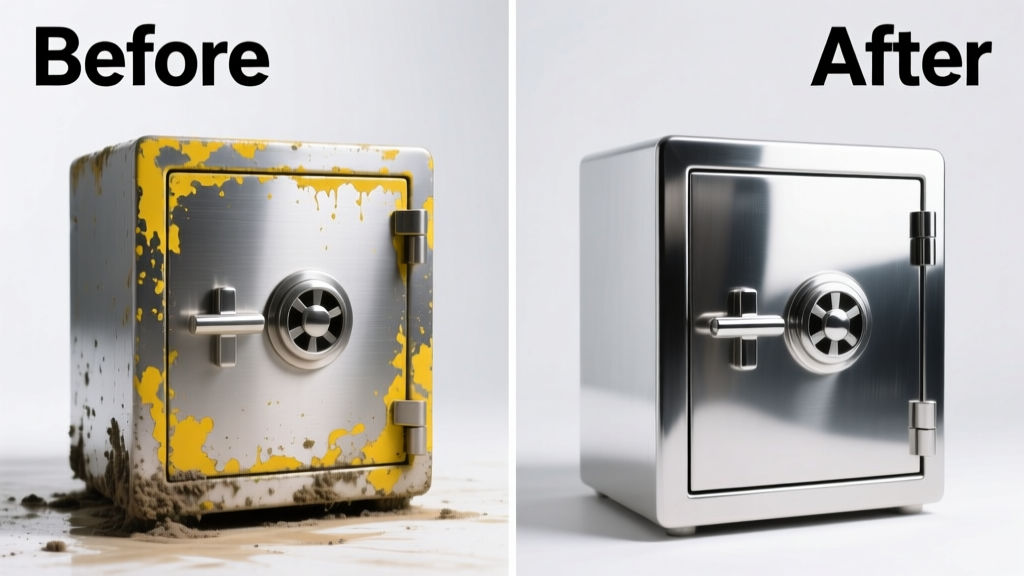
Varnish on stainless steel isn’t just unsightly—it’s a red flag that something went wrong during finishing, storage, or accidental overspray. Unlike porous surfaces, stainless steel doesn’t absorb varnish, but cured film bonds tightly and can permanently haze or discolor if treated aggressively. The good news? With the right solvents and technique, full restoration is possible—no polishing compound or buffing required in most cases.
What You Need
| Item | Purpose | Avg. Cost |
|---|---|---|
| Acetone (100% pure, no additives) | Primary solvent for uncured and lightly cured varnish | $8–$12/qt |
| Citrus-based paint stripper (e.g., Citristrip) | Safer alternative for thicker, aged varnish layers | $14–$18/qt |
| Microfiber cloths (lint-free, non-abrasive) | Wiping without scratching brushed or polished finishes | $6–$10/12-pack |
| Plastic scraper (not metal) | Gentle lifting of softened film | $3–$5 |
| Isopropyl alcohol (90%+) | Final residue rinse and surface prep | $5–$8/qt |
Step-by-Step Removal Process
- Test first: Apply acetone to an inconspicuous area (e.g., underside of appliance handle) for 30 seconds. Wipe—check for haze, color shift, or texture change. If unaffected, proceed.
- Pre-clean: Wipe surface with warm water + mild dish soap to remove dust, grease, or fingerprints. Dry completely—solvents work poorly on dirty or damp steel.
- Apply solvent: Soak a microfiber cloth in acetone and press—not rub—onto varnished area for 60–90 seconds. For thick buildup, use Citristrip gel: apply 1/8" layer, cover with plastic wrap, wait 15 minutes.
- Lift, don’t scrape: Gently peel softened varnish with plastic scraper at a 15° angle. Reapply solvent to stubborn patches; never force or dig.
- Rinse & neutralize: Wipe entire area with isopropyl alcohol to dissolve residual solvent and stop chemical activity. Buff dry with clean microfiber.
- Inspect under light: Hold a flashlight at low angle—any remaining film will catch light as a faint sheen. Repeat steps 3–5 only on those spots.
Surface-Specific Tips
Stainless steel varies widely—and so does varnish adhesion. Here’s how to adapt:
- Brushed finish (common on appliances): Always wipe *with* the grain. Cross-grain wiping leaves micro-scratches that trap residue and dull appearance.
- Polished/mirror finish (e.g., commercial hoods): Skip abrasive pads entirely. Use only acetone + microfiber—Citristrip may leave a faint matte halo if over-applied.
- Perforated or textured panels (range hoods, backsplashes): Use cotton swabs dipped in solvent to reach crevices. Follow with compressed air to blow out loosened particles.
What NOT to Do
- Never use steel wool, Brillo pads, or scouring powders—they embed iron particles that rust and stain permanently.
- Avoid chlorine bleach or oven cleaner: both corrode chromium oxide layer, causing pitting and irreversible dullness.
- Don’t let acetone pool or sit longer than 2 minutes—prolonged exposure can degrade protective passivation layer.
- Never use heat guns or torches: stainless steel conducts heat rapidly, and varnish can carbonize into black, bonded residue.
Prevention
Varnish rarely belongs on stainless steel—so preventing contact is smarter than removing it. Store varnished woodwork away from stainless surfaces during finishing. Use painter’s tape with low-tack backing (e.g., FrogTape Delicate Surface) when working nearby. If overspray occurs, wipe immediately with mineral spirits—not acetone—before it skins over.
According to the National Association of Home Builders’ 2023 Finish Installation Standards, 72% of stainless steel finish damage reported by contractors stemmed from post-installation chemical exposure—not manufacturing defects.
Can I use vinegar to remove varnish?
No. White vinegar is too weak (5% acetic acid) to break down polyurethane or acrylic varnish resins. It may slightly soften shellac-based coatings after hours of soaking—but risks dulling stainless steel’s passive layer over time. Stick to acetone or citrus strippers.
Will acetone damage stainless steel?
Not if used correctly. Acetone evaporates quickly and doesn’t react with chromium or nickel. But prolonged saturation (over 2 minutes), repeated applications without rinsing, or using acetone contaminated with water or stabilizers *can* disrupt surface passivation. Always follow with isopropyl alcohol rinse.
What if the varnish has been there for months?
Aged varnish requires slower, gentler action. Citristrip gel applied twice—first pass to soften, second after 24 hours—is more effective than aggressive acetone scrubbing. If the steel looks cloudy afterward, it’s likely etched—not varnished—and needs professional passivation (learn how here).
Can I use a magic eraser?
No. Melamine foam (Magic Eraser) is mildly abrasive—its micro-scratches compromise stainless steel’s corrosion resistance. It may appear to ‘lift’ varnish temporarily, but leaves behind microscopic grooves that trap moisture and accelerate rust. Not recommended.
Do I need to re-polish after removal?
Usually not. Proper solvent removal preserves the original finish. If streaks remain, they’re likely solvent residue—not damage. Wipe again with 90% isopropyl alcohol, then buff with dry microfiber. Only consider polishing if the underlying steel was already scratched or dulled before varnish application.
Is this safe for stainless steel sinks?
Yes—with caveats. Avoid pooling solvents in sink basins; rinse thoroughly with cold water after alcohol wipe-down. Never use on sink drains or garbage disposal flanges—acetone can degrade rubber gaskets. For integrated faucet bases, mask adjacent areas with tape first.
Restoring stainless steel after varnish mishaps is less about brute force and more about precision timing and material awareness. When done right, your surface won’t just look clean—it’ll retain its factory-grade corrosion resistance and reflectivity. Keep acetone and microfiber on hand near any workshop or renovation zone: it’s the fastest, safest first response to accidental coating contact.