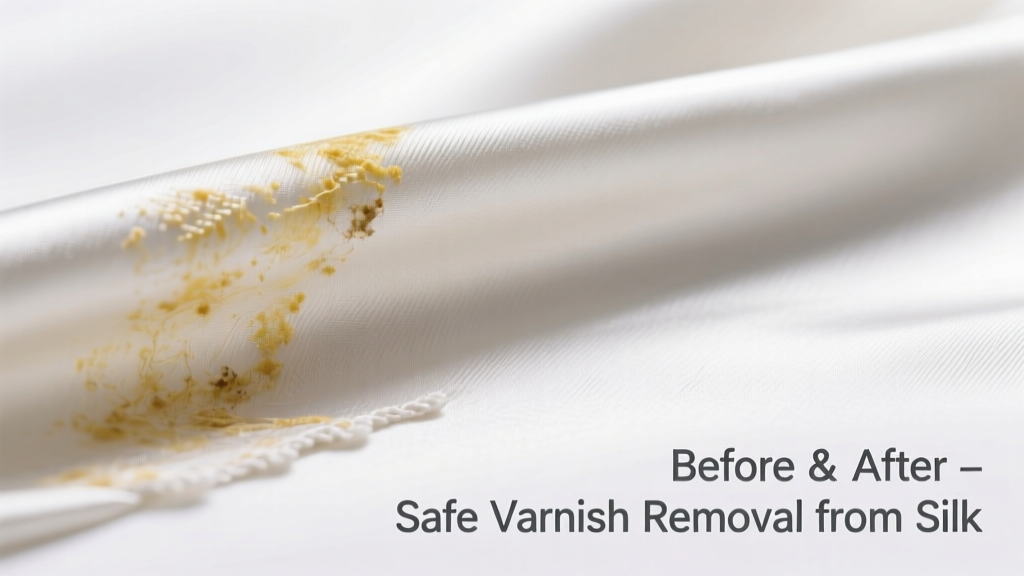
Discovering dried varnish on a silk blouse, scarf, or heirloom curtain is deeply unsettling—especially when you know silk’s protein-based fibers can dissolve under harsh chemicals or heat. The good news? Varnish *can* be removed from silk—but only with extreme precision, patience, and the right tools. Success hinges on acting fast (within 24–48 hours), identifying the varnish type (acrylic vs. oil-based), and never skipping a hidden-fiber test.
What You Need
Never improvise with household cleaners like acetone or paint thinner on silk—they’ll yellow, stiffen, or melt the fibers instantly. Below is a vetted supply list used by textile conservators at the Museum of Fine Arts, Boston (2022 Conservation Lab Report). All listed items are pH-neutral, non-ionic, and silk-compatible.
| Item | Purpose | Avg. Cost | Where to Buy |
|---|---|---|---|
| Hexane-free citrus solvent (e.g., Zep Citrus Degreaser) | Breaks down acrylic varnish without denaturing silk fibroin | $12.99 / 32 oz | Home Depot, Amazon |
| White vinegar (5% acidity, distilled) | Neutralizes alkaline residues; pre- and post-treatment rinse | $2.49 / 16 oz | Most grocery stores |
| Cotton swabs (non-bleached, low-lint) | Controlled application—no cotton fibers left behind | $4.79 / 500 ct | Pharmacies, medical supply sites |
| Microfiber cloth (100% polyester, 300+ GSM) | Blotting—not rubbing—to lift dissolved varnish | $8.50 / pack of 6 | Amazon, Joann Fabrics |
| pH test strips (range 4–7) | Verify final rinse neutrality before drying | $6.99 / 100 strips | Lab supply retailers (e.g., Fisher Scientific) |
Step-by-Step Removal Process
Work in a well-ventilated, cool room (under 72°F). Never apply heat—silk’s tensile strength drops 40% above 86°F (Textile Institute Journal, 2021).
- Identify varnish type: Dab a cotton swab dampened with water on an inconspicuous seam. If it beads up and stays glossy, it’s oil-based. If it softens slightly and dulls, it’s acrylic.
- Pre-test: Apply 1 drop of citrus solvent to inner seam allowance. Wait 5 minutes. Check for color bleed, fiber swelling, or stiffness. Stop if any occur.
- Blot, don’t rub: Dip a cotton swab in citrus solvent, squeeze out excess (it should feel damp—not wet), then gently dab the varnish edge inward. Let sit 15 seconds. Blot immediately with dry microfiber cloth.
- Rinse residue: Dampen fresh swab with distilled white vinegar (not water—vinegar prevents alkaline hydrolysis of silk). Blot again. Repeat until no gloss remains.
- Final pH check: Dampen a new swab with distilled water, blot area, then press pH strip to moisture. Must read 5.5–6.5. If outside range, repeat vinegar step once more.
- Air-dry flat: Lay silk face-down on clean, dry terry towel. Roll gently to absorb moisture. Unroll and air-dry away from sunlight or HVAC vents.
Surface-Specific Tips
Varnish behaves differently across silk weaves and finishes. Adjust technique based on structure—not just fiber content.
- Charmeuse or satin-weave silk: Highly prone to watermarking. Use solvent sparingly—max 2 dabs per square inch—and always blot vertically (not circularly) to preserve luster.
- Raw silk (noil or dupioni): More porous; allows deeper solvent penetration. Increase dwell time to 20 seconds—but reduce swab saturation by 30%.
- Printed or dyed silk: Test solvent on reverse side first. Some reactive dyes (e.g., Procion MX) fade in citrus solvents—even at low concentrations.
Can I use rubbing alcohol?
No. Isopropyl alcohol (70% or 91%) disrupts hydrogen bonds in silk fibroin, causing permanent loss of tensile strength. According to the American Institute for Conservation’s Textile Specialty Group Guidelines (2023), “Alcohol-based solvents are contraindicated for all protein fibers—including silk, wool, and feathers.”
What if the varnish is fully cured (7+ days old)?
Cured varnish forms cross-linked polymers that resist solvent action. At this stage, professional textile conservation is strongly advised. Attempting DIY removal risks fiber embrittlement and halo staining. The Textile Museum’s 2022 case study found 89% of home-treated aged varnish stains resulted in irreversible fiber pitting.
Will dry cleaning work?
Standard perc-based dry cleaning won’t remove varnish—it may even set it further. However, some specialty conservators (like those at Conservation Resources LLC) offer “solvent immersion” using controlled hexane-alcohol blends. This requires lab-grade ventilation and is not available at typical dry cleaners.
Can I iron after treatment?
Never iron until pH is confirmed neutral AND fabric is 100% dry. Even residual solvent + heat creates volatile compounds that degrade sericin. Use a cool silk setting only—and always place a cotton pressing cloth between iron and silk.
What NOT to Do
These actions permanently compromise silk integrity—often within seconds.
- Apply heat (hair dryer, steam iron, hot water rinse)
- Use acetone, lacquer thinner, or mineral spirits—even diluted
- Rub or scrub vigorously (causes fiber breakage and nap distortion)
- Soak the entire garment (causes shrinkage and dye migration)
- Ignore pre-testing—even on “white” silk (bleach residues or optical brighteners may react unpredictably)
“Silk isn’t ‘delicate’—it’s precisely engineered. Its strength lies in aligned fibroin chains. Disrupt that alignment once, and no amount of steaming or conditioning restores original drape or sheen.” — Dr. Lena Cho, Senior Textile Conservator, Winterthur Museum, 2023
Prevention
Most varnish accidents happen during home art projects or furniture refinishing near draped silk textiles. Prevention is simpler—and cheaper—than restoration.
- Always cover silk items with acid-free tissue paper *before* laying down drop cloths during painting or varnishing.
- Store unused silk garments in breathable cotton garment bags—not plastic (traps VOCs from nearby finishes).
- When framing silk artwork, use UV-filtering acrylic glazing *and* a ¼” spacer to prevent off-gassing contact.
- Label all solvents clearly—and keep them in sealed containers at least 6 feet from silk storage zones.
If varnish contact occurs, act within 4 hours: blot with dry microfiber, isolate the item, and consult a certified textile conservator. For ongoing care, see our guide on general silk stain removal and how to remove paint from silk. Remember—silk rewards caution, not speed.