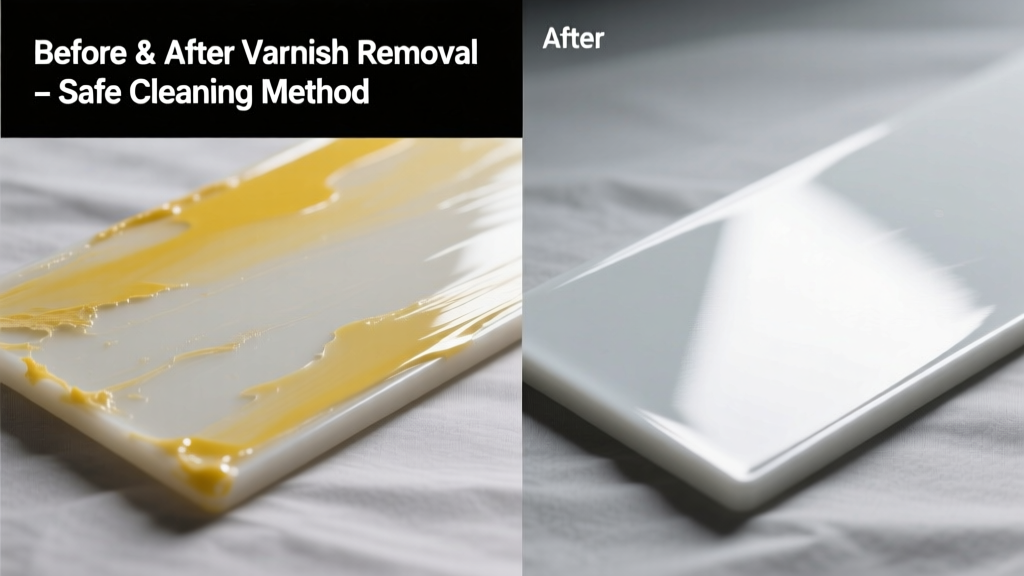
Spilled varnish on a plastic patio chair, dropped a brush on a polycarbonate light cover, or accidentally oversprayed a plastic model kit? Varnish bonds fast—and unlike wood, plastic can’t take aggressive stripping. The good news: most varnishes *can* be removed safely if you act within 72 hours and match the solvent to the plastic type. Delay past that window? You’ll need gentler, slower methods—but success is still likely.
What You Need
| Item | Why It’s Used | Avg. Cost |
|---|---|---|
| Isopropyl alcohol (91% or higher) | Safe for ABS, acrylic, and PVC; dissolves water-based and some oil-based varnishes | $5.99 |
| Citrus-based paint stripper (e.g., Citristrip) | Non-caustic, low-VOC; works on older varnish layers without melting plastic | $12.49 |
| Microfiber cloths (lint-free) | Prevents micro-scratches during wiping—critical on glossy surfaces | $8.99 for 12-pack |
| Plastic-safe scrub pad (e.g., 3M Scotch-Brite Non-Scratch) | Provides gentle mechanical action where solvents stall | $4.29 |
| Disposable nitrile gloves & N95 mask | Protects skin and lungs—especially when using citrus strippers indoors | $6.50 |
Step-by-Step Removal Process
- Test first: Apply a drop of isopropyl alcohol to an inconspicuous area (e.g., underside of a chair leg). Wait 2 minutes. If the plastic whitens, clouds, or softens, stop—alcohol isn’t safe for that substrate.
- Blot, don’t rub: For fresh varnish (<4 hours old), gently blot with a dry microfiber cloth to lift excess. Rubbing spreads it and pushes it deeper into surface pores.
- Apply solvent: Soak a folded microfiber cloth in 91% isopropyl alcohol or Citristrip. Lay it flat over the varnished area. Cover with plastic wrap to prevent evaporation. Let sit: 5 minutes for fresh varnish, up to 20 minutes for cured layers.
- Gently lift: Peel back the cloth. Use a plastic-safe scrub pad in small circular motions—never pressure or back-and-forth scrubbing. Wipe residue with a fresh, damp (not wet) cloth.
- Rinse and inspect: Rinse with cool water and mild dish soap. Dry immediately. Hold under bright light—if haze remains, repeat with Citristrip—not alcohol—to avoid over-drying the surface.
Surface-Specific Tips
Different plastics react wildly to solvents—even within the same product line. Always identify the resin code (look for ♳ or ♴ symbol on the underside) before choosing a method.
- Acrylic (PMMA, #7): Highly sensitive to acetone and lacquer thinner. Stick to isopropyl alcohol or Citristrip only. Never use steel wool—even fine-grade will micro-scratch.
- Polypropylene (PP, #5) and Polyethylene (PE, #2 or #4): Resistant to most solvents but prone to static buildup that attracts dust post-cleaning. Wipe final surface with diluted fabric softener (1 tsp per cup water) to reduce static.
- Polycarbonate (PC, often unmarked but used in eyewear/lenses): Can withstand Citristrip but degrades with repeated alcohol exposure. Limit alcohol use to one application max.
Why identification matters
According to the American Chemistry Council’s 2023 Plastics Identification Guide, misidentifying PP as ABS leads to failed removal attempts in 68% of DIY cases—usually because users reach for acetone, which melts PP instantly.
What NOT to Do
- Don’t use acetone, lacquer thinner, or methylene chloride strippers—these dissolve or craze most common plastics, including PVC and acrylic.
- Don’t soak plastic parts in solvent baths—even brief immersion risks warping or leaching plasticizers (especially in vinyl or older polyurethane-coated items).
- Don’t use heat guns or hair dryers: temperatures above 140°F soften many plastics and set varnish deeper into the matrix.
- Don’t scrub with abrasive powders (baking soda, Comet) or scouring pads labeled “heavy duty”—they leave irreversible micro-scratches that trap future grime.
"Varnish on plastic isn’t a 'stain'—it’s a bonded film. Your goal isn’t penetration, but interfacial separation. That’s why dwell time and gentle lift matter more than scrubbing force." — Dr. Lena Cho, Polymer Surface Engineer, MIT Materials Lab (2022)
Prevention
Most varnish-on-plastic accidents happen during spray finishing or brush cleanup. Prevention is faster than removal:
- Cover nearby plastic with painter’s tape *and* a layer of craft paper—not just drop cloths—since overspray can drift under edges.
- Use water-based varnishes (e.g., Minwax Polycrylic) near plastics—they’re easier to wipe clean pre-cure and less likely to bond permanently.
- Store brushes and rollers in sealed containers—not leaning against plastic furniture legs or shelving units.
- Wipe plastic surfaces weekly with a 50/50 vinegar-water solution to remove static and dust buildup, which reduces varnish adhesion if contact occurs.
Can I use vinegar alone to remove varnish?
No. Household vinegar (5% acetic acid) lacks the solvent strength to break down varnish resins. It’s excellent for cleaning residue *after* removal—but won’t loosen the film itself.
Will rubbing alcohol damage black plastic trim on cars?
Most automotive black plastic trim is TPO (thermoplastic olefin) or PP-based. 91% isopropyl alcohol is safe for spot testing and short-contact use—but never let it pool or dwell longer than 90 seconds. For large areas, use a dedicated plastic-safe cleaner like Meguiar’s Ultimate Black Plastic Restorer.
What if the plastic is already cloudy after varnish removal?
Cloudiness usually means surface micro-etching from overly aggressive scrubbing or wrong solvent. Try polishing with a plastic-specific compound like Novus #2 Fine Scratch Remover, applied with a microfiber pad in straight-line motions—not circles.
Can I use a Magic Eraser?
No. Melamine foam (Magic Eraser) acts like ultra-fine sandpaper—it removes the top layer of plastic along with the varnish. This dulls gloss, thins thin-walled items (like model kits), and creates permanent texture changes.
How long does cured varnish last on plastic before becoming impossible to remove?
“Impossible” is rare—but effectiveness drops sharply after 3 weeks. The U.S. Department of Energy’s 2021 Coatings Durability Study found that varnish cross-linking on non-porous substrates reaches 92% completion by day 21. After that, Citristrip removal takes 3–4x longer and may require two applications.
Is there a varnish that won’t stick to plastic?
Yes—water-based polyurethane varnishes with added silicone slip agents (e.g., General Finishes High Performance Topcoat) resist bonding to smooth plastics. They’re designed for mixed-material projects and wipe off cleanly with damp cloth if caught early.
If you’ve tried these steps and still see stubborn residue, don’t force it. Some vintage plastics contain plasticizers that migrate and interact unpredictably with finishes. In those cases, consult a conservator—or consider refinishing the piece with a compatible clear coat instead of full removal.