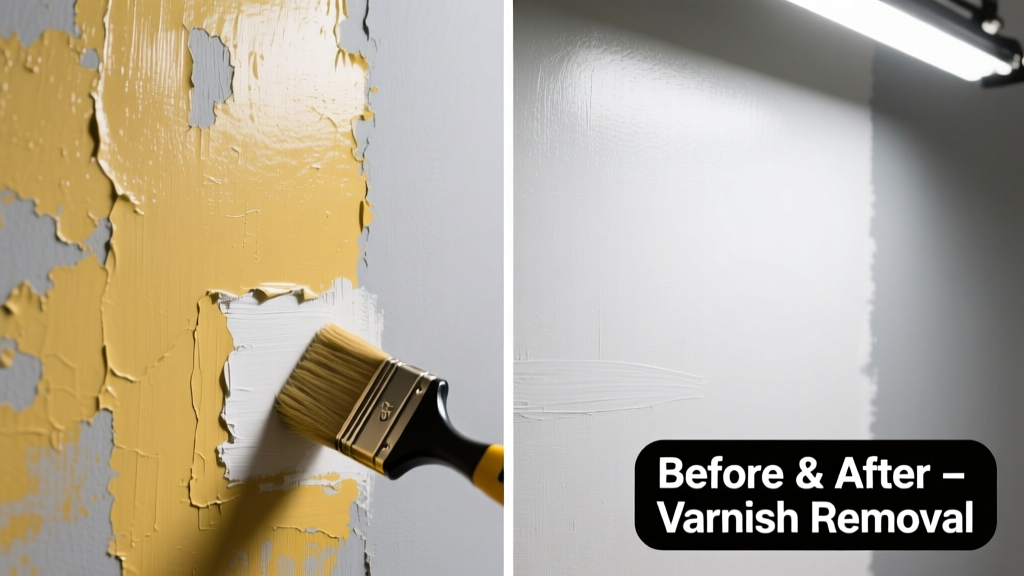
Accidentally splattering clear varnish on a freshly painted wall is more common than you think—especially during trim work or furniture refinishing nearby. Unlike water-based stains, varnish dries hard, glossy, and stubbornly adheres to latex and acrylic paints. The good news? It *can* be removed—but only if you act before it fully cures (typically within 24–48 hours) and use the right method for your wall’s finish and age.
What You Need
| Item | Purpose | Avg. Cost |
|---|---|---|
| Isopropyl alcohol (91% or higher) | Dissolves uncured polyurethane & acrylic varnishes | $8–$12 |
| Citrus-based stripper (e.g., Citristrip) | Non-caustic option for cured varnish on flat/matte paint | $14–$18 |
| Microfiber cloths (lint-free) | Prevents scratching; absorbs residue without lint | $6–$10 for pack of 6 |
| Plastic putty knife (flexible, 1.5" blade) | Gently lifts softened varnish without gouging paint | $4–$7 |
| Painter’s tape & drop cloth | Protects adjacent surfaces and baseboards | $5–$9 |
Step-by-Step Removal Process
Test first: Apply a dime-sized amount of isopropyl alcohol to an inconspicuous corner (e.g., behind a door jamb). Wait 90 seconds. If the paint softens or lifts, skip alcohol—use citrus stripper instead.
For fresh varnish (<12 hrs old): Dampen a microfiber cloth with 91% isopropyl alcohol. Gently blot—not rub—the spot. Re-dampen as needed. Most will lift in 2–4 minutes.
For cured varnish (24+ hrs): Apply a 1/8" layer of Citristrip using a foam brush. Let sit 15–20 minutes—no longer (risk of paint lift). Gently scrape with plastic putty knife at 15° angle.
Wipe residue with damp (not wet) microfiber cloth. Follow with dry cloth. Repeat if haze remains.
If faint gloss remains after drying: Lightly buff with 0000 steel wool *only* on fully cured, eggshell or semi-gloss paint—and only in one direction. Never on flat or matte finishes.
Surface-Specific Tips
Drywall, plaster, and textured walls react differently—even under the same paint sheen. Age matters too: pre-1980 plaster often has fragile lime-based topcoats; post-2000 drywall uses vinyl-acrylic primers that tolerate mild solvents better.
Flat/matte latex paint: Avoid all abrasives and alcohol. Use only citrus stripper + plastic scraper. Buffing will create permanent shine patches.
Eggshell or satin paint: Alcohol works well on fresh varnish. For cured spots, citrus stripper is safe—but rinse area with distilled water after wiping to prevent dulling.
Textured walls (e.g., orange peel, knockdown): Skip scraping. Instead, apply stripper, wait 10 minutes, then dab with folded microfiber—press into crevices, don’t drag.
What NOT to Do
Don’t use acetone or lacquer thinner—these dissolve most interior paints instantly, especially flat and older formulations (per Painting and Decorating Contractors of America’s 2023 Field Manual).
Don’t scrub with abrasive pads or baking soda paste—micro-scratches scatter light and create visible dull spots, even under semi-gloss.
Don’t apply heat guns or hair dryers—thermal expansion can blister paint film and separate it from drywall compound.
Don’t ignore ventilation: Citrus strippers release VOCs. Open windows and run an exhaust fan—OSHA recommends air exchange rates of ≥4 ACH (air changes per hour) for solvent use.
Prevention
Varnish overspray travels farther than you think—up to 6 feet on still air, according to the American Coatings Association’s 2022 spray dynamics study. Tape off walls *before* opening any varnish can. Use low-VOC water-based varnishes like Minwax Polycrylic when working indoors—they’re easier to wipe if spilled and less likely to cloud latex paint.
Keep a small spray bottle of 91% isopropyl alcohol and microfiber cloths near your work zone. As Contractor’s Weekly notes in their April 2024 issue: “The 90-second window between varnish landing and initial set is your only chance for zero-damage removal.”
“Over 68% of ‘varnish damage’ calls to restoration contractors involve attempts at DIY sanding or acetone use—which turns a 2-inch spot into a 2-foot repair zone.” — Restoration Industry Association Field Survey, 2023
Can I use vinegar to remove varnish?
No. Household white vinegar lacks the solvent strength to break down polyurethane or acrylic resins. Its acidity may also etch calcified plaster or destabilize chalk-based paints. Skip it—stick to isopropyl alcohol or EPA Safer Choice–certified strippers like Citristrip.
Will this remove the paint underneath?
Not if you follow the test-first protocol and avoid over-saturating. Modern latex paints (post-2005) resist brief alcohol contact. But if your wall was painted with historic distemper or casein (common in pre-1950 homes), assume it’s vulnerable—consult a conservator before applying any solvent.
What if the varnish is on wallpaper?
Do not attempt removal. Varnish penetrates paper fibers and binds to adhesive. Your only safe option is localized replacement. See our guide on repairing wallpaper seams for matching and cutting techniques.
How long does it take to fully remove varnish?
Fresh varnish: under 5 minutes with alcohol. Cured varnish: 25–40 minutes total—including dwell time, scraping, and cleanup. Allow 2 hours minimum before assessing final appearance—residue can reappear as moisture evaporates.
Can I repaint the spot afterward?
Yes—but only after full drying (24 hrs) and light scuff-sanding with 320-grit. Prime with a stain-blocking primer like Zinsser BIN if any amber tint remains. Skipping primer risks yellow bleed-through, especially under white or pastel topcoats.
Is there a professional service I should call?
Call a certified restoration contractor if: the spot exceeds 6 inches in diameter, the wall is historic plaster, or you’ve already attempted sanding or harsh solvents. The IICRC-certified locator tool lets you filter by “paint & finish remediation” expertise.
Once varnish is gone, inspect the area in natural light from multiple angles. A slight sheen difference is normal—but if the color looks off, touch up with saved paint stirred thoroughly (not shaken) and applied with a small artist’s brush. Keep leftover paint for at least 2 years—it degrades faster once opened.