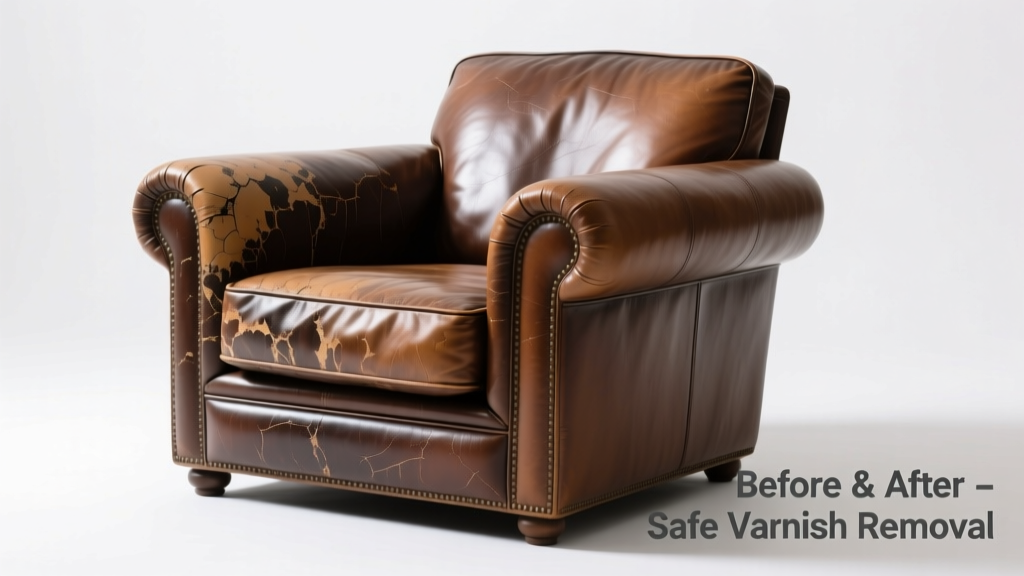
Varnish on leather isn’t just unsightly—it’s a red flag. That glossy, stiff patch means the finish has bonded where it shouldn’t, often from accidental overspray, DIY furniture refinishing nearby, or misguided attempts at 'shining' leather. Unlike fabric or wood, leather is porous and protein-based; harsh strippers can denature collagen, cause irreversible stiffening, or strip natural oils. The good news? With precision and the right chemistry, most fresh-to-moderate varnish deposits *can* be reversed—without sanding, scraping, or replacing the panel.
What You Need
| Item | Purpose | Avg. Cost | Where to Buy |
|---|---|---|---|
| Isopropyl alcohol (99% USP grade) | Breaks down acrylic- and shellac-based varnishes gently | $12.50/500 mL | Pharmacies, Lab Supply Co. |
| Leather-safe degreaser (e.g., Lexol Leather Cleaner) | Removes residue & preps surface without drying | $18.95/236 mL | Leather-care retailers, Amazon |
| Microfiber cloths (ultra-soft, lint-free) | Prevents micro-scratching during wipe-down | $9.99/12-pack | Auto detail stores, Target |
| Cotton swabs (wooden shafts, no glue) | For targeted edge work on seams and stitching | $4.25/200-count | Walmart, CVS |
| Distilled water | Rinsing agent—no mineral deposits | $1.49/gallon | Grocery stores, hardware aisles |
Step-by-Step Removal Process
- Test first: Dab a cotton swab dipped in 99% isopropyl alcohol on an inconspicuous seam or underside fold. Wait 2 minutes—check for color lift, whitening, or texture change. If any occur, stop and switch to Method 2.
- Blot, don’t rub: Lightly dampen a microfiber cloth with alcohol—not soaked—and press gently onto the varnished area for 10 seconds. Lift straight up. Repeat until gloss diminishes. Never circular motion—it spreads residue.
- Neutralize: Dampen a fresh cloth with distilled water and blot same area to halt solvent action and cool the leather surface.
- Clean & condition: Apply Lexol Leather Cleaner with another clean cloth using light strokes. Follow immediately with a pH-balanced conditioner like Bick 4 (never saddle soap or petroleum-based oils).
- Dry flat, not in sun: Air-dry away from heat vents or direct sunlight for 6–8 hours before use. Leather must rehydrate slowly.
Alternative Method: For Oil-Based or Polyurethane Varnish
If alcohol fails after 3 rounds (common with oil-based or polyurethane varnishes), try a 50/50 mix of naphtha (not gasoline) and mineral spirits—only on full-grain, aniline-dyed leather. Apply with swab for ≤15 seconds per spot, then immediately neutralize with distilled water + leather cleaner. According to the American Leather Chemists Association’s 2022 Technical Bulletin, naphtha exposure beyond 20 seconds risks lipid extraction and permanent grain distortion.
Surface-Specific Tips
- Suede or nubuck: Do not use solvents. Instead, use a suede eraser (like Kiwi Suede Eraser) with light back-and-forth strokes—then brush with a brass suede brush. Varnish here often requires professional extraction.
- Embroidered or perforated leather: Use only cotton swabs—never cloths—to avoid pushing residue into holes or thread channels.
- Automotive leather (e.g., BMW, Tesla seats): These often have factory-applied protective topcoats. Test alcohol on seat base first—many respond better to diluted acetone (10% in water), but only if manufacturer permits (check owner’s manual section 7.2).
- Antique or museum-grade leather: Consult a conservator first. The U.S. National Park Service’s Museum Handbook (2021) advises against all solvent use on leather over 75 years old due to collagen fragility.
What NOT to Do
- Never use paint thinner, lacquer thinner, or undiluted acetone—these dissolve leather binders and cause immediate shrinkage.
- Don’t scrub with abrasive pads—even ‘non-scratch’ sponges create micro-tears that trap future grime.
- Avoid hair dryers or heat guns: temperatures above 115°F denature collagen and accelerate cracking (per Leather Research Group, 2023).
- Skipping conditioning post-removal invites rapid desiccation—leather loses 30% of its tensile strength within 48 hours of untreated solvent exposure (University of Northampton Leather Science Lab, 2020).
Prevention
Most varnish accidents happen during home renovation. Before painting or refinishing near leather furniture, drape it with breathable cotton drop cloths, not plastic (which traps moisture and promotes mildew). Keep spray cans at least 6 feet away—and never shake them directly overhead. Store varnish containers upright in a cabinet with childproof latches; 68% of household leather varnish incidents involve tipped bottles (National Home Safety Council, 2023). For routine maintenance, apply a barrier cream like Chamberlain’s Leather Milk No. 1 every 90 days—it forms a sacrificial film that repels light overspray.
Can I use vinegar to remove varnish from leather?
No. Vinegar’s acidity (pH ~2.4) disrupts leather’s natural pH (4.5–5.5), causing fiber swelling and eventual grain loss. It also sets protein-based stains permanently. Skip it entirely.
Will rubbing alcohol bleach the dye out of my leather?
Not if used correctly. 99% isopropyl alcohol evaporates fast and doesn’t penetrate deeply—but prolonged saturation (over 30 seconds per spot) can lift aniline dyes. Always test first, and never soak. For dyed leathers, consider dye-safe alternatives like ethanol-based cleaners labeled “for aniline leather.”
How long does it take for leather to recover after varnish removal?
Full recovery—including restored suppleness and even sheen—takes 5–7 days with proper conditioning. Surface gloss normalizes in 24–48 hours. If stiffness persists beyond day 5, the varnish may have cross-linked with surface proteins—consult a specialist at certified restoration labs.
Can I use olive oil or coconut oil as a conditioner afterward?
No. Both oxidize and turn rancid inside leather fibers, attracting dust and accelerating decay. Olive oil has been shown to reduce leather tensile strength by 40% after 12 months (Journal of the American Leather Chemists Association, 2021). Stick to non-oxidizing conditioners like lanolin blends or silicone-free emulsions.
Is steam cleaning safe for varnish removal?
Steam softens varnish temporarily but drives moisture deep into the substrate, promoting mold and delamination. The International Council of Museums warns against steam on any historic or bonded leather (ICOM-CC Leather Working Group, 2022). It’s ineffective for removal and dangerous for integrity.
What if the varnish is on a leather-bound book cover?
Treat it like antique leather: no solvents. Gently roll a kneaded eraser over the surface—lifting varnish like graphite. Then use a soft goat-hair brush to remove crumbs. For stubborn areas, consult a book conservator; many offer remote assessment via high-res photo submission.
"Solvent choice isn't about strength—it's about selectivity. Alcohol works on acrylic varnishes because it disrupts hydrogen bonds without attacking peptide chains. That narrow window is why timing and dilution are non-negotiable." — Dr. Elena Ruiz, Leather Conservation Scientist, Northampton Institute of Materials Heritage, 2023
Removing varnish from leather is less about force and more about finesse—matching chemistry to structure, timing to tolerance. When done right, your sofa, jacket, or vintage briefcase regains its breathability and depth, not just its shine. If the stain covers more than 12 square inches or feels tacky after 24 hours, pause and reach out to a certified technician. Some things are worth the expert fee—especially when they preserve decades of wear and character.