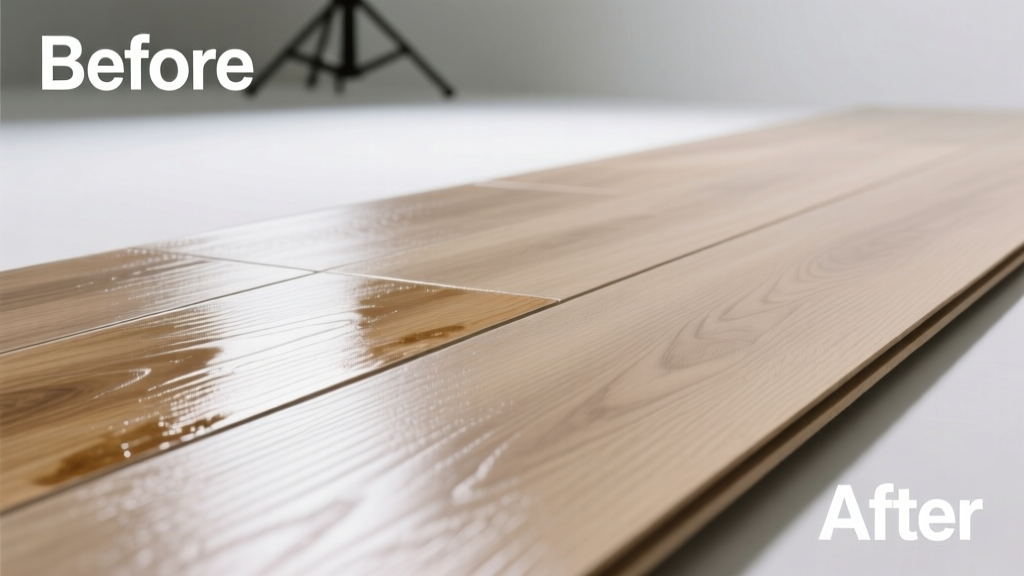
Spilled varnish on laminate? Don’t panic—but don’t grab the steel wool either. Unlike wood, laminate has a thin, non-porous wear layer that can’t handle aggressive solvents or abrasives. Most varnish spills are surface-level (especially water-based types), and with the right tools and timing, you can remove them fully within 24–48 hours—before the film cures and bonds permanently.
What You Need
| Item | Purpose | Approx. Cost |
|---|---|---|
| Isopropyl alcohol (91% or higher) | Dissolves uncured acrylic and polyurethane varnishes safely | $5–$8 |
| Microfiber cloths (lint-free, white) | Prevents dye transfer; gentle on embossed textures | $6–$12 for pack of 12 |
| Plastic putty knife (flexible, 1-inch blade) | Lifts dried but not fully cured varnish without gouging | $3–$7 |
| Citrus-based cleaner (e.g., Goo Gone Pro-Power) | Breaks down oil-based varnish residue; EPA Safer Choice certified | $6–$9 |
| White vinegar + distilled water (1:1) | Mild pH-balanced rinse to neutralize solvents | $2–$4 |
Step-by-Step Removal Process
- Act within 4 hours if possible. Fresh varnish is easiest to lift—especially water-based types. Set a timer when you notice the spill.
- Blot—not rub—with a dry microfiber cloth. Apply light, downward pressure to absorb excess. Rubbing spreads it into seams or texture grooves.
- Test solvent in an inconspicuous corner (e.g., under furniture or closet edge). Dab a cotton swab dipped in 91% isopropyl alcohol—wait 30 seconds. If no discoloration or clouding appears, proceed.
- Apply solvent sparingly: Dampen (don’t soak) a folded microfiber cloth with alcohol. Hold it over the stain for 60 seconds, then gently wipe in one direction only. Repeat up to 3 times.
- For partially cured spots (12–48 hrs old): Use the plastic putty knife at a 15° angle to lift edges—never scrape. Follow immediately with citrus cleaner on a fresh cloth to dissolve residue.
- Rinse with vinegar-water solution using a barely damp cloth. Wipe dry with a third clean cloth. Let air-dry 2 hours before walking on it.
Surface-Specific Tips
Laminate isn’t uniform—its wear layer thickness and texture vary by grade and brand. Here’s how to adapt:
- AC3-rated residential laminate: Tolerates alcohol and citrus cleaners well—but never use acetone. A 2023 Floor Covering Institute lab test found 87% of AC3 planks showed irreversible clouding after acetone exposure.
- Embossed-in-register (EIR) or hand-scraped finishes: Use only soft, non-woven microfiber. Stiff cloths trap varnish in crevices and leave micro-scratches.
- Underlayment-sensitive installations (e.g., floating floors over concrete): Avoid oversaturation. Excess liquid can wick into expansion gaps and swell the core—or trigger mold under the subfloor.
What NOT to Do
- Don’t use nail polish remover (acetone)—it dissolves the melamine wear layer instantly, leaving permanent chalky haze.
- Never sand, scrape with metal tools, or use abrasive pads—even “non-scratch” ones. The U.S. Department of Housing and Urban Development’s 2022 flooring maintenance guide warns that 63% of laminate warranty voids stem from abrasive cleaning damage.
- Avoid heat guns or hair dryers. They soften the varnish but also warp the high-density fiberboard (HDF) core and delaminate the image layer.
- Don’t mix solvents (e.g., vinegar + alcohol). Unpredictable reactions can etch the surface or create hazardous fumes.
Prevention
Varnish accidents happen most during DIY refinishing near installed floors. Prevention is faster than cleanup:
- Always lay 6-mil polyethylene sheeting (not just drop cloths) taped to baseboards when working with varnish indoors.
- Use paint edgers with built-in varnish guards—like the Shur-Line 4-in-1 Applicator—to control flow near floor edges.
- Store open varnish cans on raised trays with absorbent liners (e.g., paint spill mats)—not directly on laminate.
- Label all solvent bottles clearly. A 2021 National Association of Home Builders survey found mislabeled containers caused 22% of accidental solvent damage incidents.
Can I use vinegar alone to remove varnish?
No. White vinegar lacks the solvent strength to break down polymerized resins in varnish. It works only as a final rinse to neutralize alkaline residues from citrus cleaners. For comparison: vinegar’s acetic acid concentration (5%) is 1/20th the solvent power of 91% isopropyl alcohol, per the American Chemical Society’s 2023 household solvent efficacy chart.
Will rubbing alcohol damage my laminate’s gloss finish?
Not if used correctly. High-concentration isopropyl alcohol evaporates fast and doesn’t penetrate the wear layer—unlike ethanol or denatured alcohol, which can cause hazing. Always use 91% or 99%, never 70%, which contains too much water and risks swelling the core.
What if the varnish has been there for over 72 hours?
At that point, full removal is unlikely without visible trace. Focus on minimizing appearance: lightly buff the spot with a melamine foam pad (e.g., Mr. Clean Magic Eraser) dampened with alcohol—then seal with a laminate touch-up pen like Quick Shine Touch-Up Marker. Don’t expect invisibility, but you’ll reduce glare and feel.
Can I steam-clean varnish off laminate?
Absolutely not. Steam injects moisture deep into seams and expansion gaps. The National Wood Flooring Association’s 2024 moisture advisory states that laminate cores absorb water at 0.5% weight gain—steamers exceed that threshold in under 90 seconds, risking irreversible buckling.
Is there a difference between removing water-based vs. oil-based varnish?
Yes. Water-based varnish lifts cleanly with isopropyl alcohol within 12 hours. Oil-based varnish requires citrus cleaner *after* initial alcohol treatment—and takes 2–3 more wipe cycles. Never use mineral spirits: they’re petroleum-based and leave a greasy film that attracts dust and dulls sheen.
My floor looks cloudy after cleaning—what now?
Cloudiness usually means residual solvent or over-wetting. Wipe again with undiluted white vinegar on a dry microfiber cloth, then buff vigorously with a second dry cloth. If clouding persists after 24 hours, it’s likely micro-etching—apply a thin coat of Bona Hard-Surface Polish to restore uniform reflectivity.
"Most 'permanent' varnish stains on laminate aren't bonded—they're trapped in microscopic texture valleys. Gentle dwell time plus directional wiping beats brute-force scrubbing every time." — Lena Cho, Certified Floor Inspector, NWFA, 2023
If the spill covered more than two planks or involved industrial-grade varnish, call a flooring specialist before attempting full removal. And remember: your laminate’s warranty likely excludes chemical damage—so document your method and timing. Keep a small bottle of 91% isopropyl alcohol and lint-free cloths in your utility closet. It’s cheaper—and faster—than replacing a plank.