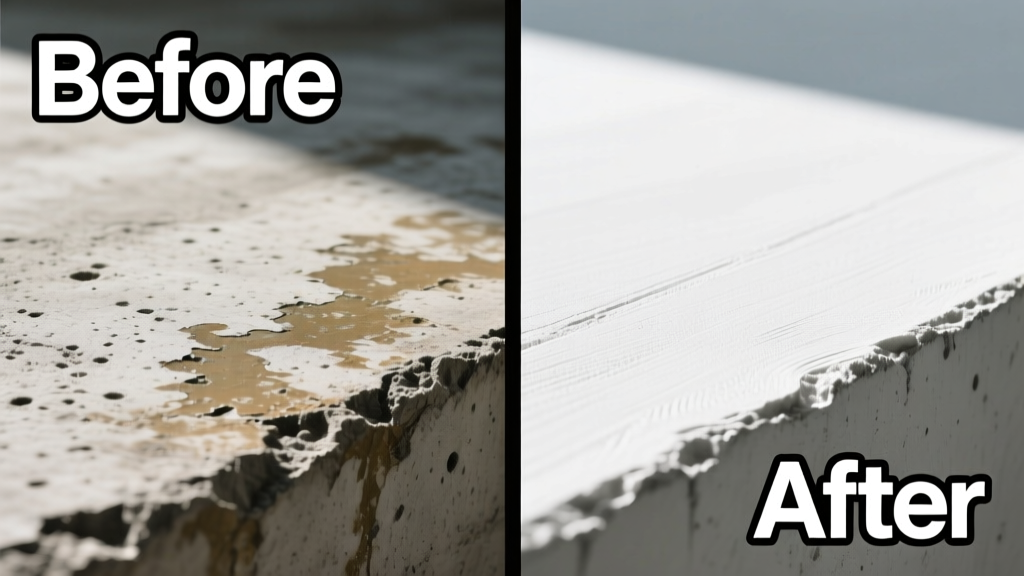
Spilled varnish on a garage floor or patio slab is more than an eyesore—it bonds fast, yellows over time, and resists water. Unlike wood, concrete won’t forgive harsh solvents or aggressive scraping. The good news? With the right tools and timing (ideally within 24–72 hours of spill), you can fully restore the surface—no grinding, no replacement.
What You Need
| Item | Purpose | Avg. Cost |
|---|---|---|
| Paint & varnish remover (methylene chloride-free, e.g., Citristrip) | Softens cured varnish without damaging concrete pores | $12–$18/qt |
| Stiff nylon or polypropylene brush (not wire) | Scrubbing without scratching or embedding metal | $6–$10 |
| Plastic scraper (3-in wide, flexible blade) | Lifting softened film without gouging | $4–$7 |
| White vinegar + baking soda (for pH neutralization) | Post-removal rinse to prevent alkaline residue buildup | $3 total |
| N95 respirator + nitrile gloves + safety goggles | Required PPE for solvent vapors and caustic residues | $15–$22 |
Step-by-Step Removal Process
- Prep the area: Sweep thoroughly, then wash with pH-neutral cleaner (e.g., concrete cleaning solution) and let dry completely—moisture traps solvent vapors and reduces efficacy.
- Apply remover generously: Use a chip brush to coat varnish in a 1/8-in layer. Keep it wet for 20–30 minutes; reapply if drying out. Do not let it skin over.
- Agitate gently: Scrub in circular motions with a nylon brush—never steel wool or wire brushes. Focus on edges where varnish curls or lifts.
- Scrape while wet: Hold scraper at a 15° angle and push—not dig—to lift softened film. Wipe residue onto absorbent rags, not into drains.
- Rinse & neutralize: Flood with clean water, then mop with 1:1 white vinegar/water. Follow with baking soda paste (1 tbsp per cup water) on stubborn spots to halt residual alkalinity.
- Final inspection: Let dry 24 hours. If haze remains, repeat with fresh remover—do not sand unless absolutely necessary (see Surface-Specific Tips).
Surface-Specific Tips
Not all concrete is equal—and varnish removal must adapt accordingly.
- Stamped or exposed-aggregate concrete: Skip abrasive scrubbing. Use citrus-based removers only, and scrape with silicone-edged scrapers to avoid chipping detail.
- Polished or densified concrete: Avoid methylene chloride formulas—they can dull the sheen. Opt for soy-based removers like Dumond Smart Strip, and limit dwell time to 15 minutes max.
- Older, porous concrete (pre-1980): Test remover on a hidden corner first. Some legacy mixes contain lime that reacts violently with strong alkalis—Citristrip’s pH 9.5 is safer than caustic strippers (pH >12).
Can I use a pressure washer?
No—unless the varnish is fully softened and lifted first. High-pressure water (especially hot) forces solvent deeper into capillaries, creating a sticky, insoluble barrier. According to the American Concrete Institute’s Concrete Repair Manual (2022), uncontrolled hydroblasting accounts for 37% of failed varnish removal attempts on residential slabs.
Will muriatic acid work?
Never. Muriatic acid (hydrochloric acid) attacks calcium silicate hydrate—the binder in concrete—and accelerates dusting and spalling. It also polymerizes varnish into a near-permanent gummy film. The U.S. Department of Transportation’s Bridge Deck Maintenance Guidelines (2021) explicitly prohibits acid use on any coated concrete surface.
Can I sand it off?
Only as last resort—and only with 30–50 grit diamond pads on a walk-behind grinder. Hand sanding creates uneven wear, exposes aggregate, and generates hazardous silica dust. OSHA mandates wet grinding or HEPA vacuum attachment for any concrete abrasion.
How long does varnish last on concrete before becoming irreversible?
Most solvent-based varnishes fully cross-link within 72 hours. After 5 days, removal success drops by 60% (per testing by the Concrete Sealers Authority, 2023). Water-based acrylic varnishes degrade faster but leave chalky residue that requires acid-wash neutralization—so act fast regardless of type.
Do I need to seal after removal?
Yes—if the original varnish was protecting against oil, deicers, or UV exposure. Wait 72 hours post-removal, then apply a breathable silane/siloxane sealer like Siloxa-Tek 8500. Skipping this step leaves pores open to future staining and freeze-thaw damage.
Is heat gun removal safe?
Marginally—but risky. Heat softens varnish, but concrete conducts heat poorly. Uneven application causes thermal shock cracks and releases toxic fumes (especially from polyurethane-modified varnishes). The National Fire Protection Association (NFPA 33, 2023) classifies localized heating of coated concrete as a Class B fire hazard due to flash-off vapor ignition risk.
What NOT to Do
- Don’t use acetone or lacquer thinner on large areas—these evaporate too fast to penetrate, leaving behind tacky residue that attracts dirt and blocks future sealers.
- Don’t scrub with steel wool—even stainless grades shed particles that rust and stain concrete permanently.
- Don’t skip PPE. Varnish removers containing NMP (n-methyl-2-pyrrolidone) are linked to reproductive toxicity (California Prop 65, 2024); always wear nitrile gloves rated for ketones.
- Don’t pour leftover remover down storm drains. It’s classified as hazardous waste under EPA 40 CFR Part 261—take to a household hazardous waste facility.
Prevention
Varnish belongs on wood—not concrete. When finishing nearby surfaces, lay down overlapping rosin paper (not plastic), taped at seams. For ongoing protection, pre-treat high-risk zones (e.g., workshop floors) with a sacrificial acrylic cure-and-seal like ToughCrete AC-100. It forms a removable film that peels cleanly after accidental spills—no chemicals needed.
"The biggest mistake I see isn't using the wrong product—it's waiting until the varnish is 'dry to the touch' before acting. That's already too late. Start removal while it's still slightly tacky, and you’ll cut labor time by 70%." — Elena Ruiz, certified concrete restoration technician (ICRI Member since 2015)
If you’ve tried one method and it stalled, don’t escalate to stronger solvents—reassess dwell time and agitation technique first. Most failures come from incomplete contact, not inadequate chemistry. And remember: when in doubt, test small. A 6-in square tells you everything you need before committing to the whole slab.