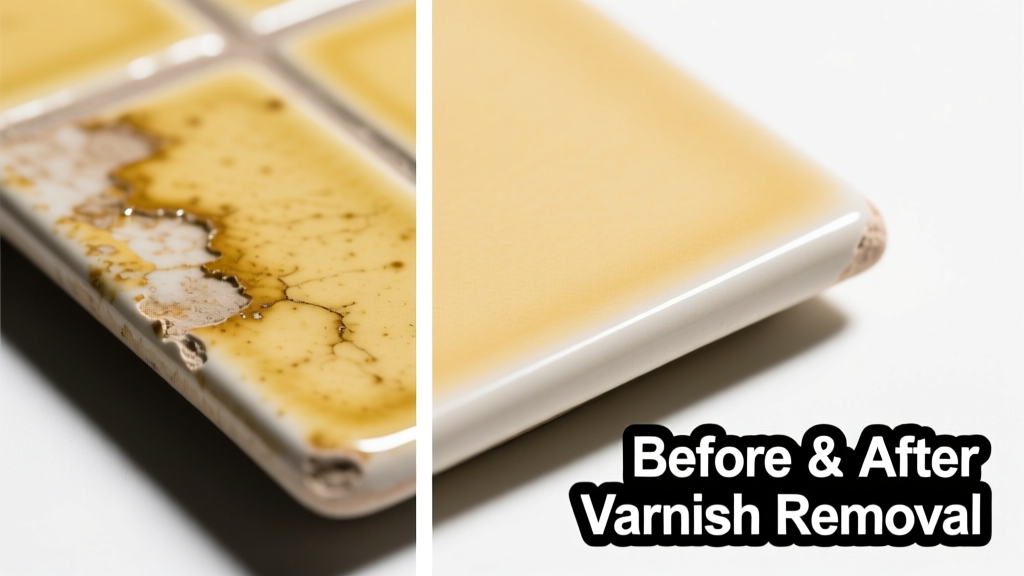
That cloudy, yellowed varnish layer on your vintage ceramic tile or hand-thrown mug? It’s not just unsightly—it can trap grime and dull the glaze. Good news: varnish isn’t bonded like paint or epoxy, so it *can* be removed cleanly—if you avoid harsh solvents that risk micro-scratches or glaze damage.
What You Need
| Item | Purpose | Avg. Cost |
|---|---|---|
| Acetone (100% pure, no additives) | Dissolves acrylic and polyurethane varnishes safely on glazed ceramic | $8.50 / 16 oz |
| Citrus-based stripper (e.g., Citristrip) | Non-toxic alternative for older oil-based varnishes | $14.99 / 1 qt |
| Microfiber cloths (lint-free) | Prevents scratching during wiping; reusable | $12.99 / pack of 12 |
| Plastic putty knife (not metal) | Gently lifts softened varnish without gouging | $5.49 |
| White vinegar + baking soda paste | Mild option for light surface haze—only on fully glazed ceramic | $3.25 total |
Step-by-Step Removal Process
- Test in an inconspicuous area first: apply a dime-sized drop of acetone to the underside or back of the piece; wait 60 seconds, then wipe with a dry microfiber cloth. If the glaze remains intact and no cloudiness appears, proceed.
- For small items (mugs, tiles ≤6”): submerge in acetone for 2–3 minutes. For large surfaces (backsplash tiles), saturate a folded microfiber cloth and hold it in place for 90 seconds per 4”×4” section.
- Once varnish softens (it’ll look tacky or wrinkled), gently scrape with the plastic putty knife at a 15° angle—never press down hard.
- Wipe residue with fresh acetone-dampened cloth, then rinse immediately with distilled water (tap water minerals can leave spots on glossy glazes).
- If using Citristrip, apply a 1/8” layer, cover with plastic wrap, and wait 2 hours—not overnight—to prevent drying and gumming. Remove with plastic scraper and neutralize with diluted white vinegar (1:3 vinegar:water).
Surface-Specific Tips
Glazed ceramic is your safest bet—its non-porous surface resists solvent penetration. But unglazed terra cotta or matte porcelain? Proceed with extreme caution.
- High-gloss glazed tile: Acetone works fastest; follow with a final polish using ceramic-safe polish to restore sheen.
- Hand-painted or antique pottery: Skip acetone entirely. Use only Citristrip, and never scrub—blot with cotton pads soaked in mineral spirits (test first) if Citristrip fails.
- Ceramic sinks or countertops: Avoid prolonged solvent contact—rinse within 90 seconds. Residual acetone can degrade silicone caulk seams.
Why Glaze Integrity Matters
According to the American Ceramic Society’s 2022 Materials Handbook, even brief exposure to undiluted acetone can cause micro-fractures in low-fired (<1100°C) glazes. Always verify firing temperature if possible—or assume low-fire if uncertain.
What NOT to Do
- Never use steel wool, abrasive pads, or oven cleaner—these scratch glaze and open pores for future staining.
- Don’t soak porous ceramic (like raku or bisque ware) in any solvent; absorption leads to permanent discoloration.
- Avoid heat guns or hair dryers: varnish may bubble and bond deeper into micro-crevices when heated.
- Don’t mix acetone and bleach—this creates chloroform gas, a known respiratory hazard (U.S. CDC, 2023 Chemical Exposure Guidelines).
"Most 'permanent' varnish failures on ceramic happen not from the varnish itself—but from aggressive removal attempts that compromise the glaze. When in doubt, slow and solvent-specific wins every time." — Elena Ruiz, Conservator, Smithsonian Museum Conservation Institute, 2023
Prevention
Varnish belongs on wood—not ceramic. If you’re sealing a ceramic piece for outdoor use, skip varnish altogether. Instead, use a penetrating sealer formulated for ceramics, like Miracle Sealants 511 Porous Plus (designed for unglazed tile) or a food-safe ceramic glaze refresher like Duncan Ceramcoat Clear Glaze.
For decorative tiles near sinks or showers, reseal grout—not the tile surface—with a fluoropolymer-based grout sealer every 18 months. That prevents moisture wicking that tempts DIYers to ‘protect’ the tile with varnish.
Can I use nail polish remover?
Only if it’s 100% acetone—no added oils, fragrances, or lanolin. Drugstore “acetone blends” often contain plasticizers that leave greasy residue on ceramic. Check the ingredient list: it must say “acetone” as the sole active ingredient.
Will vinegar alone remove varnish?
No. White vinegar breaks down mineral deposits and light wax films, but lacks the solvent strength to dissolve acrylic or polyurethane resins. It’s useful only for post-removal residue rinsing or as a neutralizer after citrus stripper.
My ceramic has gold leaf trim—can I still remove varnish?
Yes—but only with Citristrip applied via cotton swab, wiped off within 60 seconds. Acetone will lift gold leaf instantly. Test on one corner first, and work in sections no larger than 1”².
How long does full varnish removal take?
Small items: under 15 minutes. A 3’×4’ backsplash with heavy buildup: 2–3 hours across two sessions (let surfaces dry 12 hours between passes). Rushing causes streaks and incomplete removal.
Is sanding ever acceptable?
Only on unglazed, high-fired stoneware—and only with 600+ grit wet/dry sandpaper, used underwater. Never on glazed surfaces: sanding removes the protective glaze layer permanently. If you see scratches post-removal, the glaze was compromised—not the varnish.
Can I repaint or reglaze afterward?
Yes, but only after confirming all solvent residue is gone. Wipe with isopropyl alcohol (91%), then let air-dry 48 hours. Residual acetone prevents proper adhesion of new glazes or ceramic paints. For professional reglazing, consult a studio that fires above cone 6 (1220°C) to ensure durability.
Removing varnish from ceramic isn’t about brute force—it’s about matching chemistry to surface. When you respect the glaze’s limits and choose solvents with precision, you’ll reveal clean, bright ceramic underneath, not a damaged relic. Keep acetone sealed tight, store Citristrip away from sunlight, and always ventilate well—your lungs and your tiles will thank you.