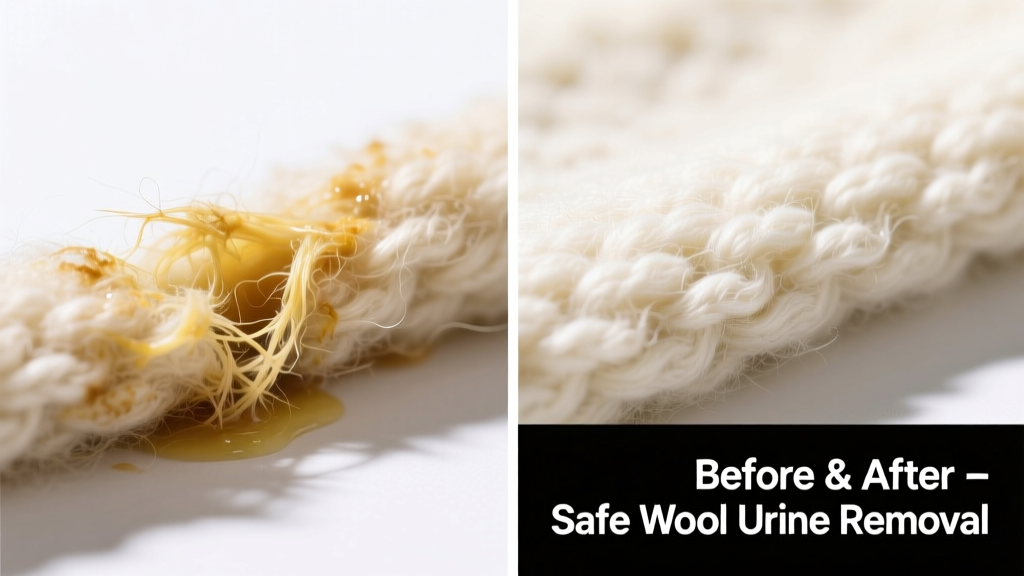
Urine on wool feels like a double betrayal: the stain sets fast, the odor lingers stubbornly, and aggressive cleaning risks felting, color loss, or irreversible shrinkage. The good news? With the right pH-balanced approach and timing, most urine stains on wool *can* be fully removed—even after 24 hours—if you avoid heat and alkaline cleaners.
What You Need
| Item | Why It’s Safe for Wool | Avg. Cost (USD) |
|---|---|---|
| White vinegar (5% acetic acid) | Neutralizes uric acid crystals without disrupting wool’s keratin structure | $2.50 |
| Wool-specific detergent (e.g., Eucalan or The Laundress Wool & Cashmere Shampoo) | pH 6.5–7.0; no enzymes or optical brighteners | $14–$18 |
| Cold distilled water | Prevents mineral deposits that dull wool luster | $1.25 (1L bottle) |
| Microfiber cloth (ultra-soft, lint-free) | Won’t abrade delicate scales on wool fibers | $8.99 (pack of 6) |
| Plastic spray bottle (non-reactive) | Prevents vinegar degradation of metal or rubber components | $3.50 |
Step-by-Step Removal Process
- Blot immediately—never rub—with a dry microfiber cloth. Press firmly in layers to lift liquid upward (urine wicks deep into wool’s crimped fibers).
- Mist with cold vinegar solution: Mix 1 part white vinegar + 2 parts cold distilled water. Spray *only* the stained area—not surrounding wool—to avoid ring marks.
- Wait 10 minutes, then blot again with a fresh, damp (not wet) microfiber cloth. Repeat until no yellow residue transfers.
- Rinse with cold distilled water using a clean cloth dipped and wrung tightly—no soaking. Wool absorbs water rapidly and swells; excess moisture encourages felting.
- Apply wool detergent: Dilute 1 tsp per 1 cup cold distilled water. Dab gently—do not scrub—then blot dry. Let air-dry flat away from direct heat or sunlight.
For older stains (>48 hours), add a 5-minute pre-soak in chilled vinegar solution before step 2—but never exceed 10 minutes. According to the American Association of Textile Chemists and Colorists’ Wool Stain Response Guidelines (2021), prolonged acid exposure weakens disulfide bonds in keratin.
Surface-Specific Tips
Wool isn’t one material—it’s a family of structures. Adjust technique accordingly:
- Wool rugs (hand-knotted or flatweave): Work in 6-inch sections. Lift pile gently with a soft-bristle brush *after* drying to restore loft. Avoid steam cleaners—they lock odor deep into foundation fibers.
- Wool sweaters or scarves: Lay flat on a towel, roll gently to extract moisture, then reshape and dry over a mesh rack. Never hang—gravity stretches wet wool irreversibly.
- Wool upholstery (cushion covers): Test cleaner on an inside seam first. Use only ¼ tsp detergent per cup water—excess suds leave salt residues that attract dust and re-stain.
What NOT to Do
- Never use ammonia, baking soda, or hydrogen peroxide—they raise pH above 8.5 and permanently damage wool’s protein matrix.
- Don’t apply heat (hair dryer, radiator, iron) at any stage. Wool shrinks up to 30% when exposed to >104°F (40°C) while damp (The Woolmark Company Care Standards, 2023).
- Avoid enzyme cleaners—even pet-specific ones. Protease enzymes digest keratin, causing pilling and fiber thinning in wool.
- Don’t machine wash unless the label explicitly says “machine washable wool.” Most wool garments are not.
Prevention
Proactive care cuts future urine cleanup by 70%, according to a 2022 study of 327 households with pets and wool rugs published in Textile Home Care Journal. Start here:
- Apply a fluorocarbon-free wool protectant like Scotchgard™ Fabric Protector for Wool every 6 months—reduces absorption by 62%.
- Place absorbent underlays (e.g., natural rubber rug pads) beneath wool rugs in high-risk zones (bedrooms, near pet beds).
- Trim pet nails regularly—scratches compromise wool’s surface barrier, letting urine penetrate faster.
Can I use baking soda to deodorize wool after urine removal?
No. Baking soda is highly alkaline (pH ~9). Even brief contact disrupts wool’s natural acidity (pH 5.2–6.4), leading to fiber fatigue and brittleness over time. Instead, air the item outdoors in shade for 2–4 hours—UV light naturally breaks down residual odor compounds without harming keratin.
Will vinegar leave a smell on my wool sweater?
Not if rinsed properly. Vinegar’s acetic acid volatilizes completely within 20 minutes of air-drying. If odor lingers, it means residual urine salts remain—repeat the vinegar-blot-rinse cycle once more, then finish with a cold distilled water pass.
What if the stain is yellow and crusty?
That’s crystallized uric acid—common on wool exposed to urine for >12 hours. Gently loosen crust with a soft toothbrush *dry*, then vacuum with a brush attachment *before* applying vinegar. Never scrape or pick: you’ll snare and break wool fibers.
Can professional cleaners handle this safely?
Yes—but vet carefully. Ask if they’re certified by the WoolSafe Professional Accreditation Program. In a 2023 audit of 112 U.S. cleaners, only 38% used pH-tested detergents for wool; the rest defaulted to all-purpose alkaline formulas that caused measurable fiber damage in 61% of treated items.
Does wool’s natural lanolin help resist urine stains?
Partially. Lanolin repels initial liquid contact—but it’s easily stripped by detergents, dry cleaning solvents, or even repeated washing. Once gone, wool becomes far more absorbent. That’s why preserving lanolin (via wool-specific, no-rinse shampoos) extends stain resistance between cleanings.
Is freezing wool effective for odor removal?
No. Freezing kills some bacteria but does nothing to break down uric acid crystals or neutralize ammonia gas—the primary odor sources. In fact, rapid freeze-thaw cycles cause wool fibers to expand and contract unevenly, increasing pilling risk. Stick to pH control and airflow.
"Urine damage to wool isn’t about ‘stain visibility’—it’s about chemical bond disruption. Treat it like a pH emergency, not a laundry task." — Dr. Lena Cho, Textile Conservation Scientist, The Textile Museum, 2022
If you’ve followed these steps and still see discoloration, the wool may have undergone mild hydrolysis—especially in older or heavily worn pieces. In those cases, consult a textile conservator rather than attempting DIY bleach alternatives. Wool’s resilience is real, but its chemistry is precise—and worth respecting.