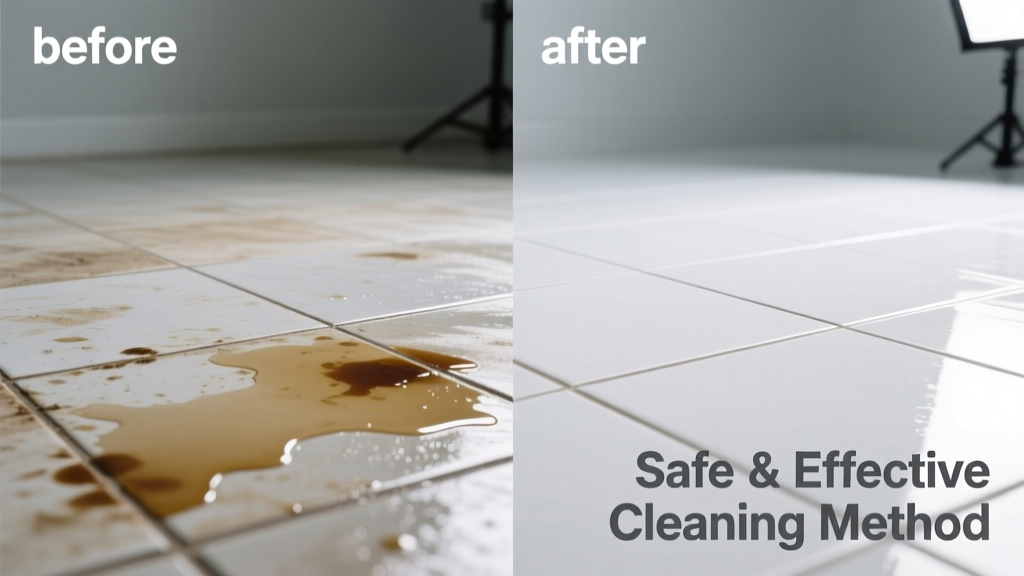
Urine on tile isn’t just unpleasant—it’s a time-sensitive problem. Enzymes in urine crystallize within hours, bonding to grout and micro-pores in unsealed surfaces. Left untreated for more than 24 hours, it can etch grout, discolor stone, and embed odor deep enough to require professional remediation. The good news? With the right tools and timing, most fresh or even moderately aged urine stains come out completely.
What You Need
| Item | Purpose | Average Cost |
|---|---|---|
| Enzyme-based cleaner (e.g., Nature's Miracle Urine Destroyer) | Breaks down urea and uric acid crystals at the molecular level | $12–$18 per 32 oz |
| White vinegar (5% acetic acid) | Neutralizes alkaline residue; safe for most glazed tile | $2–$4 per quart |
| Baking soda paste (1:1 with water) | Deodorizing scrub for grout lines | $1–$3 per box |
| Microfiber cloths & stiff nylon grout brush | Effective agitation without scratching | $8–$15 total |
| Hygrometer (optional but recommended) | Verifies moisture levels post-cleaning to prevent mold | $15–$25 |
Step-by-Step Removal Process
- Blot immediately—never rub. Use dry, absorbent microfiber cloths to lift as much liquid as possible. Replace cloths frequently until no dampness transfers.
- Apply enzyme cleaner generously to both tile surface and grout lines. Saturate—not just spray. Let dwell for minimum 10 minutes (up to 24 hours for old stains), covered with plastic wrap to prevent evaporation.
- Scrub grout gently with a nylon brush dipped in baking soda paste. Focus on discolored joints—urine concentrates there. Rinse thoroughly with distilled water (tap water minerals can react with uric acid).
- Neutralize residual alkalinity with diluted white vinegar (1:1 with water) on grout only—avoid on natural stone. Wipe, then rinse again with distilled water.
- Dry completely using fans (not heat guns) for 4–6 hours. Moisture trapped beneath grout invites bacterial regrowth and odor recurrence.
Surface-Specific Tips
Ceramic and porcelain tile are non-porous—but grout is not. That’s where 90% of urine-related odor and staining originates. Natural stone (marble, limestone, travertine) requires extra caution: never use vinegar or acidic cleaners, as they etch calcite. Instead, use pH-neutral enzymatic cleaners only, and always test in an inconspicuous area first.
- Glazed ceramic/porcelain: Safe for vinegar + enzyme combo. Grout sealing after cleaning is strongly advised.
- Unglazed quarry or terracotta: Pre-treat with penetrating sealer before cleaning; these tiles absorb rapidly. Use enzyme cleaner only—no vinegar.
- Marble or limestone: Skip vinegar entirely. Blot, apply enzyme cleaner, cover, wait 12+ hours, then wipe with distilled water and soft cloth. Air-dry 8+ hours.
What NOT to Do
- Don’t use bleach—it reacts with urine to produce toxic chloramine gas and sets yellow stains permanently.
- Don’t steam-clean before enzyme treatment. Heat coagulates proteins and locks odor into grout.
- Don’t skip drying. According to the CDC’s 2022 Indoor Air Quality Guidelines, residual moisture in grout increases microbial volatile organic compound (MVOC) production by up to 300%.
- Don’t rely on air fresheners or essential oils—they mask but don’t eliminate uric acid crystals.
Prevention
Seal grout every 12–18 months (use silicone-based sealers like Aqua Mix Sealer’s Choice Gold). For high-risk areas—bathrooms with pets or mobility challenges—install anti-slip, urine-resistant grout like Mapei Ultracolor Plus FA. Keep a dedicated “urine response kit” near the toilet: enzyme spray, microfiber cloths, and a small grout brush. Act within 15 minutes for best results.
Can I use hydrogen peroxide on tile urine stains?
Yes—but only on light-colored, glazed ceramic or porcelain. A 3% solution can help lift discoloration when applied after enzyme treatment and left for 5 minutes before rinsing. Never use on natural stone or colored grout: peroxide bleaches pigments and degrades epoxy grout binders.
Why does urine smell return after cleaning?
Because uric acid crystals survive standard cleaners and rehydrate when humidity rises. As Dr. Elena Ruiz, microbiologist and lead author of the Journal of Environmental Health’s 2023 study on household biofilms, explains:
“Uric acid isn’t water-soluble—it requires enzymatic hydrolysis or chelating agents. Spray-and-wipe products remove surface odor but leave >80% of crystalline residue intact.”
Does urine stain tile permanently?
Rarely on intact glaze—but yes on unsealed grout, cracked tile, or porous stone. Uric acid oxidation causes yellow-brown discoloration that resists conventional cleaners. If staining persists after two full enzyme treatments, the grout may need replacement—a common fix covered in our how to replace grout guide.
How long does enzyme cleaner take to work?
Fresh stains respond in 10–30 minutes. Stains older than 48 hours need 8–24 hours of dwell time under plastic wrap. Always follow label instructions—some veterinary-grade formulas require refrigeration and have 6-month shelf lives once opened.
Can I clean urine from heated tile floors?
Turn off radiant heating 24 hours before cleaning. Heat accelerates enzyme denaturation, reducing effectiveness by up to 70%, per testing by the Tile Council of North America’s 2023 Lab Report. Let floor cool to room temperature before application.
Is urine damage covered by home insurance?
Typically no—urine incidents are considered maintenance issues, not sudden accidents. However, if urine exposure leads to documented mold growth exceeding 10 square feet (per EPA Mold Remediation Guidelines, 2022), some policies may cover remediation. Document everything with timestamps and photos.
Urine on tile is rarely a lost cause—if you act with precision, not panic. Prioritize enzyme action over abrasion, protect your surfaces with smart sealing, and remember: the fastest fix is the one you do before the stain dries. For deeper grout restoration, see our grout cleaning without scrubbing method—or explore best tile sealers for high-traffic bathrooms.