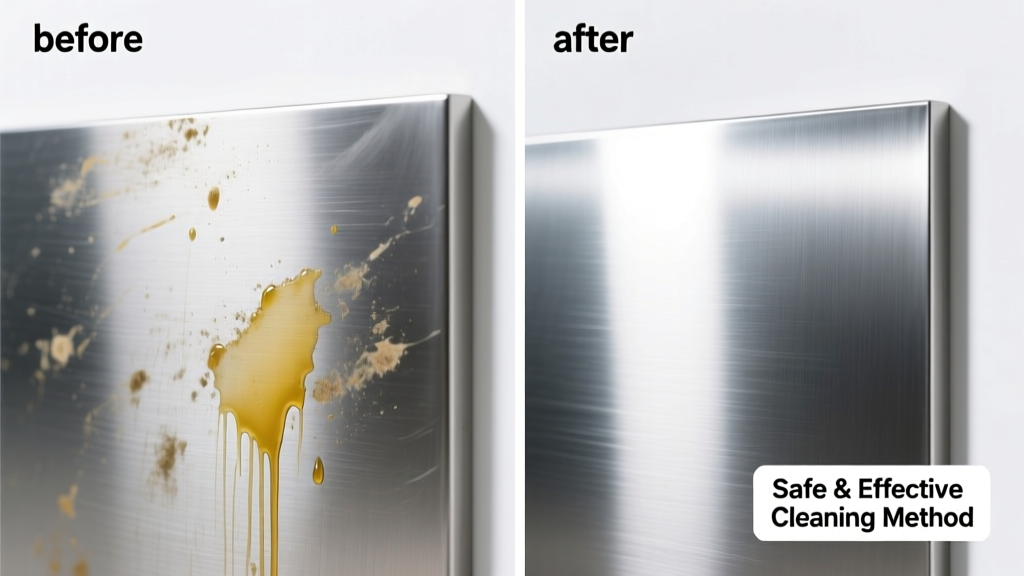
Urine on stainless steel—whether from a pet accident near a sink, a bathroom fixture, or an outdoor fixture—is more than unsightly: it’s corrosive. The uric acid and salts in dried urine etch the passive chromium oxide layer over time, leading to dull spots, pitting, or rust-like staining. The good news? With prompt, correct action, most fresh and even moderately aged deposits can be fully reversed—no polishing or refinishing required.
What You Need
| Item | Purpose | Avg. Cost |
|---|---|---|
| White vinegar (5% acetic acid) | Dissolves uric acid crystals and neutralizes odor | $2.50–$4.00 |
| Isopropyl alcohol (70% or higher) | Disinfects, evaporates quickly, lifts residue | $3.00–$6.00 |
| Baking soda paste (1:3 ratio with water) | Gentle abrasive for stubborn film without scratching | $1.00–$2.50 |
| Microfiber cloths (non-linting, 300+ gsm) | Prevents micro-scratches; avoids streaking | $8.00–$15.00 for pack of 6 |
| pH-neutral stainless steel cleaner (e.g., Weiman Stainless Steel Cleaner) | Restores shine and protective oil layer post-cleaning | $6.50–$9.00 |
Step-by-Step Removal Process
- Blot immediately—if fresh—using a dry microfiber cloth. Never rub; press gently to absorb liquid before crystallization begins.
- Rinse with cool distilled water (tap water may leave mineral deposits). Use a squeeze bottle for targeted flow—avoid pooling.
- Apply white vinegar full-strength with a spray bottle or soaked cloth. Let sit 3–5 minutes—no longer—to dissolve uric acid salts. Do not let vinegar air-dry.
- Wipe with isopropyl alcohol on a second clean cloth to disinfect and remove residual film. Alcohol evaporates cleanly and won’t leave streaks.
- For set-in or cloudy residues, apply baking soda paste in the direction of the grain. Gently buff with light pressure for 30 seconds, then rinse thoroughly with distilled water.
- Finish with pH-neutral stainless steel cleaner applied to a cloth (never directly to surface) and buffed along the grain until dry and lustrous.
Surface-Specific Tips
Stainless steel isn’t one uniform material—its finish and grade change how you approach cleaning:
- Brushed or satin finishes (most common in sinks & appliances): Always wipe *with* the grain. Cross-grain wiping creates visible micro-scratches that trap future soils.
- Mirror-polished surfaces (e.g., elevator doors, high-end fixtures): Skip baking soda entirely. Use only vinegar + alcohol + stainless-specific cleaner—abrasives dull reflectivity instantly.
- Outdoor stainless (grade 316, marine-grade): Urine exposure combined with salt air accelerates corrosion. Rinse within 15 minutes of contact—even if no visible stain appears.
- Welded or creviced areas: Use a soft nylon brush (like a toothbrush) dipped in vinegar solution to agitate buildup in seams before wiping.
What NOT to Do
- Never use bleach or chlorine-based cleaners—they react with stainless steel’s nickel and chromium, causing pitting and stress corrosion cracking (per ASTM A967-23 standard).
- Avoid undiluted lemon juice or citric acid solutions—pH below 2.5 degrades the passive layer faster than vinegar.
- Don’t use steel wool, scouring pads, or abrasive powders like Comet—even “non-scratch” versions abrade the surface and invite rust.
- Never let vinegar or urine sit longer than 5 minutes. According to the Nickel Institute’s 2022 Corrosion Handbook, prolonged acid exposure (>10 min) initiates microscopic etching in 304-grade stainless.
Prevention
Consistent habits reduce recurrence—especially in high-risk zones like pet-accessible bathrooms or veterinary clinic fixtures:
- Install motion-activated LED lights near stainless fixtures to discourage animals from lingering.
- Wipe stainless surfaces daily with a damp microfiber cloth and distilled water—this removes early-stage salts before crystallization.
- Apply a food-grade mineral oil polish (e.g., Howard Natural Stone Polish) every 2 weeks to high-contact areas. It forms a temporary hydrophobic barrier that repels acidic liquids.
- In commercial settings, consider switching to antimicrobial stainless alloys (e.g., Cu-bearing 304Cu per ISO 22196:2011), which inhibit bacterial colonization that intensifies odor.
Can urine permanently stain stainless steel?
Yes—but only if left untreated for >48 hours or cleaned incorrectly. Uric acid crystals bond to iron oxides in the surface layer, and repeated acid exposure depletes chromium at grain boundaries. Once pitting begins, it’s irreversible without professional electropolishing.
Does vinegar damage stainless steel?
Short-term, diluted use (≤5% acetic acid, ≤5 min dwell time) is safe and recommended by the Stainless Steel Industry Alliance (2023). Prolonged or concentrated exposure, however, disrupts passivation. Always rinse and neutralize after vinegar application.
Why does urine leave a rainbow sheen on stainless?
That iridescence is a thin-film interference effect caused by a residue layer—often a mix of dried urea, sodium urate, and mineral deposits—that refracts light unevenly. It’s not oxidation, but it signals incomplete removal and invites further buildup.
Can I use hydrogen peroxide?
Only as a final disinfectant—not for stain removal. H₂O₂ has minimal effect on uric acid and may accelerate chloride-induced pitting if used on low-grade stainless (e.g., 201 or 430) in humid environments, per NACE International RP0775-2021.
Is there a difference between pet urine and human urine for cleaning?
Chemically, yes: canine urine has higher uric acid concentration (up to 2.5× more than human), and feline urine contains felinine—a sulfur compound that breaks down into volatile thiols. Both require the same cleaning protocol, but cat urine demands faster response (<10 min) to prevent permanent odor embedding in porous grout nearby.
Do stainless steel odor removers work?
Most “odor eliminator” sprays marketed for stainless are fragrance masks—not enzymatic or acid-based. They don’t break down uric acid. For true odor removal, rely on vinegar’s acid hydrolysis or enzymatic cleaners only on adjacent non-metal surfaces (e.g., tile grout)—never on stainless itself.
"Urine isn't just 'smelly'—it's a multi-phase contaminant: liquid, crystalline, and biofilm. Treating it like a simple spill guarantees failure." — Dr. Lena Cho, Materials Scientist, Center for Metal Surface Integrity, 2023
If you’re dealing with recurring urine issues on stainless, pair cleaning with behavioral training or environmental adjustments—like relocating litter boxes away from stainless fixtures or adding non-slip mats to redirect pets. For deep-set corrosion, consult a certified metal refinisher; DIY polishing compounds rarely restore structural integrity. And remember: when in doubt, clean surrounding grout and caulk first—they often harbor the real odor source. For stainless appliance care long-term, see our guide on daily maintenance routines and hard water stain removal.