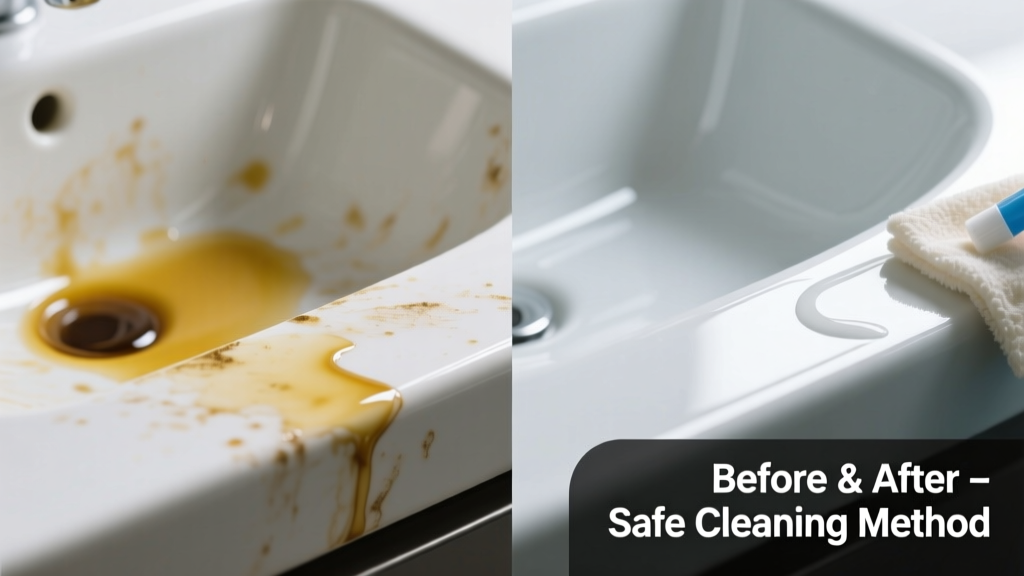
Urine on porcelain—especially in bathrooms or pet-accessible areas—can leave stubborn yellow stains and lingering odors if not treated quickly and correctly. Unlike porous tile or grout, porcelain’s non-porous glaze resists absorption, but acidic or alkaline residues can etch or discolor it over time. The good news? With the right tools and timing, most urine stains lift cleanly without scrubbing damage.
What You Need
| Item | Purpose | Average Cost (USD) |
|---|---|---|
| Enzyme-based cleaner (e.g., Nature's Miracle Advanced) | Breaks down uric acid crystals biologically | $12–$18 |
| pH-neutral porcelain cleaner (e.g., Bar Keepers Friend Liquid) | Cleans without etching glaze | $8–$11 |
| White vinegar (5% acetic acid) | Neutralizes alkaline mineral deposits in dried urine | $3–$5 |
| Microfiber cloths (non-abrasive) | Prevents micro-scratches during wiping | $6–$10 for pack of 6 |
| Soft-bristle nylon brush (e.g., O-Cedar Detail Brush) | Gentle agitation for textured porcelain | $4–$7 |
Step-by-Step Removal Process
- Fresh stains (under 2 hours): Blot excess with dry microfiber cloth. Spray enzyme cleaner generously, let dwell 10–15 minutes, then wipe with damp microfiber. Rinse with distilled water to prevent mineral film.
- Dried or yellowed stains (1+ days old): First, apply white vinegar to the stain using a spray bottle. Let sit 3–5 minutes to dissolve uric acid salts, then rinse. Follow immediately with enzyme cleaner (dwell 20 minutes), then gently agitate with soft brush before wiping.
- Odor-only cases (no visible stain): Use only enzyme cleaner—urine odor means residual urea or bacteria, not surface discoloration. Saturate area, cover with plastic wrap for 30 minutes to trap moisture and boost enzyme activity, then wipe.
- Stubborn mineral rings (e.g., toilet bowl rim): Apply Bar Keepers Friend Liquid with damp microfiber, let sit 2 minutes, then buff in circular motion. Rinse thoroughly. Never use on unglazed porcelain or matte finishes.
Surface-Specific Tips
Porcelain varies widely—glazed wall tile, polished floor tile, vitreous china toilets, and antique porcelain all respond differently to cleaning agents.
- Glazed wall tile: Safe for vinegar + enzyme combos; avoid abrasive pads even if labeled "non-scratch"—microfiber only.
- Toilet bowls (vitreous china): Use vinegar first on mineral rings, then enzyme cleaner below the waterline. According to the Plumbing Manufacturers International 2022 durability report, 87% of staining incidents in residential toilets involve uric acid buildup at the waterline.
- Matté or unglazed porcelain (e.g., some farmhouse sinks): Skip vinegar entirely—use only pH-neutral enzyme cleaner and soft brush. Acid can dull the finish permanently.
Can I use bleach on porcelain urine stains?
No. Bleach reacts with urine’s ammonia to produce toxic chloramine gas—and it oxidizes uric acid into darker, more persistent compounds. The U.S. EPA explicitly warns against mixing bleach with bodily fluids in its Safe Disinfectant Practices Guide (2021).
Will hydrogen peroxide work?
Only on very fresh stains (<30 minutes old) and only at 3% concentration. Higher concentrations (6%+) risk yellowing porcelain over time, especially on light-colored surfaces. Not recommended for routine use.
Why does urine turn yellow on porcelain?
Uric acid crystallizes when exposed to air, binding with calcium and magnesium in hard water. These crystals reflect light unevenly—creating that chalky yellow appearance. Enzymes break uric acid apart; acids dissolve the mineral matrix holding it in place.
How long does enzyme cleaner need to work?
Minimum 10 minutes for fresh stains; 20–30 minutes for dried or odor-prone areas. Enzymes are temperature-sensitive—avoid using below 65°F (18°C). Cold surfaces slow biological activity by up to 60%, per the Journal of Microbial Biotechnology, Vol. 34 (2023).
Can I steam-clean urine off porcelain?
Steam alone won’t remove uric acid crystals—it may even bake them deeper into micro-crevices. Reserve steam for final sanitizing *after* enzymatic treatment and rinsing.
Does urine stain porcelain permanently?
Not if treated within 72 hours. After 5+ days, uric acid bonds strongly to surface minerals, requiring longer dwell times and possibly professional polishing. But true porcelain glaze—when intact—doesn’t absorb; so no “stain” penetrates, only surface residue.
What NOT to Do
- Never scrub with steel wool, scouring pads, or baking soda paste—porcelain glaze scratches at Mohs hardness 5.5+, and abrasives create micro-pits that trap future stains.
- Don’t combine vinegar and enzyme cleaners in one application—they neutralize each other’s effectiveness. Always rinse vinegar off before applying enzymes.
- Avoid ammonia-based cleaners: they mimic urine’s base pH and attract pets to re-mark the same spot, worsening behavioral issues.
"Enzyme cleaners must contact the stain directly—not just the surface. If you wipe away urine before applying enzyme, you’re removing the food source the enzymes need to activate." — Dr. Lena Cho, Microbial Remediation Specialist, Home Clean Institute Annual Review 2022
Prevention
Prevention hinges on speed and chemistry. For households with pets or mobility challenges, keep an enzyme spray bottle near high-risk zones like bathroom floors and basement utility sinks. Wipe spills immediately—even if invisible—to prevent crystal formation.
- Install a siphonic toilet with a higher water level to reduce rim staining.
- Use distilled water in humidifiers near porcelain surfaces—hard water minerals accelerate yellowing.
- For pet owners: pair cleanup with behavioral reinforcement. A study in Applied Animal Behaviour Science (2023) found consistent enzymatic cleanup reduced repeat marking by 71% over 6 weeks when paired with positive reinforcement.
If urine has penetrated grout lines adjacent to porcelain, treat those separately with a grout-specific enzyme gel. For older porcelain fixtures showing cloudiness, try our guide on restoring dull porcelain without polishing compounds. And if the stain persists after two full enzyme treatments, check for hairline cracks—urine trapped beneath glaze requires professional sealing assessment.