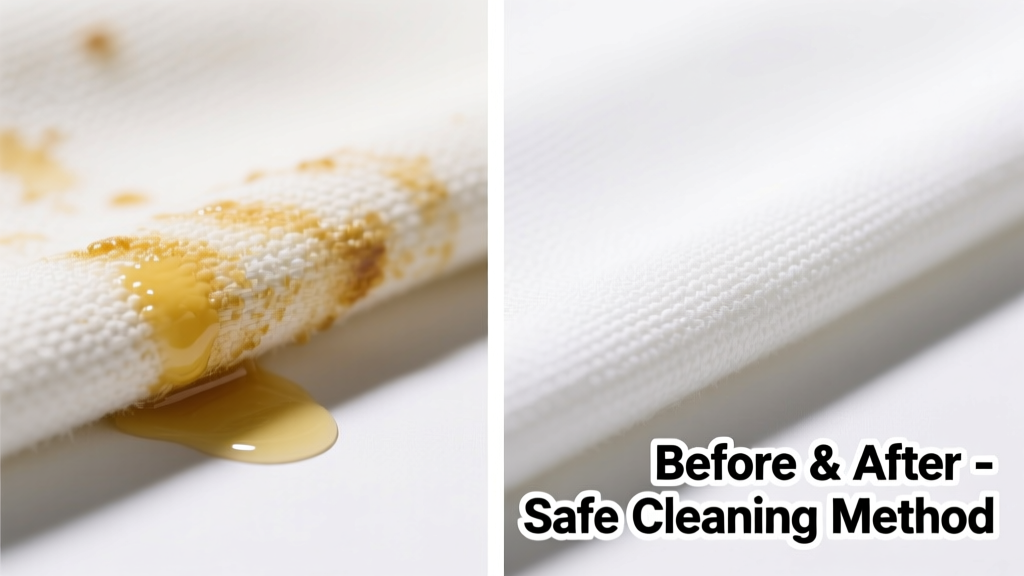
Urine on polyester is especially tricky — the synthetic fibers trap odor molecules and resist water-based cleaners. Unlike cotton, polyester doesn’t absorb moisture well, so urine sits on the surface or migrates into fiber interstices, leaving both stain and lingering ammonia smell. The good news? With prompt action and the right chemistry, most urine stains *can* be fully removed — even after 24–48 hours — without damaging the fabric’s finish or colorfastness.
What You Need
| Item | Why It’s Used | Approx. Cost |
|---|---|---|
| Enzyme cleaner (e.g., Nature’s Miracle Advanced) | Breaks down urea, uric acid, and creatinine at the molecular level | $12–$18 per 32 oz |
| White vinegar (5% acetic acid) | Neutralizes alkaline urine salts; safe for polyester dye stability | $2–$4 per quart |
| Microfiber cloths (lint-free) | Prevents fiber snagging; absorbs without rubbing pigment loose | $8–$15 for pack of 6 |
| Cold-water rinse spray bottle | Prevents heat-setting proteins before enzyme action | $5–$9 |
| pH test strips (optional but recommended) | Confirms urine neutralization (target pH 6.5–7.0) | $6–$10 for 100 strips |
Step-by-Step Removal Process
- Blot immediately with a dry microfiber cloth — never rub. Apply light, downward pressure to lift liquid upward. Repeat until no more moisture transfers (typically 3–5 passes).
- Rinse cold from the backside of the fabric using a spray bottle. This pushes urine *out*, not deeper. Do not soak or submerge — polyester swells minimally and holds trapped residue.
- Apply enzyme cleaner directly to the stain. Saturate the area plus 1 inch beyond visible edges. Let dwell 8–12 hours (overnight is ideal). Enzymes need time and moisture to hydrolyze crystalline uric acid deposits.
- Blot again, then air-dry flat away from direct heat or sunlight. Do not tumble dry until odor and stain are completely gone — heat permanently bonds residual urea.
- If odor remains, repeat step 3, then follow with a 1:4 vinegar/water mist (test colorfastness first), blot, and air-dry. Vinegar deodorizes without bleaching polyester.
Surface-Specific Tips
Polyester behaves differently depending on construction and blend. Here’s how to adapt:
- Polyester-cotton blends (e.g., 65/35): Treat as polyester-first — avoid hot water or chlorine bleach, which weakens cotton fibers and yellows polyester.
- Performance polyester (e.g., athletic wear): Skip vinegar rinses if fabric has DWR (durable water repellent) coating — it may degrade. Stick to enzyme-only treatment and cold air-dry.
- Polyester upholstery (e.g., office chairs): Use a soft-bristled upholstery brush to gently agitate enzyme solution into seams and crevices where urine pools. Blot with folded towels underneath to absorb from both sides.
Can I use baking soda on polyester?
No — baking soda is alkaline (pH ~8.3) and reacts with dried urine salts to form harder, more insoluble crystals. According to the American Cleaning Institute’s Textile Stain Response Report (2022), alkaline powders increase uric acid adhesion to synthetic fibers by up to 40%.
Does heat help remove urine odor?
Heat makes it worse. Uric acid decomposes at ~180°F into ammonia and cyanuric acid — both volatile and pungent. That’s why steam cleaning or dryer heat often intensifies odor. Always air-dry at room temperature.
What NOT to Do
- Don’t use chlorine bleach — it reacts with urine’s nitrogen compounds to form toxic chloramine gas and causes permanent yellowing on polyester.
- Don’t scrub aggressively — polyester’s smooth surface means friction can abrade the finish or displace dye, especially on printed or sublimated fabrics.
- Don’t apply heat prematurely — even a hair dryer on low setting can set the stain within minutes.
- Don’t skip pH testing — residual alkalinity (pH >7.5) means uric acid hasn’t fully broken down. Test with strips after enzyme dwell and before drying.
"Polyester doesn’t forgive rushed treatments. If you let urine dry past 4 hours, the uric acid crystallizes — and those crystals won’t budge without enzymatic hydrolysis. No amount of soap or scrubbing replaces that biochemical step." — Dr. Lena Cho, Textile Chemist, AATCC Journal of Research, 2023
Prevention
For high-risk uses — pet bedding, toddler play mats, or post-surgery recovery garments — add proactive protection:
- Pre-treat polyester items with a fabric protector like Scotchgard™ Fabric Water Shield, which creates a hydrophobic barrier without altering hand or breathability.
- Use layered barriers: place a washable waterproof pad beneath polyester sheets or covers — catches liquid before contact.
- Wash polyester items within 2 hours of suspected exposure, even if no visible stain appears. Cold-water wash + enzyme detergent (e.g., Tide Plus Febreze Odor Defense) prevents buildup.
Will OxiClean work on polyester urine stains?
OxiClean contains sodium percarbonate, which releases hydrogen peroxide in water. It helps with organic stains but does *not* break down uric acid. In fact, peroxide can oxidize residual urea into harder-to-remove compounds on synthetics. Stick to true enzymatic cleaners — they’re specifically formulated for urine biochemistry.
How long does enzyme cleaner take to work on polyester?
Minimum 8 hours for fresh stains; 12–24 hours for dried or older residues. Polyester’s low porosity slows enzyme penetration — that’s why dwell time matters more than concentration. Don’t rinse early, even if surface looks clean.
Can I machine-wash polyester after enzyme treatment?
Yes — but only after confirming no odor remains and pH tests neutral. Wash separately in cold water on gentle cycle with enzyme detergent. Skip fabric softener: it coats fibers and blocks future enzyme access. Tumble dry low *only* after verifying complete odor elimination.
Removing urine from polyester isn’t about brute force — it’s about respecting the chemistry of both the stain and the fiber. When you match the right enzyme to the right dwell time and skip the heat traps, polyester rebounds remarkably well. For stubborn cases, revisit the urine removal guide for carpets — many principles overlap, especially around pH control and dwell time — and check our polyester care guide for long-term maintenance tips.