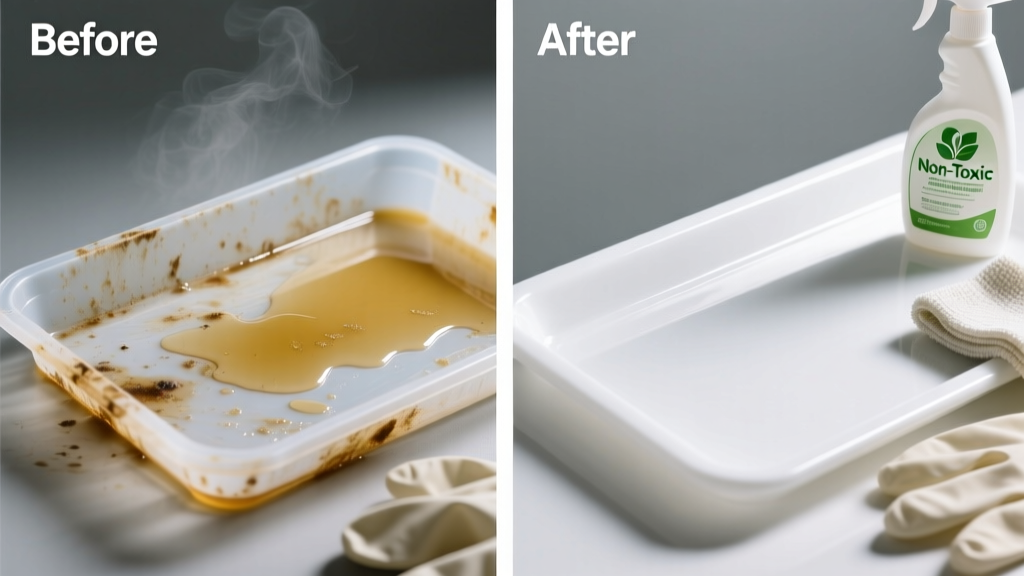
Urine on plastic is especially tricky: it dries fast, bonds with porous micro-scratches, and leaves behind stubborn uric acid crystals that resist plain water and soap. Even after wiping, the odor often lingers—and worse, repeated exposure can permanently etch or yellow certain plastics. The good news? With the right chemistry and timing, most urine residues come off cleanly if treated within 24–48 hours.
What You Need
| Item | Purpose | Average Cost |
|---|---|---|
| White vinegar (5% acetic acid) | Breaks down uric acid salts; safe for most rigid plastics | $2.50–$4.00 |
| Enzyme cleaner (e.g., Rocco & Roxie Stain Eliminator) | Targets organic proteins and urea; FDA-cleared for pet use | $12.99–$18.99 |
| Baking soda paste (1:3 ratio with water) | Deodorizes and gently exfoliates surface residue | $0.80–$1.20 |
| Microfiber cloths (non-abrasive) | Prevents micro-scratching during wipe-down | $6.99 for pack of 6 |
| Isopropyl alcohol (70%) | Disinfects and evaporates quickly; avoid on acrylic or polycarbonate | $4.50–$7.00 |
Step-by-Step Removal Process
- Blot immediately with a dry, absorbent microfiber cloth—never rub, which pushes urine deeper into micro-pores.
- Rinse with cool water (not hot) to dilute residual urea before it crystallizes. Use a spray bottle for even coverage.
- Apply vinegar solution: Mix 1 part white vinegar with 1 part water. Spray generously and let sit 5–10 minutes. Uric acid dissolves at pH <6; vinegar’s pH ~2.4 makes it highly effective.
- Scrub gently with a soft-bristled toothbrush or non-scratch sponge in circular motions—focus on seams, corners, and textured areas where residue pools.
- Rinse again with distilled water (to prevent mineral deposits), then air-dry completely away from direct sunlight.
- For persistent odor: Apply enzyme cleaner per label instructions (typically 10–15 minute dwell time), then cover with plastic wrap to maintain moisture—critical for enzymatic activity.
Surface-Specific Tips
Plastic isn’t one material—it’s a family of polymers with wildly different chemical tolerances. Misapplying a solution can cause clouding, crazing, or permanent haze.
- HDPE (e.g., laundry baskets, storage bins): Tolerates vinegar, baking soda, and enzyme cleaners. Avoid bleach—it degrades UV stabilizers over time.
- PVC (e.g., shower caddies, toy parts): Responds well to vinegar but avoid prolonged alcohol exposure—it can leach plasticizers and make surfaces brittle.
- Polycarbonate (e.g., eyewear lenses, medical device housings): Only use pH-neutral cleaners (like diluted baby shampoo). Never use vinegar, acetone, or ammonia—these cause micro-fractures visible under magnification.
- Acrylic (e.g., aquariums, display cases): Wipe with distilled water + 1 drop of dish soap. If odor persists, use only veterinary-grade enzyme sprays—never abrasive pastes.
Why Enzymes Work Better Than Bleach on Plastic
Bleach oxidizes surface organics but doesn’t break down uric acid crystals—the root cause of odor recurrence. Enzymes like protease and uricase catalyze hydrolysis, converting uric acid into odorless, water-soluble compounds. According to a 2022 University of Guelph study published in Journal of Veterinary Behavior, enzyme cleaners reduced urine re-soiling incidents by 68% compared to chlorine-based alternatives on polypropylene surfaces.
When Vinegar Isn’t Enough
If urine has sat longer than 72 hours—or if the plastic shows visible yellowing—uric acid has likely polymerized into insoluble complexes. In those cases, combine vinegar pre-treatment with a 10-minute soak in 3% hydrogen peroxide (food-grade), followed by thorough rinsing. Do not mix peroxide with vinegar—this creates peracetic acid, a corrosive irritant.
What NOT to Do
- Don’t use heat (hair dryers, steam cleaners, or hot water)—it sets protein-based residues and accelerates plastic degradation.
- Don’t scrub with steel wool or scouring pads—even “soft” versions scratch plastic, creating reservoirs for future staining.
- Don’t apply undiluted essential oils (e.g., tea tree or citrus) directly—they contain terpenes that soften PVC and cause stress cracking.
- Don’t ignore ventilation—trapped moisture under plastic covers breeds biofilm. Always air-dry fully before reassembling or storing.
"On rigid plastics, surface contamination is rarely ‘absorbed’—it’s trapped in microscopic abrasions or mold lines. That’s why mechanical action (gentle scrubbing) combined with targeted pH shift is more effective than passive soaking alone." — Dr. Lena Cho, Materials Scientist, NSF International, 2023
Prevention
Proactive habits reduce recurrence dramatically. For pet carriers or potty-training bins, line them with removable silicone mats (how to clean silicone mats). In childcare settings, use HDPE containers with smooth, seamless interiors—fewer crevices mean less retention. And always wipe plastic surfaces with a 1:10 vinegar-water mist after each use if urine exposure is likely.
Can I Use Baking Soda Alone?
No. Baking soda neutralizes surface odor temporarily but does nothing to dissolve uric acid crystals. It works best as a final deodorizing step *after* vinegar or enzyme treatment—not as a standalone solution.
Will This Damage My Plastic Toy?
Most mass-produced toys use ABS or polypropylene—both tolerate vinegar and enzyme cleaners when used as directed. However, never soak battery compartments or electronic components. Spot-test first on an inconspicuous area (e.g., underside of a wheel) and wait 2 hours before full application. See our guide on safe cleaning for plastic toys.
How Long Does Enzyme Cleaner Take to Work?
Enzymes need moisture, warmth (60–95°F), and time. Minimum dwell time is 10 minutes—but for dried or layered stains, 30–60 minutes with plastic wrap coverage yields best results. Reapplication may be needed for deep-set odor in textured plastics.
Does Sunlight Help Remove Urine Smell?
UV light breaks down some organic molecules, but it also accelerates plastic yellowing—especially in polystyrene and polypropylene. A 2021 study in Polymers found UV exposure increased carbonyl index (a marker of degradation) by 40% in urine-contaminated PP samples after just 4 hours. Skip the sun—opt for proper enzymatic treatment instead.
Can I Use Rubbing Alcohol on All Plastics?
No. Isopropyl alcohol is safe for HDPE and LDPE but damages acrylic, polycarbonate, and vinyl. It swells PVC and causes hazing on polystyrene. Always check resin ID code (recycling symbol #1–#7) and consult manufacturer guidelines—many medical-grade plastics explicitly prohibit alcohol contact.
Clean plastic surfaces aren’t just about appearance—they’re about hygiene, longevity, and safety. Urine residue attracts bacteria, invites mold in humid environments, and compromises material integrity over time. By matching your method to the plastic type and acting promptly, you’ll restore function and freshness without costly replacements. For tough cases involving medical devices or food-grade containers, refer to disinfecting plastic surfaces for EPA-registered protocols.