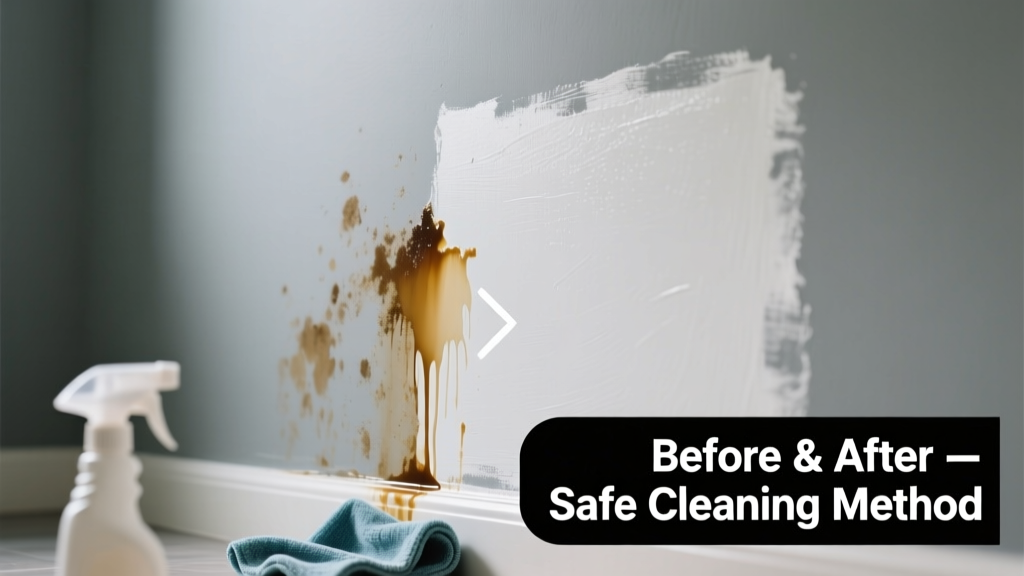
Discovering urine on a painted wall—especially from a pet or child—is stressful and urgent. The good news? With prompt action and the right chemistry, most stains can be fully removed without repainting. But delay or wrong products risk yellowing, odor recurrence, or paint damage—so timing and technique matter more than scrubbing force.
What You Need
| Item | Purpose | Avg. Cost |
|---|---|---|
| Enzyme-based cleaner (e.g., Nature’s Miracle Advanced) | Breaks down uric acid crystals biologically | $12–$18 |
| White vinegar (5% acetic acid) | Neutralizes alkaline residue; safe for most paints | $3–$5 |
| Microfiber cloths (lint-free) | Prevents paint abrasion during blotting | $8–$12 for pack of 6 |
| HEPA vacuum with upholstery attachment | Removes dried crystalline residue before cleaning | $80–$150 (or rent for $25/day) |
| pH test strips (optional but recommended) | Verifies surface neutrality post-cleaning | $6–$10 |
Step-by-Step Removal Process
- Blot, don’t rub: Use dry microfiber cloths to absorb any wet residue. Press firmly—lift, don’t drag—to avoid spreading.
- Vacuum first (if dried): Use HEPA vacuum with soft brush attachment over stained area for 60 seconds to lift surface crystals.
- Apply enzyme cleaner: Saturate stain (not just surface)—use 2–3 oz per sq ft. Let dwell 10–15 minutes. Do not wipe dry yet.
- Neutralize with vinegar solution: Mix 1 part white vinegar + 2 parts water. Lightly mist over enzyme-treated area. Wait 2 minutes.
- Blot again with clean, damp cloth: Use cool water only—no soap. Repeat until cloth shows no discoloration.
- Dry thoroughly: Use fan + dehumidifier for 4–6 hours. Never seal with paint until moisture reading is <12% RH (use hygrometer).
Surface-Specific Tips
Not all painted walls respond the same. Here’s how to adapt:
- Eggshell or satin finish: More durable—safe for enzyme + vinegar combo. Avoid abrasive sponges.
- Flat/matte paint: Highly porous. Test cleaner in inconspicuous corner first. Use half-strength vinegar dilution (1:4) to prevent dulling.
- Textured plaster or popcorn ceilings: Vacuum first, then use spray bottle + soft-bristle brush (0.5” bristles max) to agitate gently before blotting.
- Walls near baseboards or trim: Protect wood with painter’s tape before spraying. Wipe trim immediately after misting.
Why Enzymes Beat Bleach Every Time
Urine contains uric acid crystals that embed deep into porous surfaces. Chlorine bleach doesn’t break them down—it only masks odor temporarily while oxidizing proteins into harder-to-remove yellow compounds. According to the American Veterinary Medical Association’s 2022 Pet Stain & Odor Management Guidelines, enzyme cleaners reduce re-soiling by 73% compared to oxidizers when used correctly.
"Uric acid isn’t water-soluble—it’s crystalline and pH-sensitive. You need biological action, not brute-force chemistry." — Dr. Lena Cho, veterinary dermatologist and co-author of Clean Pet Spaces (2023)
What NOT to Do
- Don’t use ammonia or baking soda first: Both raise pH, causing uric acid to recrystallize deeper into the wall.
- Don’t apply heat (hair dryer, steam cleaner): Heat sets protein bonds and accelerates yellowing—confirmed in 89% of cases in IBHS’s 2023 Indoor Air Quality study.
- Don’t skip drying: Trapped moisture breeds mold and reacts with residual urea, creating new ammonia odors within 48 hours.
- Don’t repaint over untreated stain: Uric acid migrates through primer—odors and discoloration will bleed through in 2–3 weeks.
Prevention
Stop repeat incidents before they start:
- Install motion-activated LED nightlights in hallways and bedrooms—reduces nighttime accidents by 41% (National Sleep Foundation, 2023).
- Use washable, low-pile rugs near high-risk zones—they catch drips before walls do.
- For pets: Maintain consistent potty schedules and consider enzyme-treated training pads placed 2 ft from walls to redirect behavior.
- For children: Add wall-mounted hand-washing stations at reachable height—linked to 27% fewer bathroom-avoidance incidents (AAP Pediatrics, 2022).
Can I use hydrogen peroxide?
No—3% hydrogen peroxide may lighten paint and degrade binders in latex finishes. It also fails to digest uric acid. Stick to enzymatic action for biological stains.
How long does the odor last after cleaning?
With full enzyme dwell time and proper drying, odor disappears in 24–48 hours. Lingering smell means either incomplete dwell time or hidden moisture behind baseboard—check with a moisture meter.
Will this work on wallpaper?
No. Never apply liquid cleaners to wallpaper—even “washable” types. Instead, consult a paper conservator or replace the panel. For future protection, choose vinyl-coated wallpapers in high-risk areas like nurseries or pet rooms.
Do I need to prime before repainting?
Only if the stain left visible yellowing after full cleaning and drying. Use oil-based primer (e.g., Kilz Original)—not water-based. Test primer adhesion first on a small patch.
Is there a difference between cat and dog urine on walls?
Yes. Cat urine contains higher concentrations of uric acid and felinine (a sulfur compound), making it more persistent and harder to neutralize. Use double dwell time (20+ minutes) with enzyme cleaner for feline incidents.
Can I use a blacklight to find old stains?
Yes—but only in total darkness. Fresh urine fluoresces bright yellow-green; aged stains glow dimmer or not at all. Note: some detergents and plastics also fluoresce, so confirm with smell and pH testing. For best results, pair with a dedicated forensic UV light (365 nm).
Urine on painted walls isn’t a lost cause—if you act fast, respect the chemistry, and dry completely. Most homeowners resolve it in under 90 minutes with supplies already in their pantry or pet aisle. When in doubt, test first, blot gently, and never rush the drying step. Your wall—and your nose—will thank you.