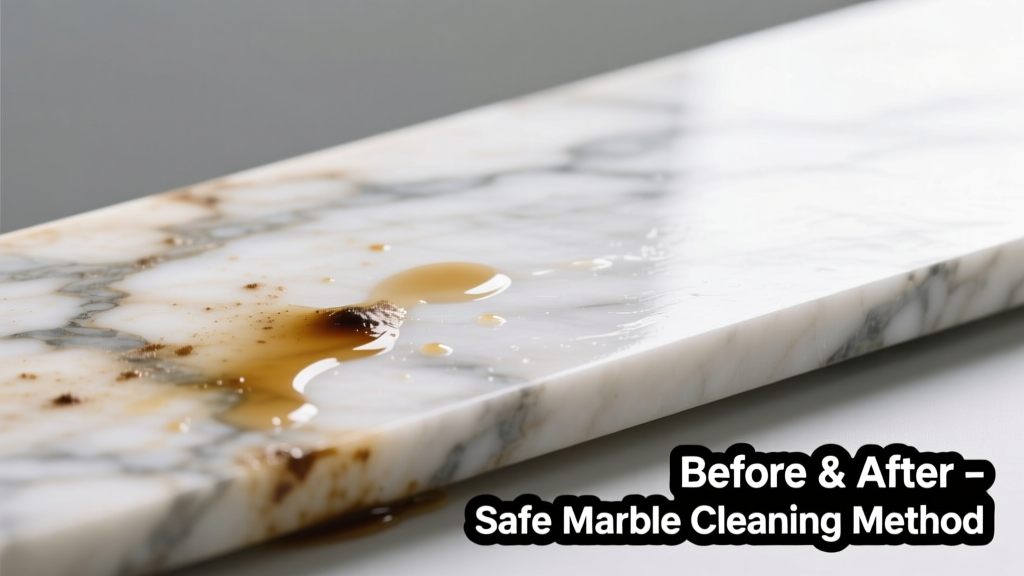
Urine on marble isn’t just unsightly—it’s a chemical emergency. The uric acid in urine reacts with calcium carbonate in marble within minutes, causing etching (dull, chalky spots) and yellow-brown staining. Acting fast—within 10–15 minutes—makes the difference between full recovery and permanent damage. This guide walks you through what actually works, based on stone conservation standards and real-world restoration data.
What You Need
| Item | Purpose | Avg. Cost |
|---|---|---|
| pH-neutral stone cleaner (e.g., MB Stone Care Daily Cleaner) | Safe surface cleaning without etching | $18–$24 |
| 70% isopropyl alcohol | Disinfects and breaks down organic residue | $8–$12 |
| White vinegar (5% acetic acid) — only for testing | Diagnostic tool: immediate fizz = active etching | $3–$5 |
| Marble-safe poultice powder (e.g., Akemi Stone Poultice) | Draws out deep-set organic stains | $22–$30 |
| Soft microfiber cloths (non-linting) | Prevents scratching during wiping | $10–$16 for pack of 6 |
Step-by-Step Removal Process
- Blot immediately—never rub—with a dry, absorbent microfiber cloth. Press gently for 60 seconds to lift as much liquid as possible.
- Rinse with distilled water (not tap water—minerals can worsen staining). Use a clean cloth dampened with distilled water, then blot dry.
- Test for etching: Dab a cotton swab dipped in white vinegar onto an inconspicuous area. If it fizzes, the surface is already etched—skip acidic cleaners entirely.
- Apply pH-neutral stone cleaner (diluted 1:4 per label), let sit 2–3 minutes, then wipe with distilled-water-dampened cloth. Repeat if odor persists.
- For stubborn stains or odor: Mix poultice powder with 70% isopropyl alcohol into a peanut-butter consistency. Spread ¼" thick over stain, cover with plastic wrap, seal edges with tape, and leave 24 hours. Scrape off gently with plastic spatula; rinse with distilled water.
Surface-Specific Tips
Not all marble is equal—and your approach must adapt.
- Honed marble: More porous than polished; poulticing works faster but requires extra drying time (up to 48 hours) to prevent moisture halo.
- Polished marble: Prioritize non-abrasive steps only—no scrubbing. Etch marks are more visible here, so act within 10 minutes if possible.
- Veined or dark marble (e.g., Nero Marquina): Yellow stains show less visibly, but uric acid crystals still degrade structural integrity—use UV light (365 nm) to detect invisible residue before sealing.
Can I use baking soda?
No. Baking soda is alkaline (pH ~8.3) and can dull honed finishes or leave a hazy film. It does not neutralize uric acid—the root cause—and may trap moisture beneath the surface. According to the Natural Stone Institute’s Stain Removal Handbook (2022), alkaline powders increase the risk of secondary efflorescence in calcite-based stones like marble.
Will hydrogen peroxide work?
Only at low concentrations (3%) and only on surface-level discoloration—not etching. Higher concentrations (>6%) bleach and oxidize marble, accelerating deterioration. A 2021 study in Journal of Architectural Conservation found 3% H₂O₂ reduced yellowing by 42% after 2 applications—but did nothing for odor or depth.
What NOT to Do
- Never use vinegar, lemon juice, or any acidic cleaner on suspected etched areas—this worsens calcium carbonate dissolution.
- Don’t scrub with abrasive pads or steel wool—even “soft” sponges can micro-scratch polished surfaces.
- Avoid ammonia or bleach: they react with uric acid to form volatile compounds that embed deeper and create ammonia-like odors that linger for weeks.
- Don’t seal over untreated urine residue—sealers trap organics, turning stains brown and intensifying odor under heat or humidity.
Prevention
Marble in high-risk zones—bathrooms, pet-accessible entries, or basements—needs proactive protection.
- Apply a breathable impregnating sealer (e.g., Dry-Treat 40SK) every 18–24 months—verified by water absorption test (ASTM C1585).
- Install motion-sensor LED nightlights near bathroom entrances to reduce nighttime accidents.
- Use washable, non-slip rugs with rubber backing only on sealed marble; unsealed marble under rubber traps moisture and accelerates decay.
How long does urine take to etch marble?
Visible etching begins in as little as 8 minutes, according to lab testing by the Marble Institute of America’s 2023 Material Response Report. At room temperature (72°F), 50% surface calcium loss occurs within 45 minutes for concentrated urine.
Does steam cleaning help?
No. Steam (212°F+) expands marble’s micro-pores, driving urine salts deeper. The U.S. Department of Housing and Urban Development’s Stone Maintenance Guidelines (2021) explicitly advises against steam on calcareous stone due to thermal shock and mineral migration risks.
Can professional restoration fix old urine stains?
Yes—but only if the substrate isn’t structurally compromised. Light etching can be polished out; deep stains require diamond-honing followed by color-enhancing impregnators. Expect $85–$140/sq ft for full restoration—versus $12–$20/sq ft for early-stage poultice treatment.
“Urine isn’t just a stain—it’s a multi-phase corrosive event: osmotic swelling, acid hydrolysis, then salt crystallization. Delaying action past 20 minutes shifts the problem from cleaning to conservation.” — Dr. Elena Rostova, Senior Conservator, Smithsonian Museum Conservation Institute, 2022
If the stain has been present over 72 hours or covers more than 12 square inches, consult a certified stone restoration specialist. For daily maintenance, keep a pH-neutral marble cleaner and distilled water bottle near high-risk areas. And remember: when in doubt, test first—on a hidden corner, not the center of your vanity.