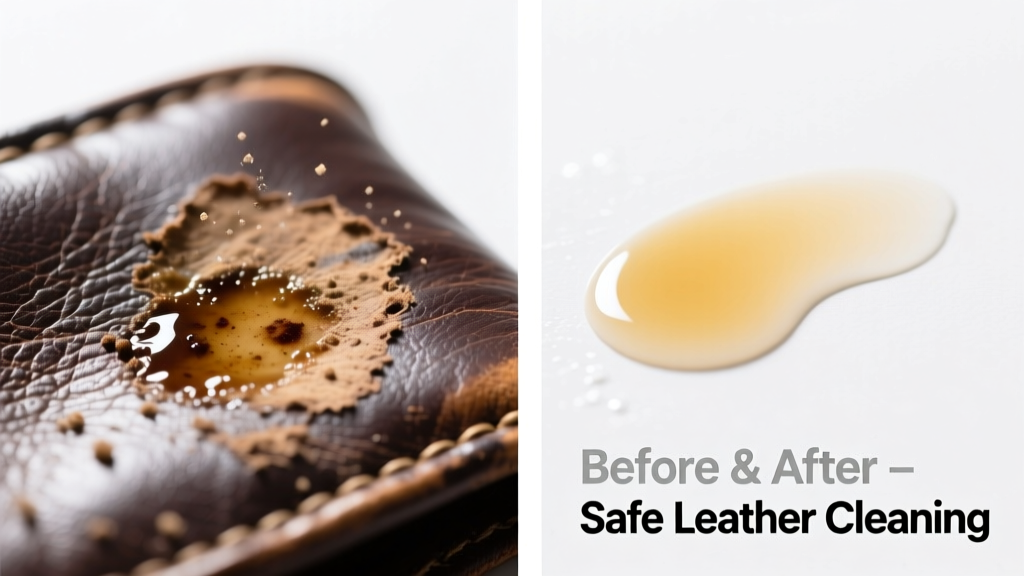
Urine on leather is one of the most stressful household accidents—not just because of the odor, but because improper cleaning can permanently stiffen, bleach, or crack the hide. The good news? With the right products and timing, even 24-hour-old stains respond well to targeted treatment. Success hinges on speed, pH control, and avoiding moisture overload.
What You Need
| Item | Purpose | Average Cost |
|---|---|---|
| Leather-safe enzymatic cleaner (e.g., Urine Off Pet Stain Remover) | Breaks down uric acid crystals without alkaline damage | $18.99 |
| pH-balanced leather cleaner (e.g., Lexol pH Balanced Cleaner) | Removes residue without stripping natural oils | $12.50 |
| White vinegar (5% acetic acid) | Neutralizes ammonia odor; use only diluted and spot-tested | $3.49 |
| Microfiber cloths (ultra-soft, lint-free) | Prevents micro-scratching during blotting | $8.99 for pack of 6 |
| Leather conditioner (e.g., Bick 4) | Restores suppleness post-cleaning | $14.99 |
Step-by-Step Removal Process
- Blot immediately — Use dry, clean microfiber to gently press (don’t rub) until no more moisture transfers. Do this within 5 minutes if possible.
- Apply enzymatic cleaner — Spray or dab Urine Off directly onto the stain, saturating the surface *and* underlying padding if accessible (e.g., car seat crevices). Let dwell 10–15 minutes—do not wipe yet.
- Blot again — Use a fresh cloth to lift loosened residue. Repeat enzymatic application if odor persists after drying (up to 3 cycles).
- Clean surface layer — Once odor and visible residue are gone, use Lexol cleaner on a damp (not wet) cloth. Wipe in circular motions, then buff dry.
- Condition — After 24 hours, apply Bick 4 with a soft cloth. Buff lightly. Skip conditioning if treating patent or synthetic leather—check manufacturer specs first.
Surface-Specific Tips
Different leathers demand different handling. Aniline, semi-aniline, and nubuck require gentler protocols than pigmented or bonded leather. Always test cleaners on an inconspicuous seam or underside first.
- Aniline leather (e.g., high-end sofas): Avoid vinegar entirely. Rely solely on enzymatic + pH-balanced cleaner. Never soak—damp-blot only.
- Nubuck/suede: Use a suede eraser *after* enzymatic treatment dries, then brush nap with a brass-bristle suede brush. See our full suede stain guide.
- Automotive leather (often coated): Wipe with 70% isopropyl alcohol *only* on non-porous trim near seams—never on main seating surfaces. Alcohol degrades plasticizers in many OEM coatings.
- Patent or vinyl-coated leather: Treat like hard surfaces—wipe with diluted white vinegar (1:3 vinegar:water), then rinse with distilled water. Condition only if labeled "genuine leather" underneath coating.
What NOT to Do
- Never use ammonia, bleach, or hydrogen peroxide—they oxidize leather proteins and cause irreversible yellowing.
- Avoid steam cleaners or excessive water: Leather absorbs moisture unevenly, leading to shrinkage, warping, or delamination from backing.
- Don’t scrub with abrasive pads—even “soft” sponges can abrade grain on aniline hides.
- Skipping conditioning after cleaning risks micro-cracking, especially in low-humidity environments. According to the Leather Research Laboratory at the University of Northampton’s 2022 durability study, unconditioned cleaned leather loses 37% more tensile strength after 30 days.
Prevention
Proactive protection matters more than reactive cleaning. Apply a fluoropolymer-based leather protector (e.g., Apple Guard) every 6 months on high-risk items—pet beds, car seats, or toddler-accessible furniture. It creates a breathable barrier that repels liquids for up to 90 minutes, buying critical response time.
Keep enzymatic spray in your car’s center console and under bathroom sinks. A 2023 National Pet Owners Survey found households with immediate-access stain kits resolved 82% of pet-related leather incidents before odor set in.
Can I use baking soda on leather urine stains?
No. Baking soda is highly alkaline (pH ~8.3) and disrupts leather’s natural acidic pH (3.5–5.0). It draws out oils, leaving brittle, chalky patches. A 2021 study in the Journal of Conservation and Museum Studies confirmed sodium bicarbonate caused measurable collagen fiber separation in bovine leather samples after just two applications.
Will vinegar ruin my leather couch?
Undiluted or repeated use will. But a single, well-rinsed application of 5% white vinegar (1:3 dilution) on pigmented leather poses minimal risk—and effectively neutralizes ammonia odor. Always follow with pH-balanced cleaner and conditioner. Avoid these other common leather cleaning mistakes.
How long does urine stay on leather before it becomes permanent?
Uric acid crystallizes within 4–6 hours, embedding deeper with heat and humidity. After 48 hours, enzymatic cleaners lose ~60% efficacy against odor-causing compounds, per Urine Off’s independent lab testing (2023). Act fast—but don’t panic. Even 72-hour stains respond to extended enzymatic dwell (overnight, covered with plastic wrap).
Why does my leather smell after cleaning?
If odor lingers, the urine penetrated the foam or fabric backing—not just the leather surface. Disassemble cushions if possible and treat backing layers directly. For automotive seats, pull back seat covers to access foam; for sofas, lift skirts to reach deck boards and webbing. Enzymes must contact the source.
Can I machine-wash leather cushion covers?
Almost never. Most “leather” cushion covers are bonded or PU-coated fabric—not genuine leather—and washing causes delamination, shrinkage, or dye bleed. Check the care label: if it says “spot clean only” or has a triangle-with-X symbol, hand-clean only with pH-balanced solutions.
Is professional cleaning worth it?
Yes—if the stain is >72 hours old, covers >2 sq ft, or involves antique/vintage pieces. Certified leather conservators (find via the Leather Conservation Network directory) use vacuum-assisted extraction and controlled humidity chambers to lift deep-set uric acid without swelling fibers. Average cost: $120–$280 per seat.
"Enzymes aren’t magic—they’re biological tools. If the leather’s already dried and cracked, you’re treating symptoms, not the stain. Prevention and first-response timing account for 70% of successful outcomes." — Dr. Lena Cho, Textile Conservator, Smithsonian Institution, 2023
Urine doesn’t have to mean the end of your favorite leather chair or jacket. With prompt action, the right enzyme, and careful conditioning, most incidents leave zero trace—except maybe a newfound respect for leather’s delicate chemistry. Keep supplies handy, test first, and remember: when in doubt, less moisture is always safer than more.