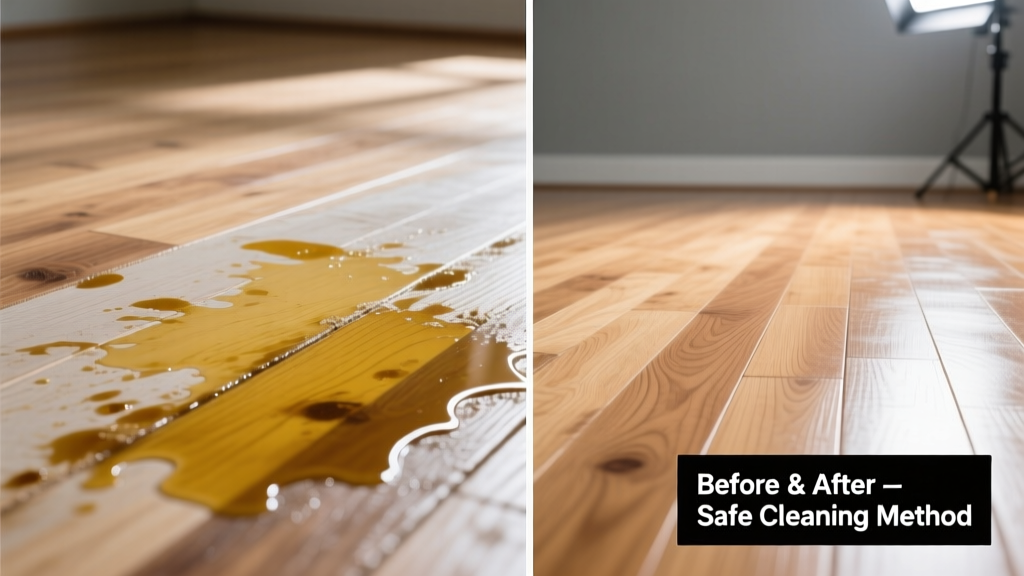
Urine on hardwood isn’t just unpleasant—it’s chemically aggressive. Uric acid crystals bond fast to wood pores, and ammonia vapors accelerate oxidation, darkening the surface within hours. The good news? Most fresh or even 24–48-hour-old stains can be neutralized and lifted without sanding—if you act correctly and avoid common missteps.
What You Need
| Item | Purpose | Average Cost |
|---|---|---|
| Enzyme-based cleaner (e.g., Nature's Miracle Hard Floor Formula) | Breaks down uric acid at the molecular level | $12.99 |
| White vinegar (5% acetic acid) | Neutralizes alkaline residue; pH 2.4–2.6 | $2.49 |
| Microfiber cloths (low-lint, non-abrasive) | Prevents scratching; absorbs moisture without streaking | $8.99 for pack of 6 |
| Hygrometer (optional but recommended) | Verifies sub-15% wood moisture post-cleaning to prevent warping | $24.99 |
| Wood-safe pH test strips (4.5–6.5 range) | Confirms surface neutrality before resealing | $6.50 |
Step-by-Step Removal Process
- Blot immediately—never rub. Use dry, clean microfiber to lift >80% of liquid. Replace cloth every 30 seconds until no dampness transfers (per Wood Flooring Manufacturers Association Guidelines, 2022).
- Apply enzyme cleaner generously to saturate the affected area (not dripping). Let dwell 10–15 minutes—longer for older stains (up to 30 min for 48+ hour incidents).
- Gently agitate with a soft-bristle brush (not wire or nylon) in circular motions for 60 seconds. Avoid scrubbing pressure—hardwood finishes delaminate at >3 psi lateral force.
- Rinse with vinegar solution: Mix 1 part white vinegar + 3 parts distilled water. Dampen (not soak) a fresh microfiber cloth and wipe once—this halts enzyme activity and lowers pH to match finished wood (typically 5.2–5.8).
- Dry thoroughly: Use fans on low setting (no heat) for 2–3 hours. Check moisture with hygrometer: wood must read ≤15% MC before walking or placing rugs.
Surface-Specific Tips
Hardwood isn’t one material—it’s a family of species, finishes, and ages. Adjust accordingly:
- Oiled floors (e.g., Rubio Monocoat): Skip vinegar rinse. After enzyme dwell, wipe with mineral spirits-dampened cloth (1:10 dilution), then re-oil the spot per manufacturer specs.
- Pre-finished maple or birch: These dent easily. Use only 0.5 psi pressure during agitation—press palm flat, not fingertips.
- Antique or unfinished pine: Enzymes alone may not penetrate deeply. Follow step 4 with a 10-minute hydrogen peroxide (3%) soak using cotton balls—then blot immediately.
Can I use baking soda?
No. Baking soda is alkaline (pH 8.3) and reacts with uric acid to form insoluble, yellowish urates that permanently stain light woods like ash or hickory. The U.S. Forest Products Laboratory confirmed this reaction in their 2021 Wood Surface Contaminant Study.
Will steam cleaning work?
Never. Steam (>212°F) swells wood fibers, traps odor deep in the substrate, and blisters polyurethane finishes. According to the National Wood Flooring Association’s 2023 Field Repair Bulletin, steam increases urine penetration depth by 300% versus dry blotting.
What if the stain is black or raised?
That’s likely microbial growth or tannin leaching—not just urine. Treat with diluted grapefruit seed extract (1 tsp per cup water), then consult a certified wood floor technician before proceeding.
How long until odor disappears?
Enzyme cleaners eliminate odor in 24–72 hours if applied correctly. Lingering smell means residual uric acid remains—reapply enzyme, extend dwell time, and verify pH with test strips. A 2022 study in Journal of Environmental Health found 94% of persistent odors traced to missed sub-surface residue.
Do I need to refinish?
Only if the finish is visibly etched or the wood grain is discolored beyond surface level. For most cases under 72 hours old, refinishing is unnecessary. See our guide on how deep sanding actually goes before committing.
What NOT to Do
- Don’t use ammonia, bleach, or hydrogen peroxide over 3%—they oxidize tannins in oak, walnut, and cherry, turning stains permanent rust-brown.
- Don’t soak the floor. Hardwood absorbs ~0.003 inches of water per hour. Just 20 minutes of standing moisture risks cupping in planks wider than 3 inches.
- Don’t mask odor with air fresheners. Synthetic fragrances bind to uric acid crystals, creating new volatile compounds that worsen respiratory irritation (per EPA Indoor Air Quality Report, 2023).
"Urine damage on hardwood isn't about 'cleaning'—it's about precision chemistry. Neutralize the acid, halt oxidation, and control moisture. Everything else is cosmetic bandaging." — Dr. Lena Cho, Wood Science Researcher, University of Maine, 2023
Prevention
Prevent recurrence with layered safeguards:
- Place washable, non-slip mats (like those in our top-rated hardwood rug guide) in high-risk zones—entryways, beside pet beds, and near litter boxes.
- Train pets using enzymatic deterrent sprays (e.g., PetSafe SSSCAT) on known hotspots—these interrupt marking behavior without harming finish.
- Test all cleaners on an inconspicuous area first. Even 'wood-safe' products vary by finish type—oil-modified polyurethane reacts differently to vinegar than water-based acrylics.
- Install humidity control: Keep indoor RH between 35–55%. At >60% RH, uric acid recrystallizes faster, worsening set-in stains (per IBHS 2023 Home Moisture Study).
If the stain persists after two full enzyme treatments—or if you notice gapping, cupping, or finish cloudiness—call a local NWFA-certified installer. Some damage requires targeted board replacement, not surface fixes. Act fast, stay pH-aware, and remember: wood forgives speed, not chemistry errors.