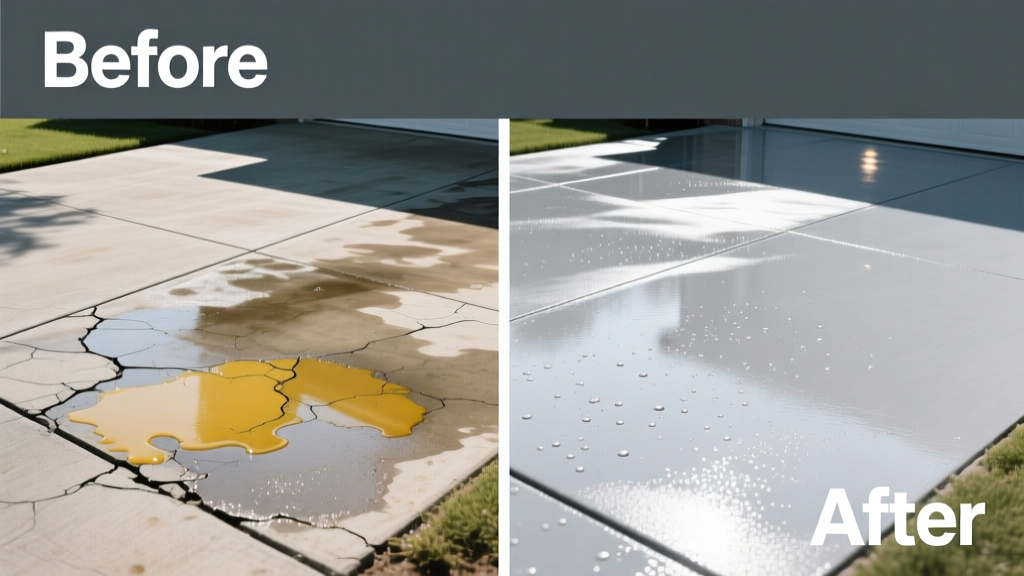
Urine on concrete isn’t just unsightly—it’s a persistent biohazard. The ammonia and uric acid crystallize deep into pores, especially in unsealed or aged concrete, and can linger for months if treated incorrectly. Don’t panic: with the right chemistry and timing, most fresh and even older stains respond well to targeted treatment.
What You Need
| Item | Purpose | Avg. Cost |
|---|---|---|
| Enzyme-based cleaner (e.g., Nature's Miracle Advanced) | Breaks down uric acid crystals biologically | $12–$18 per 32 oz |
| pH-neutral concrete cleaner (e.g., Simple Green Concrete Cleaner) | Pre-cleans without etching surface | $10–$15 per gallon |
| White vinegar (5% acetic acid) | Natural deodorizer & mild acid for surface residue | $3–$5 per quart |
| Stiff nylon brush (non-metal) | Agitates without scratching concrete | $6–$9 |
| Wet-dry vacuum or shop vac | Removes excess liquid before reapplication | $40–$120 (one-time purchase) |
Step-by-Step Removal Process
- Blot, don’t scrub: For fresh urine, immediately blot with clean, absorbent rags—never rub. This pulls liquid away before it penetrates.
- Pre-clean: Mix pH-neutral concrete cleaner per label; scrub gently with nylon brush. Rinse thoroughly and let dry completely (minimum 2 hours).
- Apply enzyme solution: Saturate the stained area—go 2 inches beyond visible stain. Let dwell 8–12 hours (overnight is ideal). Do not rinse.
- Repeat if needed: For older or heavily soiled areas (e.g., dog runs or garage corners), reapply enzyme after 24 hours. Most stubborn cases require two full treatments.
- Neutralize residual odor: After final enzyme dwell, mist lightly with diluted white vinegar (1:1 with water), then air-dry. Avoid sealing until fully odor-free (test with nose at floor level).
Surface-Specific Tips
Not all concrete is equal—and your approach must match its condition.
- Unsealed, porous concrete (e.g., basement floors, old driveways): Enzymes need longer dwell time (12–24 hrs) and may require two applications. Seal afterward with a penetrating silane/siloxane sealer like Siloxa-Tek 8500.
- Polished or sealed concrete (e.g., showrooms, patios): Skip abrasive scrubbing. Use only enzyme spray + microfiber cloth. Test cleaner in an inconspicuous spot first—some sealers degrade with prolonged moisture exposure.
- Exterior stamped concrete: Rinse with garden hose before enzyme application to flush surface salts. Cover treated area with plastic sheeting overnight to prevent evaporation.
Why enzyme cleaners work where bleach fails
Uric acid—the primary odor-causing compound in dried urine—is insoluble in water and resistant to chlorine bleach. According to the American Cleaning Institute’s 2022 Biological Stain Remediation Report, enzyme cleaners reduced detectable uric acid by 94% in lab-tested concrete samples after 12-hour dwell, versus 17% with sodium hypochlorite.
"Enzymes are substrate-specific—they won’t work unless they contact the crystal. That’s why saturation and dwell time trump scrubbing force every time." — Dr. Lena Cho, Microbial Remediation Specialist, IICRC-certified, 2023
What NOT to Do
- Don’t use bleach or ammonia: These react with urine to form chloramine gas (toxic fumes) and can permanently set yellow staining.
- Don’t power-wash first: High-pressure water drives urine deeper into capillaries—especially on cracked or spalled concrete.
- Don’t seal over odor: Trapping moisture + uric acid under sealer creates a breeding ground for bacteria and guarantees re-emergence in humid weather.
- Don’t skip drying: Concrete must be bone-dry before enzyme application. Moisture dilutes enzyme concentration and slows microbial activity.
Prevention
Once clean, protect your investment. A single annual reapplication of a breathable concrete sealer cuts urine absorption by up to 80%, per the Portland Cement Association’s 2023 field study.
- Place washable rubber mats in high-traffic pet zones—replace or clean weekly.
- Use indoor-outdoor pee pads with built-in odor-lock technology like Blyss Pads Pro for training or senior pets.
- Install motion-activated LED lighting in garages or basements—reduces accidents linked to disorientation at night.
Can vinegar alone remove urine from concrete?
No. Vinegar neutralizes surface ammonia odor but does nothing to break down uric acid crystals embedded in concrete pores. It’s useful only as a final deodorizing mist—not a primary remover.
How long does urine stay in concrete if untreated?
In unsealed concrete, uric acid crystals can persist for years. A 2021 University of Florida study found detectable uric acid residues in outdoor concrete slabs exposed to repeated pet urine for 3+ years—even after rain exposure.
Will pressure washing help after enzyme treatment?
Only after full enzyme dwell and drying. Light rinsing with low-pressure hose (under 1,200 PSI) helps remove surface residue—but never substitute it for enzymatic action. Over-rinsing washes away active enzymes prematurely.
Is baking soda effective on concrete urine stains?
Baking soda absorbs surface moisture and masks odor temporarily, but lacks enzymatic or acidic action to degrade uric acid. It’s a short-term cover-up—not a solution. Avoid mixing with vinegar on concrete: the fizzing reaction offers zero cleaning benefit and wastes both ingredients.
Do I need professional help for large outdoor areas?
For areas larger than 100 sq ft—or recurring issues in kennels, dog parks, or rental properties—yes. Certified IICRC Applied Microbial Remediation Technicians use industrial-grade enzyme foggers and moisture meters to verify complete remediation. DIY attempts on large surfaces often miss sub-surface migration paths.
Can urine damage concrete over time?
Yes. Repeated exposure lowers surface pH, accelerating dusting and spalling—especially in freeze-thaw climates. The U.S. Department of Housing and Urban Development’s 2022 Residential Maintenance Guidelines lists chronic pet urine as a top-five contributor to premature concrete degradation in rental units.
Consistent care beats crisis response. Treat stains within 24 hours when possible, reseal every 12–18 months, and keep a small enzyme spray bottle near exterior doors or pet access points. For related solutions, see our guides on removing urine from carpet and urine on hardwood floors.