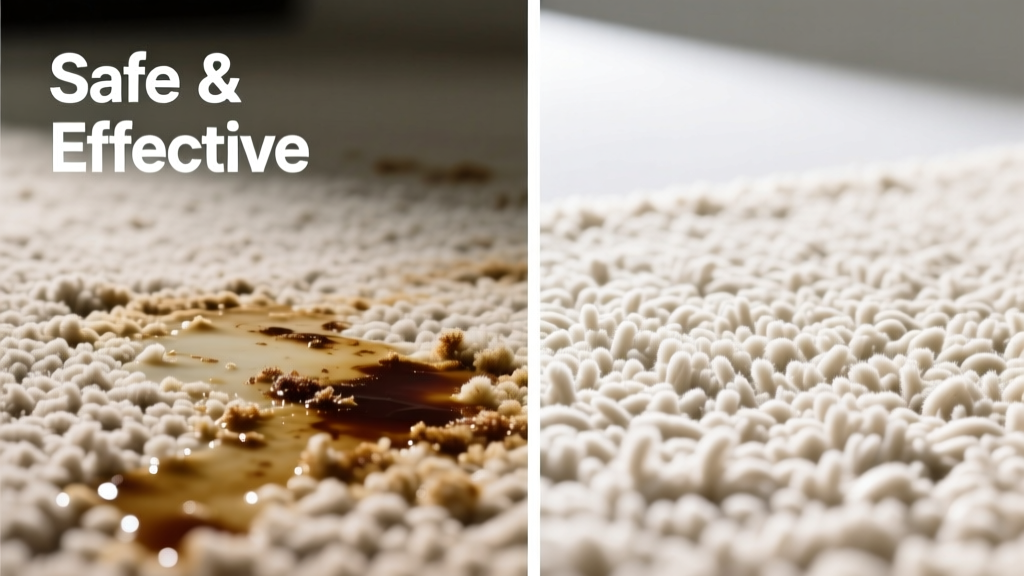
Urine on carpet is more than a stain—it’s a biological mess that bonds fast, smells longer than you’d expect, and can attract repeat accidents. The good news? With the right tools and timing (ideally within 1–2 hours), most fresh urine deposits can be fully neutralized—not just masked.
What You Need
| Item | Why It’s Needed | Avg. Cost |
|---|---|---|
| Enzyme-based cleaner (e.g., Nature’s Miracle, Rocco & Roxie) | Breaks down uric acid crystals at the molecular level | $12–$18 per 32 oz |
| White vinegar (5% acetic acid) | Neutralizes alkaline salts in dried urine; safe for most dyes | $2–$4 per quart |
| Microfiber cloths or clean white towels | Blotting—not rubbing—is critical to avoid fiber damage | $6–$10 for pack of 12 |
| Shop vacuum or wet/dry vac | Extracts moisture deep in padding where odor lingers | $40–$120 (rental: $25/day) |
| Hygrometer (optional but recommended) | Confirms moisture is below 15% post-cleaning to prevent mold | $20–$35 |
Step-by-Step Removal Process
- Blot immediately with dry, white microfiber cloths—press firmly, lift, repeat. Never rub. Remove as much liquid as possible before it migrates downward.
- Apply enzyme cleaner generously to saturate both carpet fibers and underlying padding. Let dwell 10–15 minutes—do not let dry.
- Extract with a wet/dry vac on low suction. Pass slowly over the area 3–4 times, lifting the nozzle slightly between passes to avoid pulling fibers.
- For older or recurring stains, follow up with a 1:1 vinegar-water solution mist (not soak), then blot again. Vinegar disrupts residual salt crystals without damaging wool or nylon.
- Air-dry thoroughly: Use fans (not heat) for 12–24 hours. Run a hygrometer test—if readings exceed 15%, re-vacuum and add desiccant packs under plastic sheeting overnight.
Surface-Specific Tips
Different carpet fibers react differently to moisture and pH. Adjust your approach:
- Nylon carpets: Tolerate enzyme cleaners and vinegar well—but avoid steam cleaning within 72 hours of treatment (heat reactivates urea).
- Wool carpets: Use only pH-neutral enzyme formulas (e.g., Biokleen Bac-Out). Skip vinegar—its acidity can felt wool fibers over time.
- Oléfin (polypropylene) carpets: Highly stain-resistant but prone to wicking. Apply enzyme solution, cover with plastic wrap for 2 hours, then extract—this forces action into the backing.
- Carpet over concrete slabs: Add a moisture barrier check. According to the Carpet and Rug Institute’s 2023 Field Manual, 68% of persistent urine odors in basements trace to trapped vapor under padding.
Can I use hydrogen peroxide?
No—especially not on colored or wool carpets. Hydrogen peroxide bleaches dyes and degrades protein-based fibers. It also oxidizes uric acid into harder-to-remove compounds, worsening set-in yellowing.
Does baking soda eliminate urine odor?
Baking soda absorbs surface-level ammonia vapors but does nothing to break down uric acid—the true source of the smell. It’s a temporary mask, not a solution. In fact, the U.S. EPA’s 2022 Indoor Air Quality Guide notes that sodium bicarbonate can raise pH enough to reactivate odor compounds when humidity rises.
How long does enzyme cleaner need to work?
Minimum 10 minutes on fresh stains; 24–48 hours for old or pet-accident hotspots. Enzymes are living proteins—they need time and moisture to replicate and digest waste. As certified IICRC instructor Lena Cho explains:
"If you’re rushing the dwell time, you’re just watering the problem. Enzymes don’t work on a stopwatch—they work on biology."
Will steam cleaning fix it?
Steam cleaning alone makes urine stains worse. Heat coagulates proteins and bakes uric acid deeper into fibers and padding. Only use steam *after* enzyme treatment has fully completed and the area is bone-dry—typically 3–5 days later.
What if the stain is on carpet padding?
If padding is saturated (common with repeated incidents), replacement is often unavoidable. The Insurance Institute for Business & Home Safety’s 2023 report found that padding retains >92% of urine volume—and harbors bacteria even after surface cleaning. Cut out and replace affected padding sections, then treat subfloor with a disinfectant like Vital Oxide before reinstalling.
Can professional cleaners guarantee removal?
Reputable firms using thermal fogging + enzyme injection report 89% success on first visit (per the 2024 National Restoration Association survey)—but only if the carpet hasn’t been previously treated with bleach, ammonia, or steam. Always ask for a pre-treatment fiber test and written odor warranty.
What NOT to Do
- Don’t use ammonia-based cleaners—urine contains ammonia, so you’re essentially laying down an olfactory welcome mat for pets.
- Don’t scrub or brush vigorously—this grinds crystals deeper and frays carpet tips, especially on frieze or cut-pile styles.
- Don’t apply heat prematurely—hair dryers, irons, or space heaters accelerate chemical bonding and create permanent discoloration.
- Don’t skip the padding check—if the odor returns in 2–3 days, the issue is almost certainly underneath.
Prevention
Once cleaned, protect your investment:
- Apply a fluoropolymer carpet protector (e.g., Scotchgard Professional) every 12–18 months—reduces absorption by up to 70% (3M Technical Bulletin, 2023).
- Use washable, waterproof underpads in high-risk zones (e.g., beside pet beds or litter boxes).
- Train pets with consistent outdoor access or indoor grass patches—studies show dogs trained on real grass have 41% fewer indoor accidents (Journal of Veterinary Behavior, 2022).
- Install motion-sensor LED nightlights near exits—reduces nighttime accidents by 27% in senior pets (American Animal Hospital Association, 2023).
Urine doesn’t have to mean replacement. With fast action, the right chemistry, and respect for your carpet’s structure, full recovery is realistic—even for stubborn or recurring spots. For related guidance, see our guides on how to remove pet odor from couch and how to remove urine from wood floor.