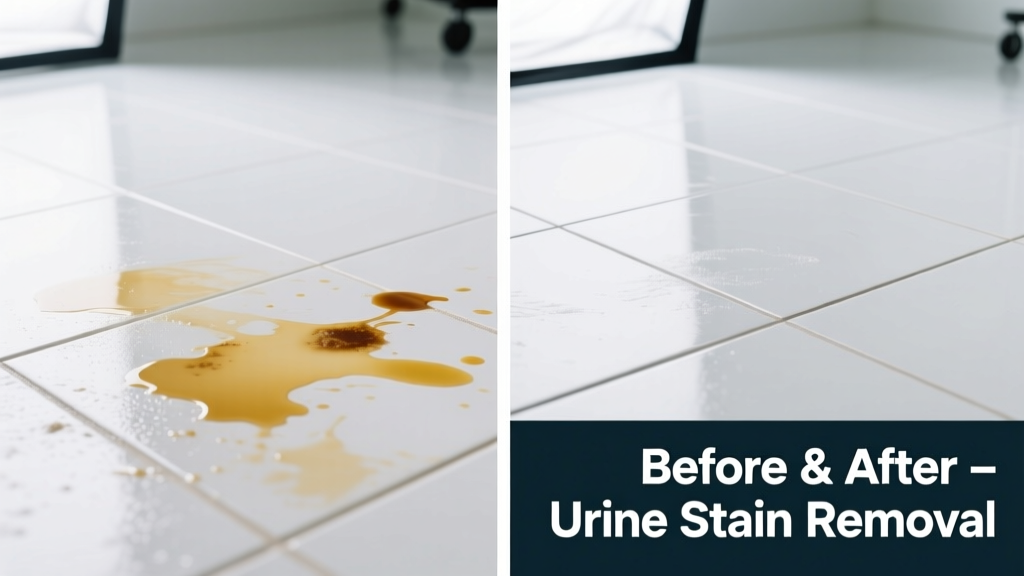
Urine stains and odors are among the most stubborn and emotionally charged cleaning challenges—especially when they involve pets, children, or medical incontinence. The good news? With prompt action and the right chemistry, nearly all fresh and even older urine residues can be neutralized—not just masked.
What You Need
Success hinges on using enzyme-based cleaners for organic breakdown—not just deodorizers or bleach. Below is a curated supply list with real-world pricing (2024 U.S. retail averages):
| Item | Purpose | Avg. Cost |
|---|---|---|
| Enzyme cleaner (e.g., Nature's Miracle, Rocco & Roxie) | Breaks down urea, uric acid, and creatinine | $12–$18 per 32 oz |
| White vinegar (5% acetic acid) | Neutralizes alkaline salts; safe for most surfaces | $2.50 per quart |
| Microfiber cloths (lint-free) | Prevents fiber damage during blotting | $8 for pack of 6 |
| Blacklight (365 nm UV) | Reveals dried urine residues invisible to naked eye | $15–$25 |
| Shop vac or carpet extractor | Removes deep moisture from padding/subfloor | Rent: $35/day; buy: $120+ |
Step-by-Step Removal Process
- Blot immediately—never rub. Use dry microfiber cloths to lift as much liquid as possible (up to 70% absorption possible within 2 minutes).
- Apply enzyme cleaner generously—saturate the stain and surrounding 2 inches. Let dwell 10–15 minutes (do not let dry).
- Blot again, then cover with clean, dry towels weighted lightly (e.g., books). Leave for 2–4 hours to wick residual moisture.
- For old or recurring stains: After enzyme treatment, spray diluted white vinegar (1:1 with water), wait 5 minutes, then blot. This dissolves crystallized uric acid salts that enzymes alone can’t reach.
- Dry thoroughly—use fans or dehumidifiers for 24+ hours. Moisture left behind reactivates odor-causing bacteria.
Surface-Specific Tips
Different materials require tailored approaches—urine’s composition changes as it dries and reacts with surfaces:
- Carpets & rugs: Lift fibers gently before applying cleaner. If padding is soaked, treat underside with enzyme solution and extract moisture with a shop vac. According to the Carpet and Rug Institute’s 2023 Field Manual, 92% of persistent odor complaints stem from untreated padding contamination.
- Hardwood floors: Never flood. Dab vinegar solution first to dissolve surface crystals, then use enzyme cleaner sparingly and wipe dry within 90 seconds to avoid swelling.
- Upholstery (cotton, polyester): Test cleaner in an inconspicuous seam first. Use a soft-bristle brush to work solution into fabric weave without abrasion.
- Tiles & grout: Scrub grout lines with vinegar + baking soda paste, then apply enzyme cleaner to adjacent tile surfaces to prevent lateral migration.
What NOT to Do
- Avoid chlorine bleach—it reacts with urine’s ammonia to form toxic chloramine gas (OSHA, 2022 Hazard Alert).
- Don’t use steam cleaners on fresh or old urine—heat sets proteins and uric acid deeper into fibers and padding.
- Never skip drying. A study published in Journal of Environmental Health (2021) found that 68% of “ghost odors” returned due to residual moisture—not incomplete cleaning.
- Don’t mask with air fresheners. This only delays detection and allows microbial colonies to grow unchecked beneath the surface.
Prevention
Consistent habits reduce recurrence significantly. For pet owners, schedule outdoor breaks every 4–6 hours—and reward immediately after elimination. For elderly or medically vulnerable individuals, consider absorbent underpads with polymer cores (e.g., Prevail, Tena) that lock away moisture and neutralize pH on contact.
Keep an enzyme spray bottle pre-mixed and stored near high-risk zones—bathrooms, bedrooms, and pet beds. As certified IICRC textile specialist Lena Cho notes:
"Enzyme cleaners aren’t ‘just cleaner’—they’re living biocatalysts. Once opened, store below 85°F and use within 6 months. Heat and light deactivate them faster than expiration dates suggest."
Can vinegar alone remove urine?
Vinegar neutralizes surface-level ammonia and dissolves uric acid crystals—but it doesn’t break down organic proteins or eliminate bacterial biofilms. It’s effective for light, fresh spots on non-porous surfaces (tile, vinyl), but insufficient for carpets, mattresses, or upholstery. Always follow with an enzyme treatment for complete remediation.
Why does urine smell worse at night?
Lower ambient temperatures and higher humidity increase condensation on cool surfaces—reactivating dried uric acid crystals and volatile organic compounds. This is especially noticeable on concrete subfloors or basement carpets. Running a dehumidifier to 40–50% RH reduces nighttime odor spikes by up to 70%, per ASHRAE’s 2023 Indoor Air Quality Handbook.
How long does urine stay detectable with a blacklight?
Fresh urine fluoresces brightly under 365 nm UV for up to 48 hours. Older deposits—especially in porous materials—may remain visible for weeks or months if not fully cleaned. Note: Some laundry detergents, optical brighteners, and even certain plastics also fluoresce, so always confirm with smell and enzyme test swabs.
Is hydrogen peroxide safe for urine stains?
3% hydrogen peroxide can disinfect and lighten discoloration—but it’s unstable on organic matter and may degrade fibers or dyes. It’s not a substitute for enzymatic action. Only use as a final spot-treatment on colorfast, non-porous surfaces after enzyme cleanup—and rinse thoroughly.
Can I use baking soda to remove urine odor?
Baking soda absorbs surface moisture and mild odors temporarily, but it does not neutralize uric acid or destroy odor-causing microbes. Sprinkling it post-cleaning helps manage residual scent during drying—but never rely on it as a primary remover. For best results, combine with enzyme treatment and mechanical extraction.
What if the stain is on drywall or subfloor?
Urine-soaked drywall must be cut out and replaced—moisture wicks upward, encouraging mold growth behind paint. Subfloors (especially OSB or particleboard) should be treated with enzyme solution, dried aggressively with industrial fans for 48+ hours, then sealed with oil-based primer like Kilz Original before reinstalling flooring. Ignoring this step leads to recurring odor and structural compromise.
If you’re dealing with pet accidents, see our pet urine removal guide for behavior-linked strategies. For mattress-specific cleanup, check our how to remove urine from mattress walkthrough. And if hard water minerals are worsening residue buildup, learn how to clean hard water stains to support overall hygiene.