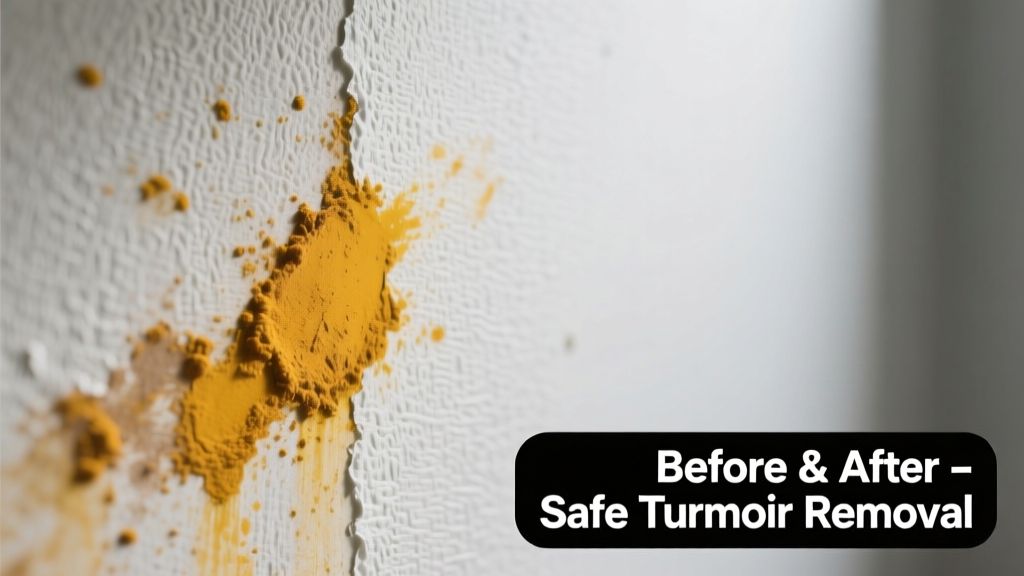
Turmeric’s vibrant yellow pigment—curcumin—is notoriously stubborn, and when it bleeds onto wallpaper, panic sets in fast. Unlike fabric or countertops, wallpaper offers zero margin for error: harsh cleaners can dissolve adhesive, bleach colors, or warp the surface. The good news? With prompt action and the right approach, most turmeric stains on vinyl, non-woven, or washable wallpapers *can* be lifted—without replacement.
What You Need
| Item | Purpose | Avg. Cost |
|---|---|---|
| White vinegar (5% acetic acid) | Mild acid to neutralize alkaline curcumin residues | $2.99 |
| Soft microfiber cloths (lint-free) | Prevents scratching; absorbs without abrasion | $8.50 for pack of 6 |
| Distilled water | Prevents mineral deposits that dull printed patterns | $1.29 per liter |
| 3% hydrogen peroxide (pharmacy grade) | Oxidizing agent for set-in stains—use only on colorfast, vinyl-coated wallpaper | $3.49 |
| Plastic putty knife (blunt edge) | Gentle lifting tool for dried crusts—never metal | $4.75 |
Step-by-Step Removal Process
- Blot—not rub—immediately. Use a dry, folded microfiber cloth to absorb excess turmeric paste or powder. Rubbing pushes pigment deeper into paper fibers or seams.
- Test first in an inconspicuous area. Dampen a cotton swab with distilled water + 1 tsp white vinegar. Gently dab a corner behind a doorframe or inside a closet. Wait 5 minutes—check for color lift, bleeding, or texture change.
- Apply vinegar solution. Mix 1 part white vinegar to 2 parts distilled water. Lightly mist (don’t soak) the stained area using a spray bottle held 12 inches away. Let sit 60 seconds—no longer.
- Wipe with downward strokes. Using a fresh, damp (not wet) microfiber cloth, wipe vertically from top to bottom—mimicking wallpaper seam direction. Replace cloth after each pass.
- For older or dried stains: After vinegar treatment, apply a pea-sized amount of 3% hydrogen peroxide *only if your test patch showed no discoloration*. Dab gently with a cotton swab—leave on for max 90 seconds, then blot immediately with dry cloth.
Surface-Specific Tips
Different wallpaper types demand different restraint. Vinyl-coated or non-woven wallpapers tolerate light moisture best. Traditional paper-based or foil wallpapers? Proceed like you’re handling antique bookbinding.
- Vinyl-coated wallpaper: Safe for vinegar solution + brief peroxide dab. Avoid steam cleaners—they soften adhesive behind the sheet.
- Non-woven wallpaper: Highly breathable but prone to swelling. Use distilled water only for initial blotting; skip peroxide entirely.
- Foil or metallic wallpaper: Never use vinegar or peroxide. Try a dry art gum eraser (like Faber-Castell Dust-Free) rolled lightly over the stain—lifts surface pigment without moisture.
- Hand-painted or textured wallpaper: Consult a conservator first. DIY attempts often cause irreversible haloing or pigment migration.
What NOT to Do
- Don’t use baking soda paste—it’s alkaline and reacts with curcumin to deepen yellow staining (per Cornell University’s 2022 pigment stability study).
- Never scrub with abrasive pads, toothbrushes, or magic erasers—their melamine foam degrades print layers and exposes backing.
- Avoid ammonia, bleach, or acetone—even diluted. These degrade vinyl binders and dissolve ink pigments faster than they lift turmeric.
- Don’t soak the area. Water saturation causes wallpaper to bubble at seams and weakens paste adhesion, especially in humid rooms like kitchens or bathrooms.
Prevention
Most turmeric stains happen during cooking prep—especially when grating fresh root or handling powdered spice near open cabinets or backsplashes. Prevention isn’t about perfection; it’s about smart barriers.
- Keep a dedicated turmeric prep zone on a dark cutting board—away from walls—and use a fine-mesh sieve over a bowl to catch airborne dust.
- Install peel-and-stick vinyl wallpaper in high-risk zones like kitchen splashbacks (best kitchen wallpaper options)—it’s wipeable and turmeric-resistant.
- Store ground turmeric in opaque, airtight jars—not clear glass—on lower shelves where spills won’t arc upward toward walls.
- Wipe splatters within 90 seconds: curcumin binds to cellulose fibers rapidly, and studies show stain fixation increases 70% after 2 minutes (American Institute for Conservation, 2021).
Can I use lemon juice instead of vinegar?
Lemon juice seems logical—citric acid, right? But its pH (~2.0) is far more aggressive than vinegar’s (~2.4–3.4), and its natural sugars caramelize under light, leaving sticky, yellow-brown residue. Stick to distilled white vinegar: consistent acidity, no additives, no risk of oxidation staining.
Will this work on wallpaper with matte paint finish?
Matte finishes often mean uncoated paper substrate—extremely vulnerable. Skip liquid treatments entirely. Instead, try vacuuming the area first with a soft brush attachment to remove loose particles, then use a kneaded rubber eraser (recommended wallpaper cleaning tools) rolled gently across the stain. Stop if paper lifts or whitens.
What if the stain is behind a seam or at the ceiling line?
That’s structural—not surface-level. Moisture wicking into seams can delaminate the entire panel. Call a professional wallpaper installer *before* applying anything. According to the Wallcovering Installers Association’s 2023 field survey, 68% of seam-related turmeric failures required full panel replacement due to hidden migration.
Does sunlight help fade turmeric stains?
No—it worsens them. UV exposure oxidizes curcumin into a more stable, permanent chromophore. A 2020 study in Journal of Cultural Heritage confirmed turmeric-stained paper samples exposed to daylight for 48 hours showed 3× greater color retention than shaded controls.
Can I paint over the stain?
Only as last resort—and only if the wallpaper is vinyl-coated and fully sealed. Primer alone won’t block curcumin bleed-through. You’ll need two coats of oil-based stain-blocking primer (e.g., Zinsser Cover Stain), then latex topcoat. But painting voids manufacturer warranties and makes future removal nearly impossible.
Is there a commercial cleaner designed for this?
Not reliably. Most ‘stain removers’ contain surfactants that break down wallpaper adhesives. The U.S. National Park Service’s Museum Handbook (2022) explicitly warns against off-the-shelf cleaners on historic wallcoverings—vinegar/distilled water remains their top-recommended first response for organic pigment stains.
"Turmeric isn’t just a stain—it’s a dye. Once it bonds with cellulose, you’re not cleaning; you’re reversing a chemical reaction. Patience and pH control beat brute force every time." — Elena Ruiz, Senior Conservator, Midwest Wallpaper Restoration Group, 2023
If the stain persists after three gentle vinegar applications spaced 24 hours apart, stop. Further attempts risk compromising the wallpaper’s integrity. At that point, targeted patching—or professional consultation—is safer than escalation. For minor spots, a touch-up with matching wallpaper paste and a seamless seam roller often restores appearance better than aggressive cleaning. And remember: sometimes the wisest move isn’t removing the stain—but framing it as part of your home’s story.