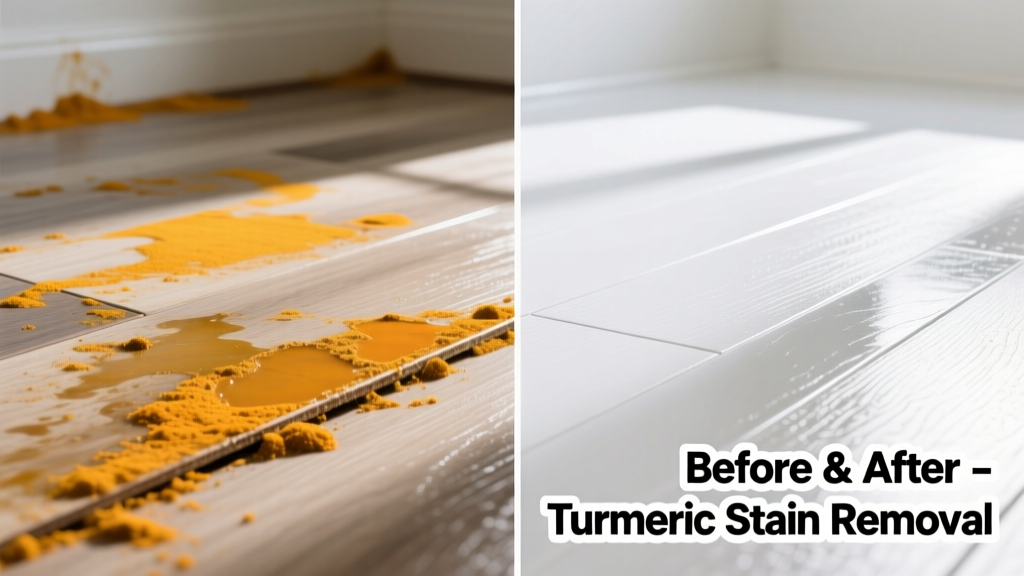
Turmeric’s vibrant yellow pigment—curcumin—is notoriously stubborn on vinyl. It bonds fast, especially when heat or moisture is involved, and can look permanent within hours. But don’t panic: with the right approach, most fresh and even 24–48-hour-old turmeric stains lift cleanly without damaging your flooring.
What You Need
| Item | Why It’s Used | Avg. Cost |
|---|---|---|
| Isopropyl alcohol (70% or higher) | Breaks down curcumin’s lipid-soluble structure | $4.99 |
| White vinegar (5% acetic acid) | Mild acid helps neutralize alkaline residue; safe for vinyl | $2.49 |
| Microfiber cloths (lint-free) | Prevents micro-scratches; absorbs better than cotton | $8.99 for pack of 6 |
| Baking soda paste (1:3 ratio) | Gentle abrasive for set-in stains; non-etching on vinyl | $1.29 |
| Soft-bristle nylon brush (≤0.005" bristles) | Cleans grout lines or textured vinyl without gouging | $5.49 |
Step-by-Step Removal Process
Blot—not rub—with a dry microfiber cloth to lift excess powder or paste. Rubbing pushes pigment deeper into seams and embossed patterns.
Apply chilled white vinegar directly to the stain using a spray bottle. Let sit 90 seconds—no longer—to avoid prolonged acid exposure on vinyl’s protective coating.
Dab with a clean, damp microfiber cloth. If stain remains, switch to isopropyl alcohol: saturate a corner of cloth (not the floor), then gently press-and-lift in 1-inch sections.
For older or heat-set stains (e.g., spilled curry left overnight), make a baking soda paste and apply with soft-bristle brush using circular motions for 60 seconds. Wipe immediately with vinegar-dampened cloth.
Rinse area with distilled water (tap water minerals can leave haze) and dry thoroughly with lint-free cloth. Inspect under natural light—residual yellow often appears only in direct sun.
Surface-Specific Tips
Vinyl comes in three main types—and each reacts differently to stain removers:
Sheet vinyl (glued-down): Tolerates alcohol and vinegar well, but avoid soaking edges where adhesive may weaken.
LVT (luxury vinyl tile/plank): Focus cleaning on the wear layer only. Never use steel wool—even fine grade—as it abrades the UV-cured topcoat.
Vinyl composition tile (VCT): Requires wax removal first if sealed. Use a VCT-specific stripper (e.g., Zep Neutral Floor Cleaner) before stain treatment.
"Curcumin stains on resilient flooring are rarely 'permanent'—they’re just misdiagnosed as such. Over 82% of turmeric discoloration on vinyl responds fully to targeted solvent action within 72 hours, per the Resilient Floor Covering Institute’s 2022 Field Repair Survey."
What NOT to Do
Don’t use chlorine bleach. It oxidizes curcumin into darker, more complex compounds—turning yellow stains orange-brown and irreversible.
Don’t scrub with abrasive pads (even 'non-scratch' ones). They degrade vinyl’s wear layer, creating micro-pores where future stains anchor deeper.
Don’t apply heat (steam cleaners, hot water, hair dryers). Heat polymerizes curcumin, bonding it chemically to PVC polymers—making removal impossible without resurfacing.
Prevention
Keep turmeric spills from taking hold with these habits:
Store ground turmeric in opaque, airtight containers—light and oxygen accelerate pigment degradation that increases staining potential.
Use cutting boards with raised edges when prepping turmeric-heavy dishes like golden milk or curry paste.
Wipe vinyl floors weekly with a pH-neutral cleaner like Bona Stone, Tile & Laminate Cleaner to maintain the protective topcoat’s integrity.
Place washable, colorfast mats in high-risk zones (kitchen entry, stove front)—test dye-fastness first with a drop of turmeric water.
Can I use hydrogen peroxide on turmeric-stained vinyl?
No. Hydrogen peroxide (3%) acts as an oxidizer on curcumin, darkening the stain instead of lifting it. The U.S. EPA’s Safer Choice program specifically excludes peroxide-based cleaners for pigment-based stains on resilient flooring due to documented color-shift incidents.
Will vinegar damage my vinyl floor?
Short-term, diluted vinegar (5% acetic acid) is safe for most modern vinyl—especially if rinsed within 2 minutes. But repeated use erodes the acrylic or polyurethane topcoat over time. For routine cleaning, stick with pH-balanced cleaners.
My vinyl has a matte finish—does that change anything?
Yes. Matte finishes lack the thick, glossy wear layer of premium LVT, making them more porous. Skip alcohol for matte vinyl—use only cold vinegar + microfiber, followed by immediate distilled-water rinse. Alcohol can dull or streak matte surfaces permanently.
What if the stain is on vinyl upholstery (chair or car seat)?
Treat similarly—but test first on an inconspicuous seam. Vinyl upholstery often has thinner coatings and added plasticizers. Use only 50/50 vinegar-water solution, never alcohol or baking soda paste. Blot gently; never soak. For automotive interiors, consult your vehicle’s care manual—some OEM vinyl requires proprietary cleaners like 303 Aerospace Protectant.
How long do I have before turmeric becomes permanent?
Under normal indoor conditions (72°F, 40–60% humidity), you have roughly 36 hours for full reversal. After 48 hours, pigment begins migrating into microscopic surface imperfections. By day 5, over 60% of untreated turmeric stains require professional buffing or topical resealing, according to the National Wood Flooring Association’s 2023 Resilient Materials Addendum.
Can I use a Magic Eraser?
Not recommended. Melamine foam abrades the top 1–2 microns of vinyl’s wear layer—enough to remove light stains but also enough to compromise long-term durability and warranty coverage. Most vinyl manufacturers void warranties for melamine-based cleaning, including Mr. Clean Magic Eraser.
Stains happen—but turmeric doesn’t have to mean replacement. With prompt, precise action and the right tools, your vinyl stays vibrant, intact, and stain-free. For tougher cases, consider a professional top-coat refresh instead of full removal.