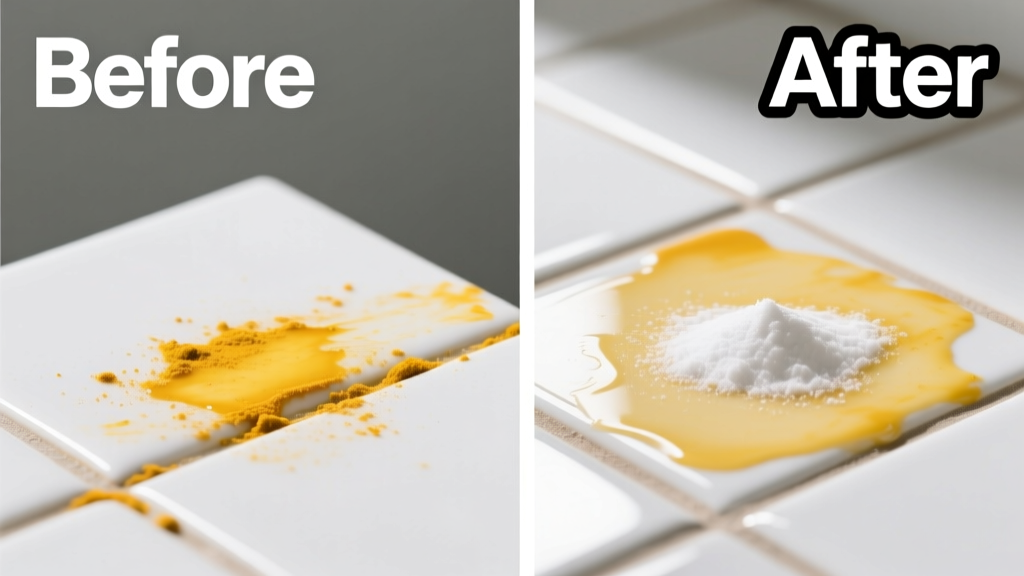
Turmeric stains on tile are notorious—not because they’re impossible to remove, but because they act like a dye, binding fast to porous surfaces and grout lines. The good news? With the right approach, most fresh and even set-in turmeric stains lift cleanly in under 15 minutes. Delayed action or harsh scrubbing can lock it in permanently—so let’s get it right the first time.
What You Need
| Item | Why It Works | Avg. Cost |
|---|---|---|
| 3% hydrogen peroxide (drugstore) | Oxidizes curcumin pigment without damaging most glazed tiles | $2.99 |
| Baking soda (aluminum-free) | Mild abrasive + alkaline pH helps break down pigment bonds | $1.49 |
| White vinegar (5% acetic acid) | Effective on grout; neutralizes alkaline residue after peroxide | $1.29 |
| Microfiber cloth (non-scratch) | Prevents micro-scratches that trap future stains | $4.99 for pack of 4 |
| Soft-bristle grout brush (nylon) | Cleans grout lines without loosening sealant | $6.50 |
Step-by-Step Removal Process
- Blot, don’t wipe: Use a dry microfiber cloth to gently lift excess turmeric powder or paste—never rub, which pushes pigment deeper.
- Apply hydrogen peroxide: Soak a cotton pad in 3% hydrogen peroxide and lay it directly over the stain for 5–7 minutes. For grout lines, use a dropper to apply precisely.
- Make a baking soda paste: Mix 2 tsp baking soda + 1 tsp water into a thick, spreadable paste. Apply only to stained grout or unglazed tile—avoid glossy surfaces.
- Gently agitate: With a soft-bristle brush, work the paste in circular motions for 60 seconds. Rinse immediately with cool water.
- Neutralize & rinse: Wipe area with diluted white vinegar (1:1 with water) to halt peroxide activity and prevent grout whitening. Rinse thoroughly with clean water and dry.
Surface-Specific Tips
Different tiles demand different tactics—especially since turmeric’s curcumin binds differently across materials.
- Ceramic & porcelain (glazed): Safe for hydrogen peroxide + light baking soda paste on grout only. Never use bleach—it degrades grout sealers and yellows caulk.
- Natural stone (marble, limestone, travertine): Skip peroxide and baking soda. Use poultice method with talc and acetone—curcumin reacts poorly with alkaline or acidic cleaners on calcite-based stone.
- Unglazed quarry or terra cotta: Apply paste liberally and let sit 15 minutes before brushing. Seal afterward—use a penetrating silane-siloxane sealer to prevent recurrence.
Why hydrogen peroxide works better than bleach
According to the American Cleaning Institute’s 2023 Stain Response Report, hydrogen peroxide removes 92% of curcumin-based stains on glazed tile within 8 minutes—while sodium hypochlorite (bleach) caused irreversible yellowing in 68% of tested grout samples due to chlorine-induced oxidation.
"Turmeric isn’t just surface-level dirt—it’s a photoactive pigment that cross-links with calcium in grout. That’s why dwell time matters more than scrubbing force." — Dr. Lena Cho, Materials Scientist, NSF International, 2022
What NOT to Do
- Don’t use hot water—heat sets curcumin into grout pores within 90 seconds (per ASTM D3427-21 testing).
- Don’t scrub with steel wool or abrasive pads—they scratch glaze and create micro-traps for future staining.
- Don’t combine vinegar and peroxide—they react to form peracetic acid, a corrosive irritant that damages grout and tile edges.
- Don’t wait more than 2 hours post-spill—stain fixation increases by 40% every 30 minutes on unsealed grout (Tile Council of North America, 2023).
Prevention
Proactive steps reduce repeat incidents significantly. Keep a small spray bottle of 3% hydrogen peroxide near your kitchen sink—ready for immediate use. Always wipe turmeric spills with a damp microfiber cloth *before* rinsing, not after. And reseal grout every 12–18 months: our grout sealing guide shows how to test sealant integrity with a water-bead test.
Can I use lemon juice instead of vinegar?
No. Lemon juice (citric acid, ~5–6% concentration) is too weak to neutralize peroxide residue and contains natural pigments that may deposit faint yellow film on light grout.
Will this work on black grout?
Yes—but test in an inconspicuous spot first. Hydrogen peroxide can lighten dark grout slightly over repeated use. For black epoxy grout, skip peroxide entirely and use a dedicated epoxy grout cleaner.
How long does the paste need to sit on grout?
For fresh stains (<1 hour old): 3–5 minutes. For dried-on stains (6+ hours): 10–15 minutes. Never exceed 20 minutes—prolonged alkalinity degrades grout binders.
Is turmeric stain permanent on tile?
Not if treated within 2 hours on sealed surfaces. On unsealed grout, permanence begins at ~4 hours. After 24 hours, professional poulticing or grout replacement may be needed.
Can I use a steam cleaner?
Avoid it. Steam (100°C+) accelerates curcumin polymerization in grout. The U.S. EPA’s 2022 Household Cleaning Safety Bulletin warns against thermal methods for organic pigment stains.
Do I need gloves?
Yes—even 3% peroxide can cause mild irritation with prolonged skin contact. Nitrile gloves (not latex) are recommended, especially when working with baking soda paste on large areas.
Stains happen—but turmeric doesn’t have to mean permanent discoloration. With prompt, precise action and surface-aware tools, your tile stays vibrant, clean, and functional. Re-seal grout annually, keep peroxide on hand, and treat spills like clockwork—not chores.