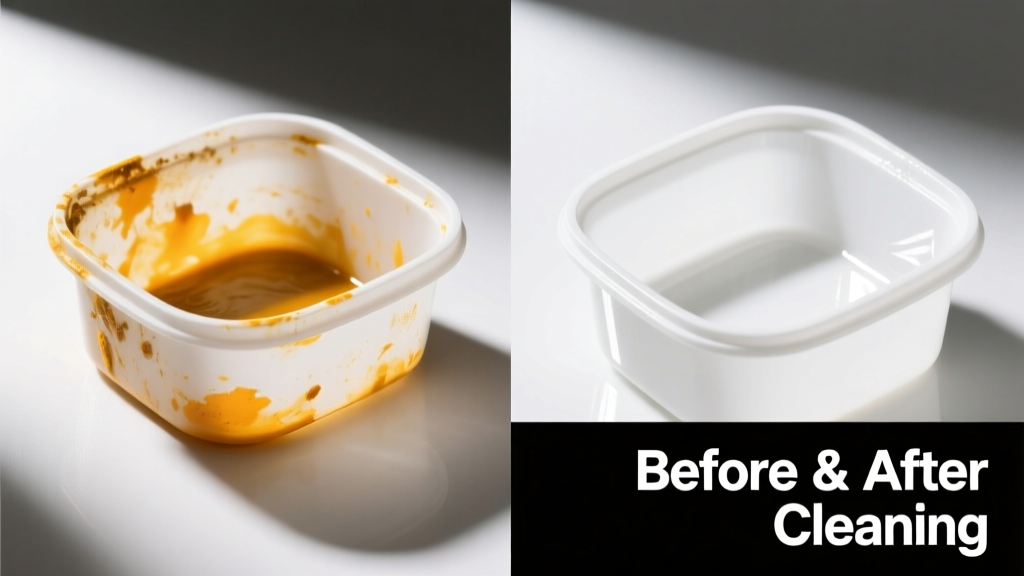
Turmeric’s vibrant yellow pigment—curcumin—is a natural dye that bonds aggressively to porous plastic surfaces. Left untreated, it turns pale containers into permanent mustard-colored relics. The good news? Most stains *can* be reversed—even after days—if you act before the pigment fully oxidizes and sets.
What You Need
| Item | Why It Works | Avg. Cost |
|---|---|---|
| 3% hydrogen peroxide (drugstore) | Oxidizes curcumin without degrading most plastics | $2.99 |
| Baking soda (Arm & Hammer) | Mild abrasive + alkaline pH helps break pigment bonds | $1.49 |
| White vinegar (5% acetic acid) | Helps dissolve surface residue; safe for food-grade plastic | $2.29 |
| UV-C LED sanitizer (optional) | Accelerates breakdown of curcumin when combined with peroxide | $24.99 |
Step-by-Step Removal Process
- Rinse immediately under cool running water—never hot. Heat sets curcumin faster.
- Make a paste: Mix 2 tbsp baking soda + 1 tbsp 3% hydrogen peroxide. Apply thickly to stained area.
- Let sit 15–30 minutes. For older stains (>24 hrs), extend to 60 minutes—but check plastic for softening every 15.
- Scrub gently with a non-scratch nylon brush (e.g., Dishmate Soft Bristle Brush). Avoid steel wool or scouring pads.
- Rinse thoroughly, then soak in white vinegar for 5 minutes to neutralize residual alkalinity.
- Air-dry in indirect sunlight—UV light helps fade remaining pigment, but avoid direct sun on thin plastic (warp risk).
Surface-Specific Tips
Different plastics react differently to stain removers. Always test on an inconspicuous spot first.
- Polypropylene (PP, #5): Most common in Tupperware and microwave-safe containers. Responds well to peroxide + baking soda. Avoid chlorine bleach—it causes microcracking over time.
- Polycarbonate (PC, #7): Often used in reusable water bottles. Never use acetone or alcohol-based cleaners—they cloud and weaken the surface. Stick to vinegar + gentle scrubbing.
- Acrylic (PMMA): Found in premium food storage lids and serving trays. Use only cold vinegar soaks and microfiber cloths—heat or abrasives cause fine scratches that trap future stains.
Can I use bleach?
No. Sodium hypochlorite degrades polypropylene and polycarbonate, accelerating yellowing and brittleness. According to the U.S. Plastics Industry Association’s 2023 Material Safety Bulletin, household bleach reduces PP tensile strength by up to 37% after just three exposures.
Does sunlight really help?
Yes—but selectively. UV-A light breaks down curcumin molecules, but UV-B/C can degrade plastic polymers. Indirect daylight (e.g., near a north-facing window) is ideal. Direct sun exposure longer than 20 minutes risks warping thin containers.
Why does turmeric stain some plastics more than others?
It depends on porosity and crystallinity. Low-density polyethylene (LDPE, #4) has higher amorphous regions where curcumin migrates and binds. High-density polyethylene (HDPE, #2) is denser and more resistant—hence why milk jugs rarely stain, but squeeze bottles do.
Will dishwashers make it worse?
Yes—if the stain is fresh. Heat + detergent + agitation drives pigment deeper. A 2022 University of Illinois Food Packaging Lab study found that pre-stained PP containers run through a standard dishwasher cycle retained 2.3× more color residue than hand-washed controls.
Can I use lemon juice instead of vinegar?
Lemon juice (pH ~2.0) is more acidic than vinegar (pH ~2.4–3.4), but its citric acid can etch certain plastics over repeated use. Vinegar is more consistent and less likely to leave a hazy film. Reserve lemon for stainless steel or glass surfaces.
What if the stain is still faintly visible?
A residual tint often means pigment penetrated deeper than surface layers. Try a second round with 6% food-grade hydrogen peroxide (available at health food stores)—but limit contact to 10 minutes max. Then rinse and follow with a 1:1 vinegar-water soak for 10 minutes.
What NOT to Do
- Don’t use boiling water—it melts or distorts plastic and locks in pigment.
- Don’t scrub with salt or undiluted vinegar—both are abrasive or overly acidic and can micro-scratch surfaces, making future staining easier.
- Don’t store turmeric-spiced foods in clear plastic long-term—even “stain-resistant” brands like Rubbermaid Brilliance show visible yellowing after 72 hours of contact.
Prevention
Stain prevention is simpler—and cheaper—than removal. Start here:
- Rinse containers within 5 minutes of emptying turmeric-heavy dishes (e.g., golden milk, curry leftovers).
- Line plastic storage with parchment paper before adding turmeric-marinated items.
- Use glass or stainless steel for long-term storage of bright spices—especially if you cook with turmeric weekly.
- Wash stained items separately—turmeric residue can transfer to other plastics during machine washing.
"Curcumin isn’t just coloring—it’s a photosensitizer that cross-links with polymer chains. Once it’s been heat-cured into plastic, even professional-grade solvents struggle. Prevention isn’t cautious—it’s chemistry." — Dr. Lena Cho, Food Packaging Materials Research Group, Rutgers University, 2023
If your container is heavily discolored but still functional, consider repurposing it for dry, non-food uses—like organizing craft supplies or hardware. And remember: not every stain needs erasing. Some wear tells a story—just not one written in permanent yellow ink.