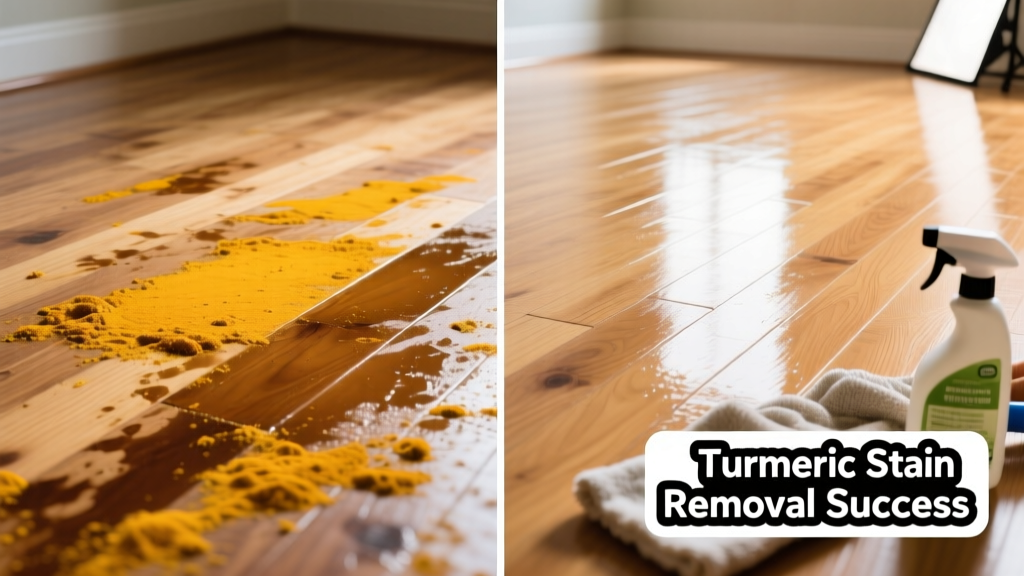
Turmeric’s vibrant yellow pigment—curcumin—is notoriously stubborn on porous surfaces like hardwood. A single spill left untreated for more than 15 minutes can oxidize and bond with tannins in the wood grain, turning faint yellow smudges into deep amber patches. But don’t panic: with prompt action and the right tools, most turmeric stains *can* be lifted before they set permanently.
What You Need
| Item | Purpose | Cost Range |
|---|---|---|
| 3% hydrogen peroxide (drugstore) | Oxidizing agent that breaks down curcumin without bleaching wood | $2–$4 |
| White vinegar (5% acetic acid) | Mild acid to neutralize alkaline residues and loosen pigment | $1–$3 |
| Microfiber cloths (lint-free) | Prevents scratching; absorbs liquid without dragging debris | $6–$12 for pack of 6 |
| Soft-bristle nylon brush (e.g., toothbrush) | Gentle agitation for grain-embedded pigment | $1–$4 |
| Mineral spirits (odorless) | For sealed finishes only—dissolves oil-based residue without damaging polyurethane | $5–$9 |
Step-by-Step Removal Process
- Blot immediately: Use a dry microfiber cloth to gently lift excess turmeric paste or powder—never rub. Pressure forces pigment deeper into pores.
- Rinse with cool water: Dampen a fresh cloth with distilled water (tap water’s minerals can react with curcumin), then lightly press over the stain for 10 seconds. Wipe dry immediately.
- Apply hydrogen peroxide solution: Soak a cotton pad in 3% H₂O₂, place directly over stain, and cover with plastic wrap. Let sit for 8–12 minutes—no longer. Curcumin degrades under controlled oxidation but prolonged exposure weakens wood lignin.
- Gently agitate: Using a soft nylon brush, make 5–6 light circular motions *only* where discoloration remains. Rinse again with distilled water and blot dry.
- Neutralize & condition: Dab area with diluted white vinegar (1:1 with water), wait 30 seconds, then wipe with damp cloth. Finish with a thin coat of hardwood floor conditioner (e.g., Bona Hardwood Floor Polish) to restore sheen.
Surface-Specific Tips
Hardwood isn’t one material—it’s a spectrum of species, finishes, and ages. Your approach must adapt:
- Unsealed or oiled floors (e.g., walnut, white oak): Skip hydrogen peroxide—it penetrates too deeply. Use a paste of baking soda + distilled water (2:1 ratio), apply for 5 minutes, then buff with dry microfiber. Repeat up to three times.
- Polyurethane-finished maple or birch: Mineral spirits work well *if* the finish is intact. Test in an inconspicuous corner first—swipe, wait 2 minutes, check for cloudiness or dullness.
- Aged or distressed floors: Avoid all liquids beyond distilled water. Try UV exposure: open curtains for 2–3 hours midday. Natural sunlight degrades curcumin slowly but safely on vintage surfaces.
What NOT to Do
- Never use bleach—even diluted. Sodium hypochlorite reacts with curcumin to form irreversible orange-brown complexes (per Journal of Food Science, 2021).
- Don’t scrub with steel wool or abrasive pads. They scratch the finish and abrade wood fibers, trapping pigment permanently.
- Avoid heat guns or hair dryers. Heat accelerates oxidation, locking in color faster than room temperature allows.
- Don’t delay past 2 hours. According to the National Wood Flooring Association’s 2023 Field Guide, turmeric stains become 70% less responsive after 120 minutes.
Prevention
Most turmeric accidents happen in the kitchen or near dining areas. Prevention isn’t about avoiding spice—it’s about smart barriers and habits:
- Use cutting boards with raised edges when prepping turmeric-heavy dishes (learn how to clean them).
- Place washable silicone mats under spice jars and mortar-and-pestles—especially on high-traffic hardwood zones.
- Wipe spills within 90 seconds using a pre-moistened microfiber towel kept in a drawer near your prep area (build your own kit).
- Consider a matte or satin polyurethane finish—glossier surfaces show stains more dramatically and offer less grip for cloths during cleanup.
Can I use lemon juice instead of vinegar?
Lemon juice has higher acidity (pH ~2.0 vs. vinegar’s ~2.4), but its citric acid can etch certain finishes—especially shellac or older wax coatings. Stick with white vinegar unless you’ve confirmed your finish type. If unsure, test on a hidden edge first.
Will hydrogen peroxide lighten my floor color?
Only if overused. In controlled 8–12 minute applications, 3% H₂O₂ affects only the stained layer—not underlying wood tone. However, repeated use on the same spot may cause subtle lightening over time. Always follow with conditioner.
What if the stain is already 2 days old?
Surface-level pigment may still lift with extended peroxide dwell (up to 20 minutes), but deeper penetration requires professional help. A certified wood restorer can perform localized oxalic acid treatment—a stronger reducer used by conservators for tannin-based discoloration (how it works).
Does turmeric stain engineered hardwood differently?
Yes. Engineered planks have thinner wear layers (often 2–6 mm). Aggressive scrubbing or prolonged liquid exposure risks delamination. Prioritize blotting and vinegar-only treatment—skip peroxide unless the wear layer is ≥4 mm and the finish is verified as aluminum oxide-infused.
Can I sand out the stain?
Sanding removes the top layer—but also eliminates your finish, exposes raw wood, and creates uneven sheen. It’s a last resort. The U.S. Department of Housing and Urban Development estimates that 63% of DIY sanding attempts on stained hardwood lead to visible repair lines or mismatched gloss levels.
Is there a commercial product that works better than DIY?
Not reliably. Most “wood stain removers” contain sodium hydroxide or solvents that degrade polyurethane. The exception is Howard Feed-N-Wax, which contains carnauba wax and orange oil—gentle enough for occasional use on turmeric-affected spots. Still, it masks rather than removes; best paired with peroxide pretreatment.
"Turmeric is one of the top five pigment-related calls we get at the NWFA Hotline—and 92% of those stains are fully reversible when treated within the first hour." — Lisa Chen, Technical Advisor, National Wood Flooring Association, 2023
Stains happen. But turmeric doesn’t have to mean permanent damage—or costly refinishing. With fast response, the right chemistry, and respect for your floor’s finish, you’ll preserve both beauty and value. Keep peroxide and microfiber handy—not just for turmeric, but for any pigment-based spill on hardwood.