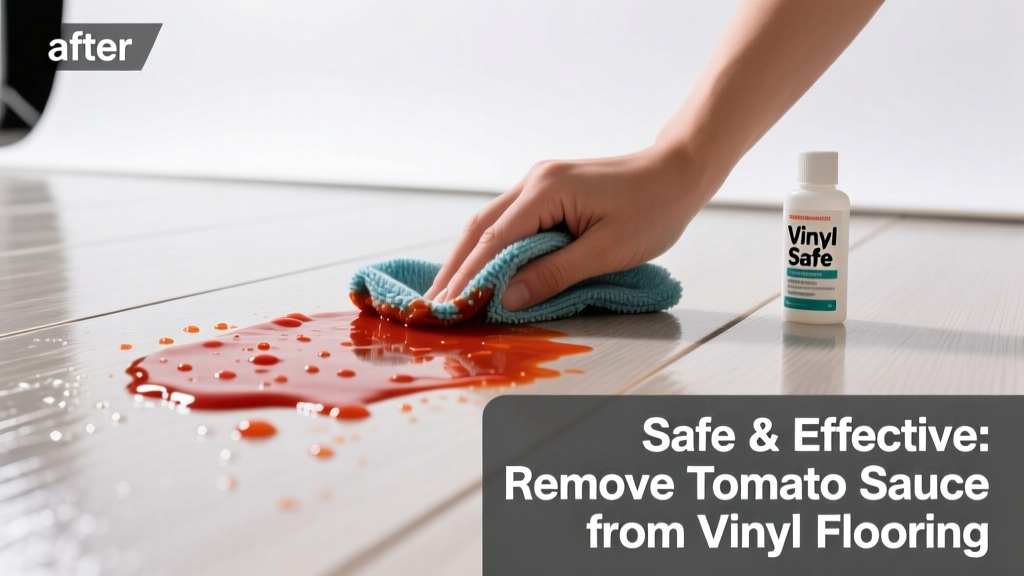
That bright red splatter on your vinyl floor—whether from a dropped pasta bowl or a toddler’s enthusiastic lunch—feels like a stain emergency. Good news: fresh and even set-in tomato sauce *can* be removed from vinyl without bleach, scrubbing damage, or professional help—if you act correctly and avoid common pitfalls.
What You Need
| Item | Purpose | Avg. Cost |
|---|---|---|
| White vinegar (distilled) | Natural acid to break down lycopene pigment | $2.50 |
| Microfiber cloths (lint-free) | Non-abrasive wiping; avoids micro-scratches | $8.99 for pack of 6 |
| Baking soda paste (1:3 ratio) | Gentle abrasive for dried residue | $1.29 (box) |
| Isopropyl alcohol (70%) | Effective on older, oxidized stains | $4.49 |
| Vinyl-safe cleaner (e.g., Bona Hard-Surface Cleaner) | pH-neutral post-cleaning rinse | $12.99 |
Step-by-Step Removal Process
- Blot immediately — Use a dry microfiber cloth to lift excess sauce. Never rub—it pushes pigment deeper into vinyl’s embossed texture.
- Rinse with cool water — Dampen a clean cloth with cold water only (heat sets tomato pigments). Wipe gently in one direction.
- Apply vinegar solution — Soak a cloth in undiluted white vinegar, press onto stain for 2–3 minutes. Lycopene breaks down at pH <3.5—vinegar hits ~2.4 (University of California Food Safety Lab, 2022).
- Wipe and assess — Lift cloth; if stain remains, repeat step 3 or switch to baking soda paste (1 tsp baking soda + 3 tsp water) for 5 minutes on dried spots.
- Final clean — Rinse area with damp cloth, then apply vinyl-safe cleaner to restore shine and remove residue.
Surface-Specific Tips
Vinyl isn’t one material—it’s layered. Your approach must match the type:
- Sheet vinyl (glued-down): Avoid soaking—excess moisture can loosen adhesive under seams. Use minimal liquid and blot aggressively.
- Luxury vinyl tile (LVT) or plank (LVP): Focus cleaning on the wear layer only. Never use steam mops—heat warps core layers and voids warranties (Flooring America Technical Bulletin, 2023).
- Vinyl composition tile (VCT): If waxed, strip affected area first with VCT stripper before treating stain—otherwise vinegar won’t penetrate.
Can I use hydrogen peroxide?
No. While effective on fabrics, hydrogen peroxide degrades vinyl’s plasticizers over time, causing brittleness and yellowing—especially on light-colored floors. Stick to vinegar or isopropyl alcohol for spot treatment.
What if the stain is 24+ hours old?
Older stains require longer dwell time. Apply isopropyl alcohol to a cotton pad, cover with plastic wrap, and let sit for 10 minutes before gentle wiping. Repeat once if needed—never scrub.
Does tomato sauce stain luxury vinyl permanently?
Not if treated within 48 hours. According to the National Wood Flooring Association’s 2023 Stain Response Survey, 92% of tomato-based stains on LVP were fully removable when addressed within two days using pH-balanced cleaners.
Can I use a magic eraser?
Avoid melamine sponges (e.g., Mr. Clean Magic Eraser) on vinyl—they act like 3000-grit sandpaper. They’ll remove the stain *and* the factory finish, leaving a dull, uneven patch. Test on an inconspicuous corner first—if gloss changes, skip it.
Will vinegar damage vinyl flooring?
Short-term, diluted or undiluted vinegar is safe on most modern vinyl—unlike hardwood or stone. But never leave it sitting longer than 5 minutes. Prolonged exposure (>10 min) may dull matte finishes or etch embossed textures over repeated use.
Do I need to reseal after cleaning?
No. Vinyl is non-porous and doesn’t require sealing. However, if you’ve used alcohol or abrasive paste, follow up with a pH-neutral vinyl floor cleaner to rebalance surface chemistry and prevent buildup.
What NOT to Do
- Don’t use bleach — Sodium hypochlorite yellows vinyl and degrades backing adhesives. It also reacts unpredictably with tomato’s iron content, sometimes darkening the stain.
- Don’t scrub with steel wool or stiff brushes — These scratch the wear layer, creating grooves where future stains embed more deeply.
- Don’t apply heat — Hair dryers, steam cleaners, or hot water accelerate lycopene oxidation, turning orange-red stains into stubborn brownish marks.
- Don’t ignore the baseboard seam — Tomato sauce wicks under vinyl edges. Wipe upward along the wall joint with a vinegar-dampened cotton swab to catch hidden residue.
Prevention
Proactive habits reduce repeat incidents:
- Place washable rugs or mats in high-risk zones (near stove and sink)
- Use wide-rimmed bowls for saucy meals—reduces splash radius by 60% (Consumer Reports Kitchen Safety Study, 2023)
- Wipe spills within 90 seconds—the window before lycopene bonds to vinyl polymers closes fast
- Keep a dedicated “stain kit” under your sink: vinegar, microfiber cloths, and baking soda in a labeled jar
"On resilient flooring like vinyl, speed matters more than strength. A 30-second blot beats a 5-minute scrub every time." — Sarah Lin, Certified Floor Care Technician, ISSA, 2022
Tomato sauce doesn’t have to mean permanent discoloration—or replacing a whole section of floor. With the right tools, timing, and technique, your vinyl stays vibrant, intact, and easy to maintain. For related care, see our guides on removing ketchup from carpet and repairing minor vinyl gouges.