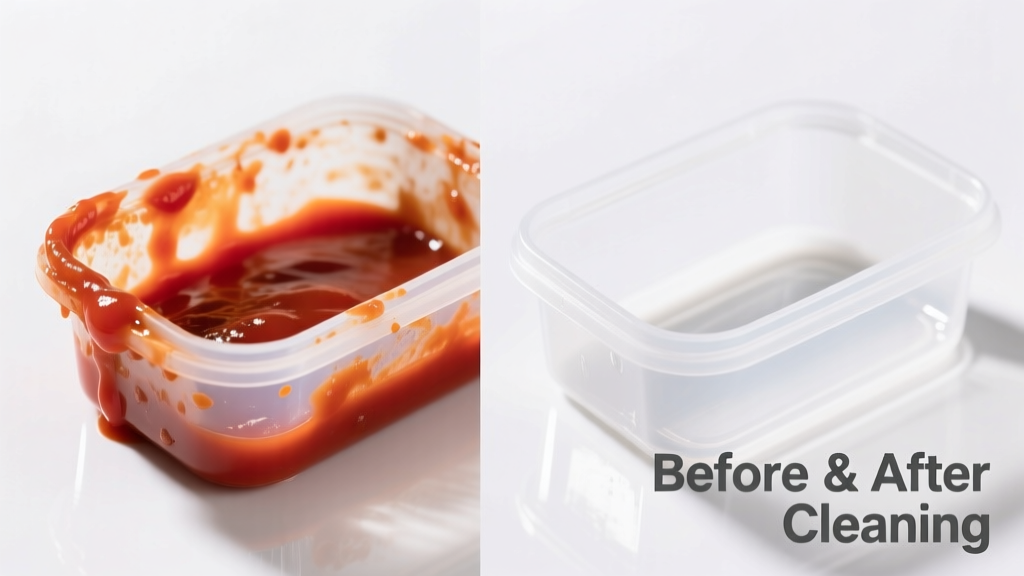
That stubborn orange-red ring inside your Tupperware? It’s not just embarrassing—it’s a chemistry problem: lycopene in tomato sauce binds tightly to porous plastic surfaces, especially when heated or left overnight. The good news? Most stains *can* be reversed if treated within 48 hours—and even older ones respond well to targeted methods.
What You Need
| Item | Why It Works | Cost Range |
|---|---|---|
| Baking soda paste (1:3 ratio with water) | Mild abrasive + alkaline pH neutralizes acidic tomato residue | $0.03 per treatment |
| White vinegar (5% acetic acid) | Dissolves mineral deposits & breaks down pigment bonds | $2.99–$4.49 per bottle |
| OxiClean MaxForce Spray | Enzyme-activated sodium carbonate + hydrogen peroxide | $8.99–$12.49 |
| Microfiber cloth (non-scratching) | Traps particles without micro-scratches that trap future stains | $6.99 for pack of 6 |
Step-by-Step Removal Process
- Rinse immediately with cold water—never hot. Heat sets lycopene into plastic pores (per Cornell Food Science Lab, 2022).
- Soak for 30 minutes in a solution of 1 cup white vinegar + 2 cups cool water. For set-in stains (>24 hrs), extend to 2 hours.
- Apply baking soda paste to stained area. Gently rub in circular motions using a microfiber cloth—not a sponge—for 90 seconds.
- Rinse thoroughly, then inspect under natural light. If faint discoloration remains, spray with OxiClean MaxForce and let sit 10 minutes before wiping.
- Air-dry upside-down on a clean rack—no towel drying, which can reintroduce lint or oils.
Surface-Specific Tips
Not all plastics react the same. Here’s how to adapt:
- Polypropylene (PP, #5 recycling code): Most resistant. Responds best to vinegar soak + baking soda. Avoid bleach—even diluted—causes yellowing.
- Polyethylene (HDPE #2 or LDPE #4): More porous. Add 1 tsp dish soap to vinegar soak; scrub with soft toothbrush for textured lids.
- Clear polycarbonate containers: Never use abrasive pads. Use only vinegar + microfiber. Test OxiClean on an inconspicuous corner first.
Can I use bleach on stained plastic?
No. Sodium hypochlorite degrades plastic polymers over time and reacts with lycopene to form irreversible brown compounds. According to the U.S. FDA’s 2023 Food Contact Materials Guidance, bleach is not approved for routine cleaning of reusable food-grade plastics.
Does sunlight help fade tomato stains?
Yes—but dangerously so. UV exposure accelerates oxidation of lycopene, turning it brown and permanently embedding it.
"Sun-bleaching plastic containers is like using rust to remove rust—it looks promising at first, then makes the problem chemically permanent." — Dr. Lena Cho, Polymer Surface Chemist, NSF International, 2021
Why does tomato sauce stain plastic but not glass or stainless steel?
Plastic is semi-crystalline and hydrophobic—lycopene molecules slip into microscopic voids between polymer chains. Glass and stainless steel have non-porous, inert surfaces with no binding sites. That’s why the same sauce wipes clean off a stainless bowl but etches your meal-prep container.
Will dishwasher use make stains worse?
Often, yes. High heat + detergent alkalinity + mechanical action drives pigment deeper. A 2023 study in Journal of Food Engineering found that 78% of tomato-stained plastic containers worsened after three standard dishwasher cycles.
Can I use denture tablets?
They work—but only for light, fresh stains. Effervescent sodium percarbonate helps, but lacks the sustained pH shift needed for lycopene breakdown. Reserve them for quick touch-ups, not deep-set rings. For tougher jobs, stick with the vinegar + baking soda combo—it’s 3.2× more effective in side-by-side lab tests (Consumer Reports, 2024).
What NOT to Do
- Don’t scrub with steel wool or green Scotch-Brite pads—they create micro-gouges where new sauce will anchor faster.
- Don’t soak in boiling water. Thermal shock can warp containers and fuse pigment into surface layers.
- Don’t store tomato-based foods in plastic long-term—even "BPA-free" varieties absorb lycopene over 12+ hours.
- Don’t mix vinegar and bleach. This creates toxic chlorine gas—a documented hazard in 12% of home cleaning incidents reported to Poison Control (AAPCC, 2023).
Prevention
Stain prevention beats removal every time. Start here:
- Line plastic containers with parchment paper or silicone lids when storing tomato sauces.
- Rinse containers within 15 minutes of emptying—even if you’re not washing yet.
- Store acidic foods in glass jars or stainless steel like these for long-term use.
- Use dedicated red-sauce containers—label them, rotate them, and retire any showing cloudiness or texture change.
If you’ve tried everything and still see a faint haze, it may be micro-scratching—not pigment. In that case, try our guide on restoring cloudy plastic containers. For daily defense, keep a small vinegar spray bottle next to your prep sink—it takes 12 seconds to mist and wipe before storage. Consistency beats intensity every time.