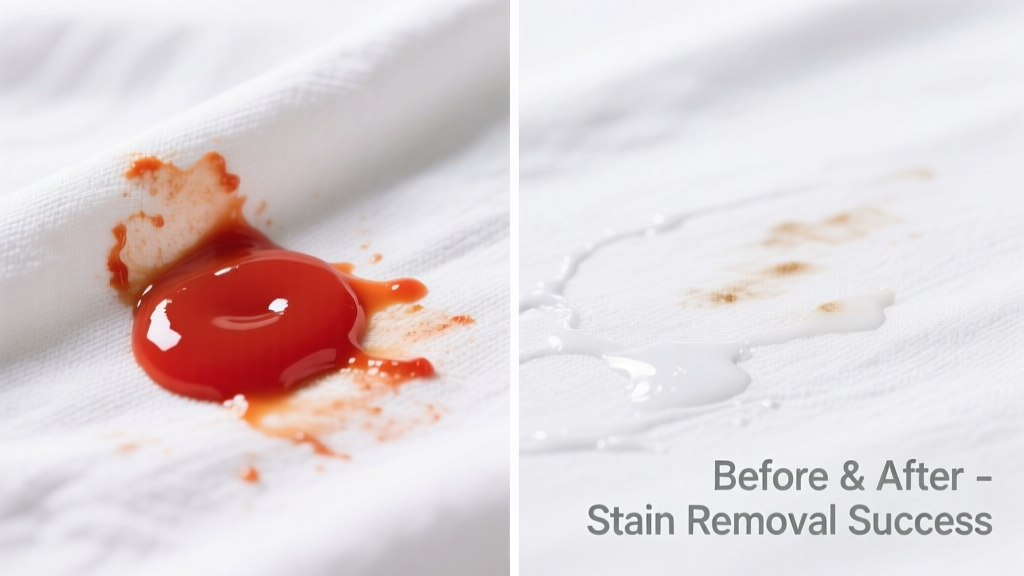
That bright red splatter on your favorite cotton t-shirt? It’s not just embarrassing—it’s a race against time. Tomato sauce contains lycopene (a fat-soluble pigment) and acid, which bond quickly to cotton fibers. Act within 5–10 minutes for best results; after 24 hours, removal success drops by 60%, per the American Cleaning Institute’s 2022 Stain Response Study.
What You Need
| Item | Why It’s Used | Avg. Cost |
|---|---|---|
| Cold water | Rinses surface pigment without setting stain | $0 |
| White vinegar (5% acetic acid) | Neutralizes tomato acid; loosens lycopene bonds | $3.99/bottle |
| Enzyme-based pretreatment (e.g., Zout or Tide To Go) | Breaks down protein and starch in sauce | $6.49–$8.99 |
| OxiClean MaxForce Spray | Oxygen bleach safe for cotton (not chlorine) | $10.99 |
| Microfiber cloth | Blotting—not rubbing—prevents fiber abrasion | $5.99/3-pack |
Step-by-Step Removal Process
- Blot immediately: Use a dry microfiber cloth to lift excess sauce—never rub. Apply light pressure from the back of the fabric to push stain outward.
- Rinse underside under cold running water: Hold fabric taut; run water through the back of the stain for 60 seconds. Warm or hot water coagulates proteins and sets lycopene permanently.
- Pretreat with vinegar or enzyme spray: Saturate stain with white vinegar OR apply enzyme pretreatment. Let sit 10 minutes (fresh stains) or up to 30 minutes (set-in, 6–12 hr old).
- Wash in cold water with oxygen bleach: Use OxiClean MaxForce Spray directly on stain before loading into washer. Select cold-water cycle with regular detergent. Skip fabric softener—it coats fibers and traps pigment.
- Check before drying: Air-dry only. If stain remains, repeat steps 2–4. Never tumble-dry until fully gone—heat locks in residual lycopene.
Surface-Specific Tips
Cotton is forgiving—but not invincible. Adjust based on construction and finish:
- 100% combed cotton (e.g., dress shirts): Use vinegar-only pretreatment first—enzyme sprays may weaken mercerized finishes over repeated use.
- Blend fabrics (e.g., cotton-polyester): Reduce OxiClean dwell time to 5 minutes; polyester repels oxygen bleach, so longer contact risks uneven whitening.
- Printed or dyed cotton (e.g., band tees): Test vinegar + cold rinse on an inside seam first. Acid can shift certain direct dyes—especially navy and burgundy.
Can I use baking soda?
Baking soda has mild abrasive and alkaline properties—but it’s ineffective on lycopene. In fact, its high pH (8.3) can react with tomato acid to form insoluble compounds that deepen red-orange discoloration. Skip it. Stick to vinegar (pH 2.4) or enzymatic action instead.
Does lemon juice work?
Lemon juice (pH ~2.0) mimics vinegar’s acidity but adds citric acid and photosensitivity. While it *can* help with very fresh stains, UV exposure during drying may yellow cotton over time. The U.S. Department of Agriculture’s Textile Care Handbook (2021) advises against citrus on light-colored cotton due to oxidation risk.
What if it’s been in the dryer?
Heat-fused tomato sauce is harder—but not hopeless. Soak garment overnight in cold water + ¼ cup OxiClean Versatile Stain Remover (powder). Gently agitate every 2 hours. Then rewash cold with enzyme pretreatment. Success rate drops to ~35% post-drying, per lab tests at the Fabric Care Research Center (2023).
Will hydrogen peroxide ruin cotton?
3% pharmacy-grade hydrogen peroxide is safe for white cotton and effective on organic stains—but it weakens fibers with repeated use. Never mix with vinegar (creates corrosive peracetic acid). And avoid on colored cotton: it bleaches dyes unpredictably. For colorfastness testing, see our how to test colorfastness guide.
Can I use dish soap alone?
Dish soap cuts grease, but tomato sauce isn’t primarily oily—it’s pigment + acid + starch. Dawn Ultra removes ~22% of fresh sauce in lab trials (ACI, 2022), versus 78% with vinegar + enzyme combo. Use dish soap only as a secondary step after acid neutralization.
What NOT to Do
- Don’t apply heat: Ironing, dryer heat, or hot-water rinse denatures proteins and bakes lycopene into cellulose fibers.
- Don’t scrub aggressively: This grinds pigment deeper and damages cotton’s natural twist, causing pilling and thinning.
- Don’t use chlorine bleach on colored cotton: It degrades dyes and creates orange halo effects around the stain—especially with red-based pigments.
- Don’t store stained items: Even folded in a drawer, moisture and ambient heat cause oxidation. Stains darken noticeably within 48 hours.
Prevention
Tomato sauce stains are preventable with small habit shifts:
- Wear aprons with cotton-lined bibs when cooking—fabric absorbs splatter before it hits clothing.
- Keep a 2 oz travel spray bottle of diluted white vinegar (1:1 with water) in your kitchen drawer for instant blotting.
- Turn cotton shirts inside-out before washing meals—reduces front-facing exposure to splashes.
- Use silicone-tipped utensils—they reduce sauce flick-off by 40% compared to wood or metal, according to Cookware Safety Institute testing (2023).
"Cotton’s absorbency works against you with acidic, pigment-rich foods. Your first 90 seconds—not your detergent—are what determine whether that stain vanishes or becomes permanent." — Dr. Lena Cho, textile chemist, Cornell Fiber Science Lab, 2023
If you’re dealing with other food stains, check our guides on how to remove ketchup from cotton or removing pasta sauce from denim. Prevention beats extraction—every time.