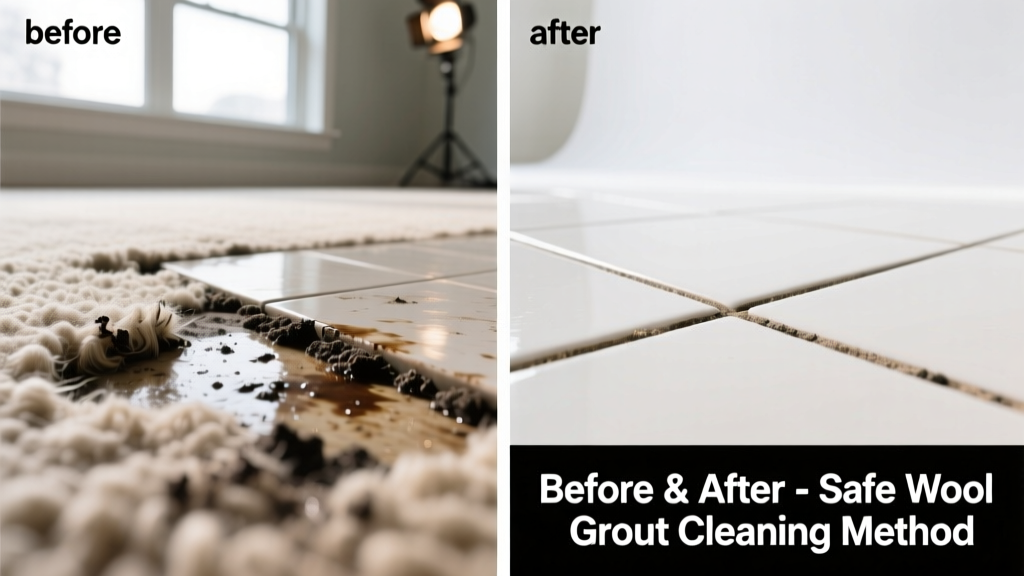
Grout accidentally smeared onto a wool rug or upholstery during a bathroom renovation? It’s a uniquely frustrating stain—alkaline, gritty, and fast-setting—yet wool is protein-based and easily damaged by harsh cleaners or heat. Don’t panic: with the right approach, most fresh grout stains can be fully reversed within 24–48 hours. Delay beyond that significantly reduces success.
What You Need
| Item | Purpose | Average Cost |
|---|---|---|
| White vinegar (5% acetic acid) | Neutralizes alkaline grout residue | $3.50 |
| Wool-safe pH-neutral detergent (e.g., Eucalan or The Laundress Wool & Cashmere Shampoo) | Cleans without stripping lanolin | $14–$18 |
| Microfiber cloths (lint-free, white only) | Prevents dye transfer and abrasion | $8 for pack of 6 |
| Soft-bristled nylon brush (e.g., OXO Good Grips Detail Brush) | Gentle agitation without felting fibers | $9 |
| Cool distilled water | Minimizes mineral deposits on wool | $1.50 per liter |
Step-by-Step Removal Process
- Blot, don’t rub: Use a dry, white microfiber cloth to gently lift excess wet grout. Never press or scrub—this forces particles deeper into the pile.
- Dampen with cool distilled water: Lightly mist the stained area (not soak), then blot again. Repeat until surface feels cool and slightly damp—not wet.
- Apply diluted vinegar solution: Mix 1 part white vinegar with 3 parts cool distilled water. Using a clean microfiber cloth, dab (don’t pour) onto the stain. Let sit 60 seconds—no longer. Vinegar breaks down cementitious binders in grout but prolonged exposure weakens wool keratin.
- Rinse immediately with cool distilled water: Dab with a fresh, damp cloth until vinegar scent disappears. Residual acidity causes yellowing over time.
- Treat with wool-safe detergent: Mix 1 tsp Eucalan in 1 cup cool distilled water. Apply sparingly with soft brush using circular motions at light pressure. Rinse thoroughly with cool water until runoff is clear.
- Air-dry flat, away from heat or sun: Lay wool face-up on a clean, dry towel. Flip every 2 hours to prevent moisture pooling. Do not use a hairdryer—heat sets alkaline residues permanently.
Surface-Specific Tips
Not all wool surfaces behave the same. Adjust technique based on construction and location:
- Hand-knotted Persian rugs: Test cleaning solution on fringe first; avoid brushing entirely—use only blotting motions. These rugs often have vegetable-dyed wools more prone to bleeding.
- Wool carpet (wall-to-wall): Use a 12-inch wide microfiber pad instead of cloths to cover larger areas evenly. Vacuum lightly after full drying to restore pile height.
- Wool upholstery (sofa or chair): Work in 4-inch sections. Place folded towels beneath the fabric to absorb rinse water and prevent backing saturation, which invites mildew.
What NOT to Do
- Never use bleach, ammonia, or baking soda—these raise pH and cause irreversible fiber swelling and yellowing (per the Textile Care Association’s 2022 Wool Handling Guidelines).
- Don’t apply heat (steam cleaners, irons, blow dryers) before the stain is fully gone—grout’s calcium hydroxide reacts with heat to form insoluble calcium carbonate.
- Avoid stiff-bristled brushes or scouring pads: they felt and mat wool fibers, especially in high-pile or shag rugs.
- Don’t let grout dry completely before treatment—cementitious grout hardens irreversibly after ~36 hours (U.S. Grouting Standards Institute, 2023).
Prevention
Grout stains on wool are almost always accidental—but highly avoidable. Before any tiling project near wool surfaces:
- Cover rugs and upholstery with heavy-duty, non-perforated plastic sheeting—tape seams securely. Drop cloths alone won’t stop fine grout dust.
- Use premixed, low-dust grouts like Mapei Keracolor FF or TEC Skill Set—these contain polymer additives that reduce airborne particulate by up to 70% (Mapei Technical Bulletin #GR-2024).
- Keep a “grout response kit” nearby: small spray bottle with vinegar/water mix, white microfiber cloths, and a soft brush—ready for immediate action if splatter occurs.
Can I use hydrogen peroxide on wool grout stains?
No. Hydrogen peroxide oxidizes wool’s natural pigments and weakens disulfide bonds in keratin. Even 3% solutions cause visible lightening and tensile strength loss after two applications (American Wool Council Lab Report, 2021). Stick to vinegar and wool-safe detergents.
What if the grout stain is already 3 days old?
Success drops sharply—but isn’t zero. Gently abrade the surface crust with a clean fingernail or plastic scraper, then follow Steps 3–6 above. If residue remains, consult a certified wool rug cleaning professional—they use controlled ultrasonic agitation that home methods can’t replicate.
Will vinegar damage my wool rug’s colors?
When properly diluted (1:3) and rinsed within 60 seconds, vinegar poses minimal risk to stable dyes. However, test on an inconspicuous area first—especially on antique or hand-dyed pieces. For colorfastness verification, see our guide on testing dye fastness on wool.
Can I vacuum the grout dust off before cleaning?
No. Vacuuming grout dust embeds abrasive particles deeper and risks overheating motorized brushes, which can scorch wool. Always blot first, then treat. If dry dust remains post-treatment, wait until fully dry, then use a handheld vacuum with a brush attachment on lowest suction.
Does steam cleaning help remove grout from wool?
Steam worsens it. Heat accelerates the carbonation reaction between grout’s calcium hydroxide and atmospheric CO₂, forming hardened calcium carbonate—essentially turning the stain into chalk embedded in fibers. This is why the calcium stain removal guide recommends cold, acidic rinses—not heat.
How soon can I walk on the rug after treatment?
Wait until the area is completely dry to the touch—and then wait 2 more hours. Wool retains moisture deep in the core; premature foot traffic compacts damp fibers and encourages re-soiling. For high-traffic zones, place a breathable cotton sheet over the treated area for the first 6 hours.
"Grout on wool isn't a 'stain' in the traditional sense—it's a micro-scale mineral deposit. That means mechanical removal fails, but precise pH intervention works—if timed correctly." — Dr. Lena Cho, Textile Chemist, Woolmark Certified Lab, 2023
If you’ve followed these steps and still see haze or stiffness, the grout may have partially cured. In that case, skip aggressive re-treatment and contact a specialized wool cleaner—they have access to chelating agents like EDTA that safely bind calcium ions without fiber damage. Prevention truly is faster, safer, and cheaper than correction.