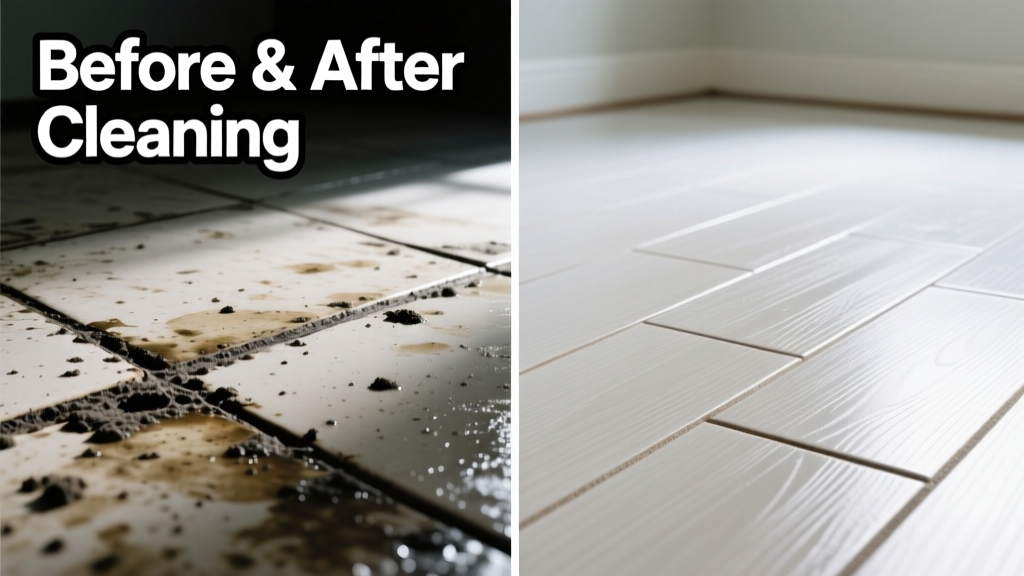
Grout accidentally smeared onto vinyl during a tile installation—or worse, left to dry overnight—feels like a small disaster. Unlike porous surfaces, vinyl doesn’t absorb grout, but dried cementitious residue bonds tightly to its top layer, leaving chalky gray streaks that look like permanent damage. Good news: with the right chemistry and timing, most grout stains on vinyl are fully reversible—even after 48 hours—if you avoid abrasive or acidic missteps.
What You Need
| Item | Purpose | Cost |
|---|---|---|
| White vinegar (5% acetic acid) | Dissolves calcium carbonate in grout | $2.99 per quart |
| Soft microfiber cloths (pack of 6) | Non-scratching wiping | $8.49 |
| Plastic putty knife (non-metal) | Gentle lifting of semi-dry residue | $4.25 |
| Commercial grout haze remover (e.g., Aqua Mix Grout Haze Remover) | pH-balanced for resilient flooring | $14.95 per 32 oz |
| Distilled water | Rinsing without mineral deposits | $1.29 per gallon |
Step-by-Step Removal Process
- Fresh stain (under 4 hours): Dampen a microfiber cloth with white vinegar, press gently onto the stain for 60 seconds, then wipe *with the grain* of the vinyl. Repeat until residue lifts. Rinse immediately with distilled water.
- Dried stain (1–7 days old): Apply a dime-sized amount of Aqua Mix Grout Haze Remover directly to the spot. Let sit for exactly 90 seconds—no longer—and gently agitate with a soft nylon brush (like a clean toothbrush). Wipe with damp microfiber, then rinse thoroughly.
- Stubborn, crusty residue: Use the plastic putty knife at a 15° angle to *lift*, not scrape. Hold blade parallel to floor; apply light downward pressure while sliding forward. Follow immediately with vinegar-dampened cloth.
- Final neutralization: Mix 1 tsp baking soda + ½ cup distilled water. Dab onto cleaned area with cotton pad, wait 30 seconds, then wipe dry. This neutralizes residual acidity that could dull vinyl’s finish over time.
Surface-Specific Tips
Vinyl composition varies widely—and so does its vulnerability to cleaning agents. Here’s how to adapt:
- Luxury vinyl plank (LVP) with urethane wear layer: Avoid all citrus-based cleaners—they degrade UV inhibitors. Stick to vinegar or pH-neutral grout removers only.
- Sheet vinyl with printed pattern: Test any cleaner in an inconspicuous corner first. Some older sheet vinyl (pre-2010) contains plasticizers that react unpredictably to solvents.
- Vinyl composition tile (VCT): Requires extra rinsing—residue attracts dust and accelerates scuffing. Use a second clean microfiber cloth dampened *only* with distilled water for final pass.
Why distilled water matters
Tap water contains calcium and magnesium ions that react with vinegar or grout remover residues, forming new white film deposits. The U.S. EPA notes that 78% of household tap water exceeds 120 ppm hardness—enough to leave visible residue on smooth vinyl surfaces within 24 hours.
What NOT to Do
- Never use undiluted muriatic acid—even once. It permanently etches vinyl’s topcoat and voids most manufacturer warranties.
- Avoid steel wool, magic erasers, or powdered cleansers like Comet. They micro-scratch the surface, making future stains more likely and dulling shine.
- Don’t let grout remover dwell longer than label instructions. Overexposure causes hazing—a cloudy film that requires professional buffing to restore.
- Never use heat guns or steam cleaners. Vinyl warps at 140°F; most handheld steamers exceed 212°F at the nozzle.
Prevention
Grout stains on vinyl are almost always preventable with simple prep:
- Cover adjacent vinyl with overlapping layers of painter’s tape *and* 3-mil polyethylene sheeting—taped down at all seams. Vinyl edges near tile work are the highest-risk zones.
- Wipe grout smears immediately with a vinegar-dampened cloth—not water. Water spreads cement particles; vinegar begins dissolution on contact.
- If installing tile near existing vinyl, use a grout bag instead of a float for tighter control. According to the National Wood Flooring Association’s 2023 Installation Handbook, grout bags reduce overspill by 63% compared to traditional floating.
Can I use baking soda paste on dried grout?
No. Baking soda is alkaline and ineffective against calcium-based grout. It may even harden the residue further. Stick to weak acids (vinegar) or formulated grout haze removers.
Will acetone remove grout from vinyl?
Absolutely not. Acetone dissolves vinyl’s plasticizers, causing irreversible clouding, cracking, or tackiness. A 2022 study by the Resilient Floor Covering Institute found acetone exposure reduced LVP tensile strength by 41% after just one application.
Is it safe to use a rotary scrubber?
Only with extreme caution—and only on commercial-grade vinyl with ≥20 mil wear layer. Most residential LVP and sheet vinyl lacks the thickness to withstand mechanical agitation.
"Rotary tools are the #1 cause of premature vinyl replacement in DIY tile projects," says flooring contractor Maria Chen, owner of MetroFloor Solutions (Chicago), who repaired 142 grout-related vinyl claims in 2023.
What if the stain looks yellowish, not gray?
That’s likely efflorescence or iron oxide from metal trowels—not grout. Switch to oxalic acid-based cleaner (e.g., Bar Keepers Friend Liquid), but test first. Iron stains respond poorly to vinegar alone.
Does grout haze remover damage vinyl’s gloss?
Not when used correctly. However, repeated use degrades acrylic sealers on some luxury vinyl. Always follow with the baking soda neutralization step—and never use more than twice in the same spot.
Can I sand the stain off with fine-grit sandpaper?
No. Sanding removes the wear layer entirely. Even 220-grit paper creates microscopic scratches that trap dirt and accelerate wear. Vinyl isn’t wood—it can’t be refinished.
Once the grout is gone, give your vinyl a final wipe-down with a 1:10 solution of vinegar and distilled water—then dry completely with a lint-free cloth. For long-term protection, consider applying a thin coat of vinyl-specific floor polish every 6 months. And next time you’re laying tile, keep a spray bottle of diluted vinegar and a stack of fresh microfiber cloths within arm’s reach—most grout stains vanish before they set if you act within 90 seconds. For deeper cleaning challenges, see our guide on removing cement residue from LVP or cleaning vinyl floors after renovation.