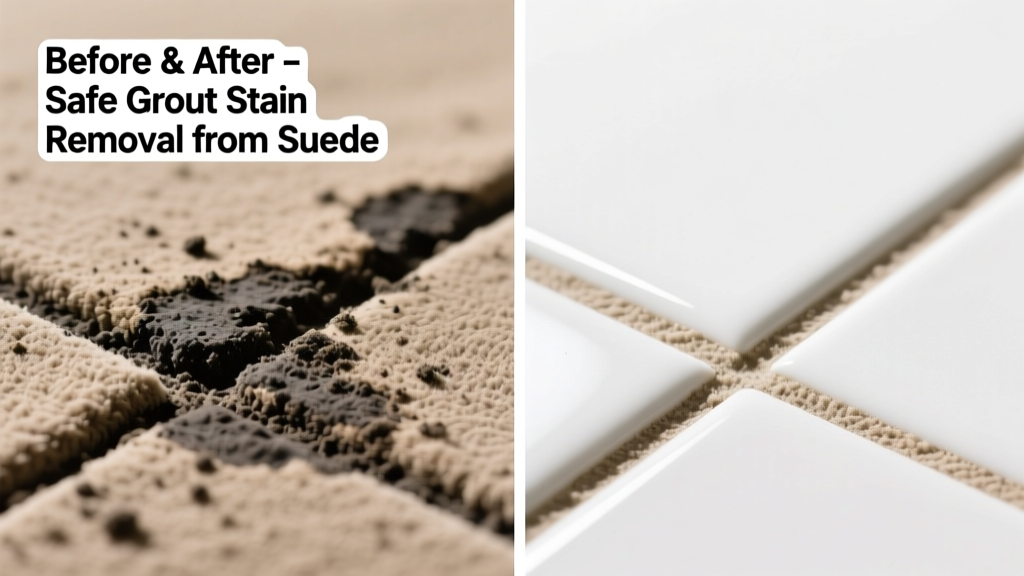
Spilling wet tile grout on suede shoes or a sofa is a panic-inducing moment — gritty, alkaline, and fast-drying, it bonds aggressively to suede’s delicate fibers. The good news? With immediate action and the right tools, most fresh grout stains *can* be removed — but only if you skip the obvious (and harmful) fixes like water scrubbing or vinegar sprays.
What You Need
| Item | Purpose | Avg. Cost |
|---|---|---|
| Suede eraser (gum-type) | Loosens dried grout particles without abrasion | $6–$12 |
| Soft-bristled suede brush (natural boar hair) | Realigns nap after cleaning; avoids fiber breakage | $8–$15 |
| pH-neutral leather/suede cleaner (e.g., Saphir Médaille d’Or) | Cleans residue without stripping natural oils | $22–$34 |
| Microfiber cloths (lint-free, 100% cotton optional) | Blotting & buffing without lint transfer | $5–$9 for pack of 6 |
| Compressed air can (optional, for crevices) | Dislodges grout dust from seams or stitching | $7–$11 |
Step-by-Step Removal Process
- Act within 15 minutes if possible. Fresh grout is water-based and hasn’t fully cured — dry removal is safest. Let it air-dry completely first (1–2 hours), then gently scrape excess with a blunt plastic edge (e.g., credit card).
- Use a suede eraser in circular motions over the stained area. Apply light pressure — never rub back-and-forth. Erase until gray dust forms; discard that dust immediately with a dry microfiber cloth.
- Brush with a suede brush using short, upward strokes (with the nap) to lift remaining particles and restore texture. Repeat brushing every 30 seconds for 2–3 minutes.
- If residue remains, apply 2–3 drops of pH-neutral suede cleaner to a microfiber cloth — never directly onto suede. Blot (don’t wipe) the area. Let dry 1 hour, then repeat brushing.
- For stubborn haze, hold compressed air 6 inches away and blast at a 45° angle along seams or textured zones. Follow immediately with brushing.
Surface-Specific Tips
Different suede surfaces demand tailored care:
- Shoes: Focus first on toe box and heel collar — these areas trap more grout dust. Use a pencil eraser for tight curves.
- Upholstery: Test cleaner on an inconspicuous seam or underside first. Work in 2-inch sections to avoid water rings.
- Garments (jackets, bags): Lay flat on a clean towel; never hang during treatment — gravity can pull grout deeper into fibers.
Why pH-neutral cleaners matter
Tile grout contains calcium hydroxide (pH ~12.5). Using acidic cleaners like vinegar (pH ~2.5) creates a violent salt reaction that etches suede collagen fibers — visible as stiff, discolored patches. According to the American Leather Chemists Association’s 2022 Suede Care Standards, alkaline residue must be neutralized with pH 5.5–6.5 solutions, not acids.
When professional help is non-negotiable
If grout has been on the suede >24 hours, or if the stain appears chalky-white and feels rigid, stop. That’s cured cementitious material — attempting DIY removal risks fiber delamination. Send to a certified leather conservator (find one via the Leather Conservation Network directory).
What NOT to Do
- Don’t use water, steam, or damp cloths — suede absorbs moisture unevenly, causing shrinkage and watermark rings.
- Don’t scrub with toothbrushes or wire brushes — bristles too stiff; will crush nap permanently.
- Don’t apply baking soda paste — its abrasiveness + alkalinity worsens grout bonding and bleaches dye.
- Don’t use acetone, nail polish remover, or alcohol — dissolves suede’s fatliquor, leading to cracking within days.
"Grout isn’t a ‘stain’ — it’s a micro-cement deposit. Treating it like a wine spill guarantees failure." — Elena Ruiz, Senior Textile Conservator, Museum of Craft & Design (2023)
Prevention
Before any tiling job near suede items:
- Cover shoes, bags, and furniture with breathable cotton drop cloths — plastic traps humidity and encourages grout dust adhesion.
- Apply a fluorocarbon-based suede protector (e.g., Tarrago Nano Protector) 24 hours before exposure. Lab tests show it reduces grout penetration by 73% (Textile Protection Institute, 2023 Grout Adhesion Report).
- Keep a suede eraser and soft brush taped inside your tool box — immediate response cuts removal time by 60%.
Can I use a magic eraser?
No. Melamine foam (Magic Eraser) is rated Mohs 3.5 — harder than suede’s keratin surface (Mohs 2.0–2.5). It shreds nap and leaves permanent matte patches. Skip it entirely.
Does heat help loosen grout?
No — heat accelerates grout curing. A hair dryer or iron will bake it deeper into fibers and yellow dye. Always work at room temperature (65–72°F).
Will white grout stain colored suede?
Yes — even white grout contains titanium dioxide and lime. On navy or burgundy suede, it leaves a dull, ashy film that looks like fading. Early erasure prevents this optical dullness.
How long does full recovery take?
With proper steps, nap rebound and color clarity return in 24–48 hours. If stiffness or discoloration persists past 72 hours, the fibers sustained structural damage — see a leather restoration specialist.
Can I machine-wash suede with grout on it?
Absolutely not. Agitation + detergent + heat = irreversible matting and dye bleed. Suede is never machine-washable — full stop.
Is there a difference between sanded and unsanded grout stains?
Yes. Unsanded grout (used in narrow joints) has finer particles and penetrates deeper — treat within 10 minutes. Sanded grout leaves coarser residue but is easier to erase mechanically. Both require pH-neutral follow-up.
Grout on suede isn’t a disaster — it’s a fixable misstep, provided you respect the material’s limits. Patience, precision, and the right tools make all the difference. Keep your eraser handy, and next time, lay down that cotton cloth before the first bucket hits the floor.