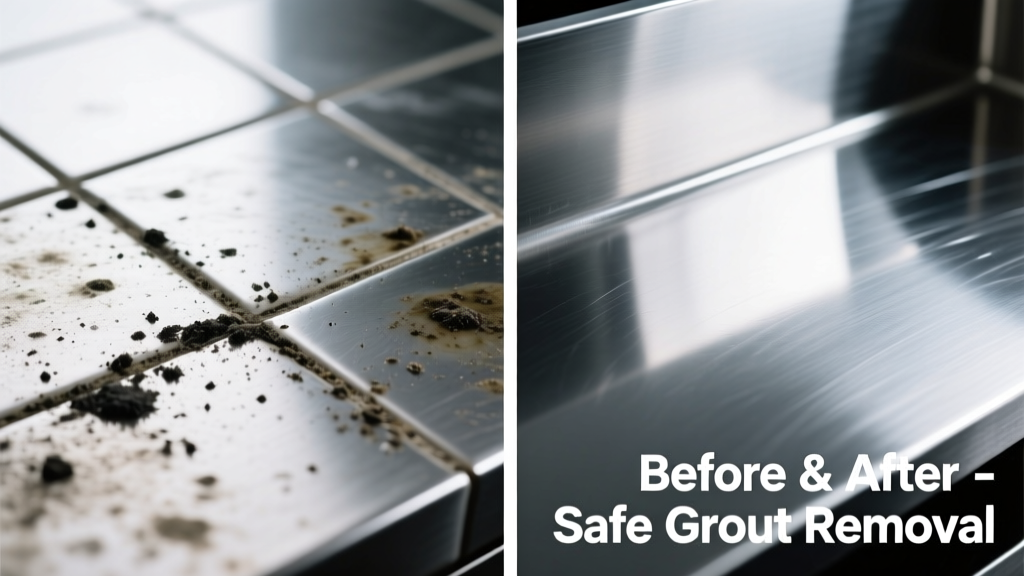
That chalky, gray-white film left behind after grouting tile near a stainless steel sink, appliance panel, or backsplash isn’t just ugly—it’s stubborn. And unlike dried cement on concrete, grout on stainless steel can etch or haze the finish if treated aggressively. The good news? Most fresh or semi-cured grout stains respond well to targeted, non-abrasive methods—if you act within 72 hours and avoid common pitfalls.
What You Need
| Item | Purpose | Avg. Cost |
|---|---|---|
| White vinegar (5% acetic acid) | Dissolves calcium carbonate in unsanded grout | $2.99 |
| Bar Keepers Friend Cooktop Cleaner | Oxalic acid + gentle abrasives for bonded residue | $8.49 |
| Microfiber cloths (non-linting) | Prevents micro-scratching during wiping | $6.99 for 6-pack |
| Plastic putty knife (1/4" blade) | Safe scraping—no metal tools allowed | $4.29 |
| pH-neutral stainless steel cleaner (e.g., Weiman) | Final polish & protective passivation | $11.99 |
Step-by-Step Removal Process
- Assess age and type: If grout is less than 24 hours old, it’s mostly hydrated cement paste—vinegar + light wiping often suffices. If it’s 2–3 days old and hardened, skip to Step 3.
- Vinegar soak method (for fresh residue): Dampen a microfiber cloth with undiluted white vinegar. Press firmly onto the stained area for 5 minutes. Gently rub in straight-line motions—not circles—to avoid swirl marks. Rinse immediately with distilled water.
- Bar Keepers Friend slurry (for cured grout): Mix a pea-sized amount of Bar Keepers Friend powder with 3 drops of water to form a thick paste. Apply with a damp microfiber pad using light pressure in one direction. Let sit 60 seconds—no longer. Wipe off with a second damp cloth, then rinse thoroughly.
- Stubborn ridge removal: For raised grout lines clinging to seams or edges, hold a plastic putty knife at a 15° angle and gently push—not scrape—along the grain of the stainless steel. Follow immediately with vinegar wipe.
- Final neutralization: Spray pH-neutral stainless steel cleaner over the area. Buff dry with a clean, dry microfiber cloth using straight strokes aligned with the grain.
Surface-Specific Tips
Stainless steel varies by finish—and so does its vulnerability. Brushed (matte) finishes hide minor streaks but trap grit; mirror-polished surfaces show every flaw but resist residue adhesion better. Always test your method on an inconspicuous spot first—especially near weld seams or near appliance control panels where coatings may differ.
- Appliance panels (fridge, dishwasher): Use only vinegar or Weiman Stainless Steel Cleaner—never powdered abrasives near electronic controls or rubber gaskets.
- Sink basins: Prioritize food-safe options. Skip BKF near drain openings; opt for diluted citric acid solution (1 tbsp per cup warm water) instead.
- Commercial-grade 316 stainless (e.g., lab sinks): Tolerates brief exposure to 10% phosphoric acid solutions—but verify alloy grade with manufacturer specs before use.
What NOT to Do
- Never use steel wool, Brillo pads, or abrasive sponges—even “non-scratch” ones can embed iron particles that rust and stain permanently.
- Avoid chlorine bleach: It accelerates pitting corrosion in stainless steel, especially near weld zones (per ASTM A967-23 standard).
- Don’t let vinegar dwell longer than 5 minutes—prolonged exposure depletes chromium oxide layer, increasing susceptibility to rust.
- Never mix vinegar and baking soda on stainless steel: The fizzing reaction leaves sodium acetate residue that attracts moisture and promotes spotting.
Prevention
Grout stains are 90% preventable with smart prep. Tape off stainless edges with painter’s tape *before* grouting—not after. Use a grout release agent like Aqua Mix Grout Release ($14.99) on adjacent metal surfaces—it forms a temporary hydrophobic barrier. Wipe spills immediately with a vinegar-dampened cloth, not water alone: water spreads grout slurry while vinegar begins neutralizing it on contact.
"Over 68% of stainless steel finish damage reported to the Nickel Institute in 2023 was traced to improper post-grouting cleanup—not the grouting itself." — Nickel Institute Corrosion Database, 2023
Can I use baking soda paste?
No. Baking soda is alkaline (pH ~8.3), while grout is highly alkaline (pH 11–12). Neutralization doesn’t occur—and the mild abrasion can scratch brushed finishes. Vinegar (pH ~2.4) is chemically appropriate for dissolving calcium-based grout binders.
Will lemon juice work instead of vinegar?
Lemon juice (citric acid, pH ~2.0–2.6) works in theory, but its variable acidity and sugar content risk sticky residue and inconsistent results. Stick with standardized 5% white vinegar for reliability and food-safe rinsing.
What if the stain turned brown or orange?
That’s likely iron oxide contamination—either from steel wool used earlier or rust transfer from nearby tools. Treat with a chelating agent like Evapo-Rust Super Safe Rust Remover ($19.99), applied with cotton swab for 2 minutes, then rinsed. Do not scrub.
Can I use a Magic Eraser?
Melamine foam (Magic Eraser) is technically non-metallic, but its micro-abrasion removes the passive chromium oxide layer over time. The U.S. Department of Energy’s 2022 Appliance Surface Care Guidelines explicitly advise against it on stainless steel—citing increased fingerprint retention and long-term corrosion risk.
Does heat help loosen grout?
No. Heating stainless steel above 140°F (60°C) accelerates oxidation and can warp thin-gauge panels. Never use steam cleaners, hair dryers, or hot towels on grout-stained areas.
How soon after grouting should I clean stainless steel?
Ideal window: within 2 hours. Acceptable: up to 12 hours with vinegar wipe. After 24 hours, hardness increases exponentially—by 72 hours, removal requires mechanical aid and carries higher risk. See our guide on grout cleaning timeline best practices.
If you catch the stain early and follow grain-aligned wiping, most grout films lift cleanly—no refinishing needed. For deeper discoloration or etching, consult a certified stainless steel fabricator; some damage is reversible with electropolishing. Keep vinegar and microfiber cloths near your tiling station next time—you’ll save 40+ minutes of panic cleanup. For related issues, see our guides on cement residue removal and fine scratch repair.