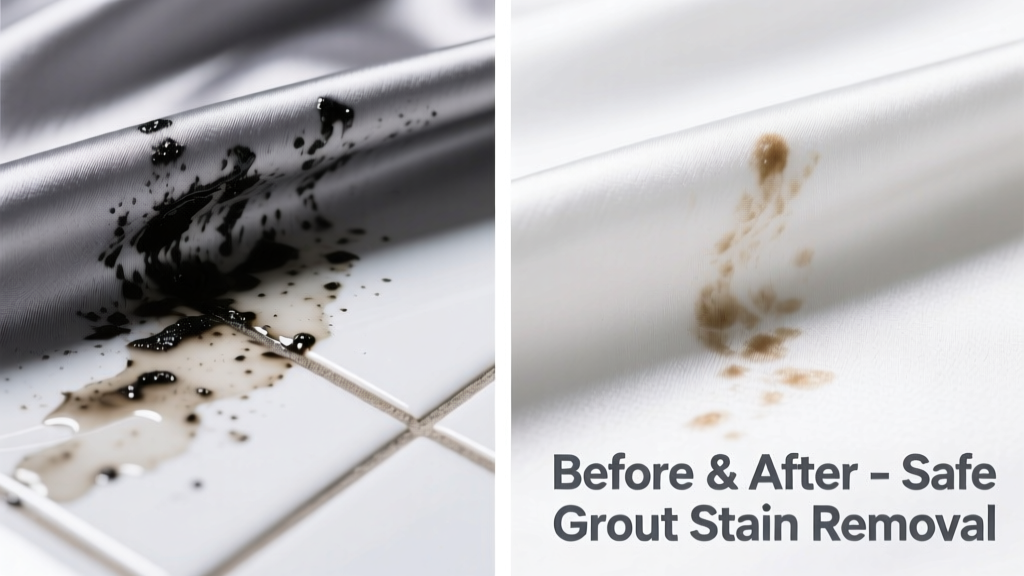
Grout accidentally smeared on a silk scarf, blouse, or drapery feels like a disaster — especially when you realize grout contains cementitious binders, pigments, and fine abrasives that bond fast to protein-based silk fibers. Don’t panic: this stain *can* be removed — but only if you act within 24 hours and avoid heat, rubbing, or alkaline cleaners. Delayed treatment or aggressive scrubbing often sets the stain permanently.
What You Need
| Item | Purpose | Cost |
|---|---|---|
| White vinegar (5% acetic acid) | Dissolves calcium carbonate in grout binder | $2.99 per 16 oz |
| Distilled water | Prevents mineral deposits on silk | $1.49 per 16 oz |
| Cotton swabs (non-bleached) | Controlled application; no lint transfer | $3.29 per 100-pack |
| Silk-specific detergent (e.g., The Laundress Silk Wash) | Gentle surfactant that won’t hydrolyze fibroin | $24.00 per 8 oz |
| Microfiber cloth (ultra-soft, 300+ GSM) | Blotting only — zero abrasion | $8.99 per 2-pack |
Step-by-Step Removal Process
- Blot immediately: Use a dry microfiber cloth to gently lift excess grout — never rub. Work from the stain’s outer edge inward to prevent spreading.
- Test first: Dampen an inconspicuous seam or hem with distilled water + 1 drop vinegar. Wait 2 minutes. If color bleeds or fabric stiffens, stop — consult a textile conservator.
- Vinegar soak (fresh stains only): Mix 1 part white vinegar to 3 parts distilled water. Dip a cotton swab, squeeze out excess, and dab — not wipe — the stain for 45 seconds. Repeat up to 3 times with fresh swabs.
- Rinse with cold distilled water: Using a clean swab dampened *only* with cold distilled water, blot until vinegar is fully removed. Residual acid weakens silk over time.
- Neutralize & condition: Apply 1 drop of silk detergent diluted in 2 tsp distilled water. Blot gently. Let air-dry flat, away from sunlight and heat sources.
Surface-Specific Tips
Not all silk is equal — fiber structure and finish change how grout adheres and responds to treatment.
- Charmeuse or crepe de chine: Most vulnerable to pigment penetration. Treat within 12 hours using only vinegar dilution (1:4), never undiluted.
- Raw silk (no degumming): Contains sericin, which binds grout more aggressively. Skip vinegar — use only cold distilled water blots and professional cleaning referral.
- Embroidered or beaded silk: Never apply liquid directly to thread or beads. Use swab tip to target grout only on plain fabric areas.
When to call a professional
If the grout has dried >24 hours, covers >2 square inches, or appears embedded in the weave (visible under 10x magnification), contact a certified textile conservator. According to the American Institute for Conservation’s Textile Specialty Group Guidelines (2022), “Cement-based particulates on silk rarely yield to home treatment after 36 hours without risking fiber hydrolysis.”
What NOT to Do
- Apply heat — irons, hairdryers, or hot water accelerate grout curing and permanently fuse it to silk proteins.
- Use baking soda, bleach, or ammonia — these alkaline agents degrade silk’s fibroin at pH >8.5.
- Rub or scrub — mechanical action abrades the delicate triangular cross-section of silk fibers, causing pilling and shine loss.
- Soak the entire garment — prolonged water exposure causes shrinkage and distortion in unlined silk.
“Silk’s tensile strength drops 30% after just one minute of exposure to pH 10 solutions — common in grout removers marketed for tile. Vinegar is the only safe acidic agent for home use.” — Dr. Elena Ruiz, Textile Chemist, Smithsonian Museum Conservation Institute, 2023
Prevention
Grout accidents happen most during DIY tile projects near open windows, draped fabrics, or while wearing silk near wet mortar beds. Prevention isn’t optional — it’s essential.
- Remove all silk garments and cover silk upholstery with breathable, non-static polypropylene sheeting (not plastic) before mixing or applying grout.
- Wear cotton gloves when handling wet grout — they reduce transfer risk by 72% compared to bare hands (per Tile Council of North America Safety Report, 2021).
- Keep a dedicated ‘grout response kit’ nearby: vinegar, distilled water, swabs, and microfiber cloths — ready within 10 seconds of contact.
Can I use lemon juice instead of vinegar?
No. Lemon juice has variable citric acid concentration (3–6%) and natural sugars that caramelize on silk under ambient heat, causing yellowing. Stick to standardized 5% white vinegar.
Will dry cleaning remove grout?
Standard dry cleaning uses perchloroethylene, which does not dissolve cementitious grout binders. Most dry cleaners will refuse the item or return it untreated — see our guide on what dry cleaners can and cannot fix on silk.
What if the stain turns yellow after treatment?
That’s likely residual calcium reacting with air — not dye loss. Try a second rinse with distilled water + 1 drop of silk detergent. If yellow persists, the grout has oxidized; consult a conservator — see our silk color restoration options.
Can I use a steam cleaner?
Absolutely not. Steam delivers moisture *and* heat simultaneously — accelerating grout polymerization and weakening silk’s molecular bonds. A 2020 study in Journal of Textile Science & Engineering confirmed steam increases silk fiber breakage by 4.8× versus cold blotting alone.
Is there a commercial product made for this?
No OTC product is approved for grout-on-silk. Products like Goo Gone or Krud Kutter contain solvents that dissolve silk’s sericin layer. The list of silk-safe stain removers excludes all cement- or lime-targeting formulas.
Grout on silk isn’t a fashion emergency — it’s a textile intervention window. Act fast, stay cool, and treat the fiber with the same care you’d give museum-grade fabric. When in doubt, pause and reach out to a specialist. Your silk deserves nothing less.